
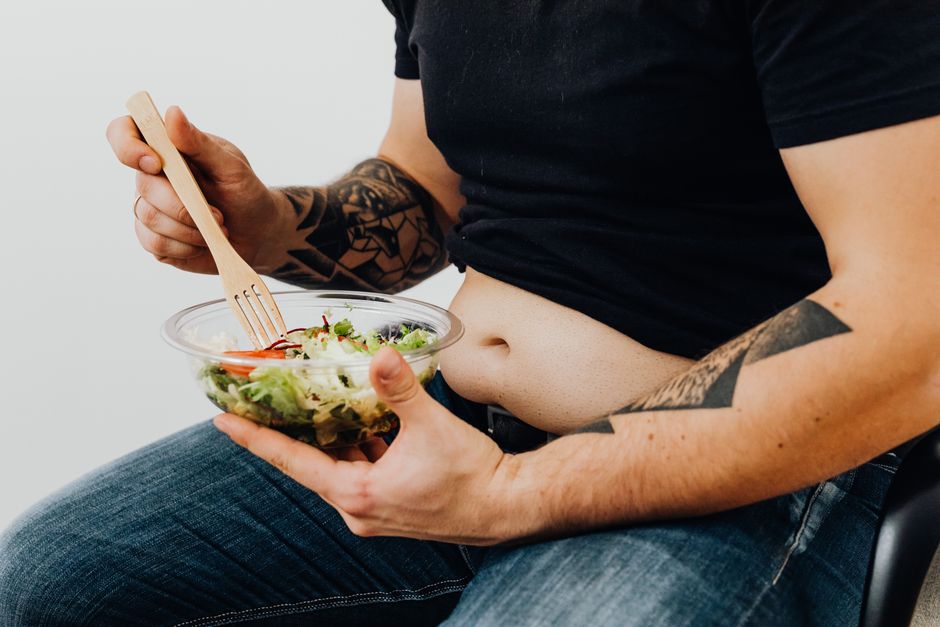
Belly fat after 50 is not a character flaw or a sign you stopped trying. It is largely the result of hormonal shifts, lost muscle mass, and decades of gradual metabolic change. The good news is that the same levers that work for younger men still work after 50 — they just need to be pulled differently. You cannot target belly fat with crunches, but you can change the conditions that make your body store it there.
Why Does Belly Fat Increase for Men Over 50?
Testosterone levels in men decline gradually with age, typically starting in the 30s or 40s and continuing slowly. This matters because testosterone supports muscle mass, and muscle burns more calories at rest than fat. As testosterone drifts down, lean mass tends to shrink, and the body’s daily calorie needs fall with it.
At the same time, fat storage shifts. Men carry more visceral fat — the deep fat wrapped around internal organs — as they age. Visceral fat is not just cosmetic. It is metabolically active tissue that releases inflammatory signals and is linked to insulin resistance, type 2 diabetes, and cardiovascular disease.
Cortisol, the stress hormone, also plays a role. Chronic stress, poor sleep, and low physical activity all nudge cortisol higher, and elevated cortisol is associated with more abdominal fat storage. The combination of lower testosterone, higher cortisol, and less muscle creates a feedback loop that favors belly fat.
One non-obvious point: the change is not purely hormonal. Men over 50 often move less than they did at 30 — not because they are lazy, but because of joint pain, career demands, or simply habit. Reduced daily movement accounts for a meaningful share of the metabolic slowdown that gets blamed entirely on age.
Can You Target Belly Fat With Ab Exercises?
No. Spot reduction does not work. Doing crunches, planks, or leg raises strengthens the abdominal muscles underneath, but it does not preferentially burn the fat sitting on top of them. This has been tested repeatedly, and the results are consistent: exercising a specific muscle does not reduce fat in that specific area.
This is one of the most persistent myths in fitness. Ab exercises build core strength, which is genuinely valuable for posture, back health, and daily function. They just do not melt belly fat. Fat loss happens system-wide, driven by a calorie deficit and hormonal environment, not by which muscle you happen to be working.
What actually reduces belly fat is reducing overall body fat. Where you lose it first is largely genetic and not under your control. For many men, the belly is the last place fat leaves and the first place it returns.
What Actually Works to Lose Belly Fat for Men Over 50?
Three things carry most of the weight: resistance training to rebuild muscle, a modest calorie deficit, and enough protein to preserve lean mass while you lose fat. None of these are exotic. They are just harder to sustain than the marketing around them suggests.
Build and keep muscle
Resistance training — lifting weights, using resistance bands, or bodyweight work — is the single most important lever after 50. Muscle is metabolically expensive tissue. The more you have, the more calories you burn at rest, and the better your body handles blood sugar. Research consistently shows that resistance training improves insulin sensitivity and helps preserve lean mass during weight loss.
Two to three sessions per week covering major muscle groups is a reasonable target for most healthy men. If you are new to lifting or have joint issues, working with a trainer or physical therapist to learn safe form is worth the investment.
Create a modest calorie deficit
Fat loss requires eating fewer calories than you burn. There is no way around this. But aggressive deficits backfire after 50 because they accelerate muscle loss. A slow, sustainable deficit — one that produces gradual loss rather than rapid drops — protects lean mass and is easier to maintain.
No specific calorie number applies to everyone. Your needs depend on your current weight, activity level, and muscle mass. A registered dietitian can calculate a personalized target. What matters more than the exact number is consistency over months, not weeks.
Eat enough protein
Protein preserves muscle during weight loss and helps you feel full. Older adults may need more protein than younger ones to trigger muscle protein synthesis, the process by which the body builds muscle. Some research suggests that protein distribution across the day matters, not just total intake.
Good sources include lean meat, poultry, fish, eggs, dairy, beans, and soy. The exact amount that is right for you depends on your body weight, kidney function, and overall health. If you have kidney disease, talk to your doctor before increasing protein.
Does Diet or Exercise Matter More?
Both matter, but they do different jobs. Diet drives fat loss. Exercise — specifically resistance training — determines what kind of weight you lose. Lose weight through diet alone and a meaningful portion can come from muscle. Add resistance training and you shift the ratio toward fat.
Cardiovascular exercise has real value for heart health, blood pressure, and mood. It also burns calories. But cardio alone, without resistance training, tends to produce more muscle loss during weight reduction than most men realize. The combination is what works.
Walking deserves a mention. It is low-impact, easy to sustain, and adds meaningful daily calorie burn without the recovery cost of intense cardio. For men with joint pain or limited time, it is often the most practical starting point.
What About Sleep, Stress, and Alcohol?
These three are underrated and often ignored. Poor sleep raises cortisol and disrupts appetite hormones, making overeating more likely. Chronic stress does the same. Alcohol adds calories and, in heavier amounts, is associated with increased abdominal fat.
None of these are moral failings. They are physiological inputs that affect where your body stores fat. Improving sleep quality, managing stress through whatever works for you, and moderating alcohol intake are legitimate parts of a belly fat strategy — not optional extras.
Sleep apnea is worth flagging specifically. It is common in men over 50, especially those carrying extra weight, and it disrupts sleep in ways that drive weight gain and metabolic problems. If you snore heavily, wake unrefreshed, or feel exhausted during the day, ask your doctor about a sleep study.
Should You Consider Supplements or Medications?
Most supplements marketed for belly fat have weak or absent evidence. Fat burners, detox teas, and “metabolism boosters” rarely survive scrutiny in controlled trials. Some contain stimulants that raise blood pressure or interact with medications. The evidence does not support them as reliable tools.
Prescription options exist for weight management, including medications that have shown meaningful results in clinical trials for certain patients. These are not appropriate for everyone, and they require medical supervision. They also work best alongside diet and exercise, not instead of them.
Testosterone therapy is sometimes discussed for men with low testosterone and belly fat. It is a legitimate treatment for diagnosed hypogonadism, but it is not a general weight loss tool. It requires blood tests, a diagnosis, and ongoing monitoring. If you suspect low testosterone, get tested rather than guessing.
How Long Does It Take to See Results?
Fat loss is gradual. Visible changes in the belly typically take weeks to months of consistent effort, not days. Early progress is often invisible — improved energy, better sleep, and stronger lifts come before the mirror changes.
Men who lose weight slowly and keep it off tend to do so by changing habits permanently, not by following short-term programs. The goal is not a six-week transformation. It is a sustainable pattern you can maintain for decades.
Measuring progress by waist circumference and how clothes fit is often more useful than the scale. The scale can stall while body composition improves, especially when you are gaining muscle and losing fat at the same time.
Frequently Asked Questions
Can you lose belly fat after 50?
Yes. Fat loss is possible at any age, though it tends to be slower after 50 because of lower muscle mass and hormonal changes. The same principles — resistance training, a modest calorie deficit, and adequate protein — still apply.
What is the fastest way to lose belly fat for men over 50?
There is no fast method that is also safe and sustainable. Aggressive crash diets accelerate muscle loss, which makes future fat loss harder. A slow, steady approach protects muscle and is more likely to last.
Do crunches burn belly fat?
No. Crunches strengthen abdominal muscles but do not reduce fat in that area. Spot reduction has not held up in research, and fat loss happens throughout the body rather than in one targeted spot.
Does low testosterone cause belly fat?
Low testosterone is associated with increased abdominal fat, and the relationship runs both ways — extra fat can also lower testosterone. If you suspect low testosterone, a doctor can test for it and discuss whether treatment is appropriate.
