
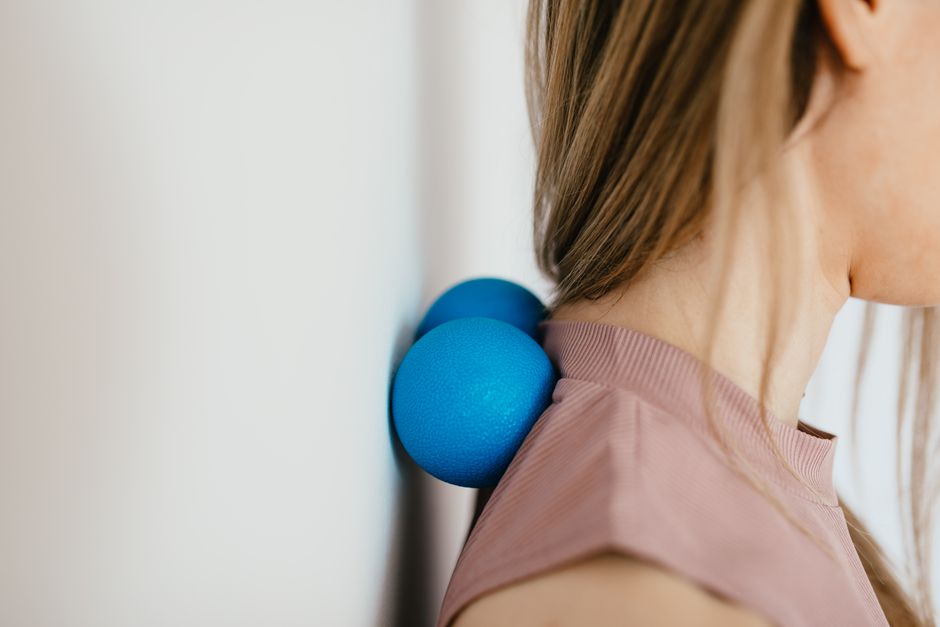
Stiff neck muscles usually loosen best with a combination of gentle movement and warmth. Heat relaxes muscle tissue and improves blood flow, while slow stretches restore length to muscles that have tightened from posture, stress, or sleep position. Used together, they work better than either one alone.
Most everyday neck tightness responds to simple home care within days. The key is doing the right stretches gently, applying heat correctly, and knowing when a stiff neck is something more than muscle tension.
Why Do Neck Muscles Get Tight in the First Place?
Neck muscles tighten for a small number of well-understood reasons. The most common is sustained posture — holding your head forward while looking at a screen, phone, or book. For every inch your head sits forward of your shoulders, the muscles at the back of your neck must work harder to hold it up. Over hours and days, that constant low-level effort leads to fatigue, tightness, and soreness.
Stress is the second major cause. When you are tense, you unconsciously contract the muscles of the neck and shoulders. This is sometimes called a stress response, and it can last long enough to cause real muscle fatigue.
Other common triggers include sleeping in an awkward position, sudden unfamiliar exertion, and cold drafts. Less often, neck stiffness is a sign of something that needs medical attention. A stiff neck with fever, severe headache, or sensitivity to light is a medical emergency and needs immediate care.
How To Loosen Neck Muscles Stretches Heat More?
The combination works because heat and stretching do different jobs. Heat increases blood flow and raises tissue temperature, which makes muscle fibers more pliable and can reduce the sensation of pain. Stretching then lengthens the muscle and restores range of motion. Doing stretches on cold, stiff muscles is harder and less comfortable than doing them after warmth.
Research on heat therapy for muscle pain generally supports its use for short-term relief. Studies indicate that superficial heat can reduce pain and improve flexibility, though the effect is temporary and best used as part of a routine rather than a one-time fix.
Here is a simple sequence that uses both:
- Apply heat to the neck and upper shoulders for 10 to 15 minutes. A warm shower, heating pad, or moist heat pack all work.
- Follow immediately with slow, gentle stretches while the tissue is warm.
- Move through each stretch without bouncing. Hold where you feel a gentle pull, not pain.
- Repeat the heat and stretch sequence once or twice daily during a flare-up.
Heat is not appropriate for a new injury in the first 48 hours, when inflammation is still active. In that window, cold is generally used instead. For ordinary muscle tightness without a recent injury, heat is the better choice.
Which Stretches Actually Help a Stiff Neck?
Target the muscles that do the most work holding your head up. These run along the back of the neck, the sides, and the upper shoulders. Move slowly and stay within a comfortable range.
Chin tuck. Sit or stand tall. Without tilting your head, draw your chin straight back as if making a double chin. Hold for a few seconds, then release. This gently works the deep muscles at the front of the neck and offsets forward head posture.
Side bend. Drop your right ear toward your right shoulder until you feel a stretch along the left side of your neck. Hold briefly. Repeat on the other side. Keep your shoulders down and relaxed.
Forward and back. Slowly lower your chin toward your chest, then return to neutral. Do not tip your head backward into a full extension, which can compress the joints at the back of the neck.
Rotation. Turn your head slowly to look over one shoulder, then the other. Keep the movement smooth and controlled.
Shoulder rolls. Roll your shoulders up, back, and down in a slow circle. This releases the upper trapezius muscles that often tighten along with the neck.
Stop any stretch that causes sharp pain, numbness, tingling, or dizziness. Those symptoms point to nerve or blood vessel involvement and are not something to stretch through.





Does Heat Alone Work, or Do You Need Both?
Heat alone can ease discomfort and make the neck feel looser, but it does not restore length to a shortened muscle. Stretching alone works, but it is often uncomfortable when muscles are cold and guarded. Together they cover both problems.
Research suggests heat and stretch are complementary rather than interchangeable. Heat prepares the tissue; stretching changes it. If you only have time for one, gentle movement tends to have a more lasting effect than heat, because it addresses the underlying tightness rather than just the sensation.
For chronic tightness tied to posture, neither heat nor stretching fixes the cause on its own. Changing how you sit, how often you move, and how you position your screen does more over the long run than any single session.
How Long Until a Stiff Neck Gets Better?
Most everyday muscle tightness improves within a few days of consistent home care. If it is not improving after about a week, or if it is getting worse, that is a reason to see a clinician.
Some causes of neck stiffness are not muscular and will not respond to stretching or heat. These include problems with the cervical spine, nerve compression, and inflammatory conditions. A clinician can tell the difference through history and examination.
Seek medical care promptly if you have:
- Neck stiffness with fever, severe headache, or light sensitivity
- Numbness, weakness, or tingling in the arms or hands
- Pain that follows an injury or accident
- Stiffness that keeps getting worse
- Difficulty swallowing, speaking, or breathing
These signs suggest something beyond simple muscle tension and should be evaluated rather than treated at home.
What Else Helps Neck Muscles Relax?
Posture changes matter more than most people expect. Raising your screen to eye level, keeping your phone closer to eye level rather than looking down, and taking frequent movement breaks all reduce the load on neck muscles. Standing up and moving every 30 to 45 minutes helps break the cycle of sustained contraction.
Stress management also has a direct effect. Because tension often drives neck tightness, relaxation techniques, slow breathing, and adequate sleep can reduce how often muscles tighten in the first place.
Gentle massage can ease tightness temporarily and may improve comfort before stretching. Evidence for massage as a long-term fix is limited, but as a short-term aid it is reasonable.
Ergonomic adjustments to your workspace — chair height, screen position, and arm support — reduce the sustained effort your neck muscles must make. These changes take time to show benefit but address the root of posture-related tightness.
Frequently Asked Questions
Should I use heat or ice for a stiff neck?
Use heat for ordinary muscle tightness without a recent injury. Use ice instead during the first 48 hours after a new injury, when inflammation is still active.
How long should I apply heat to my neck?
Apply heat for about 10 to 15 minutes at a time. Longer sessions do not add benefit and can irritate the skin.
Can stretching make a stiff neck worse?
Yes, if you stretch too hard or push into pain. Gentle stretching within a comfortable range is safe, but sharp pain, numbness, or dizziness means you should stop and see a clinician.
When should I worry about a stiff neck?
Get medical care right away if neck stiffness comes with fever, severe headache, light sensitivity, or numbness and weakness in your arms. These point to causes beyond simple muscle tension.
