
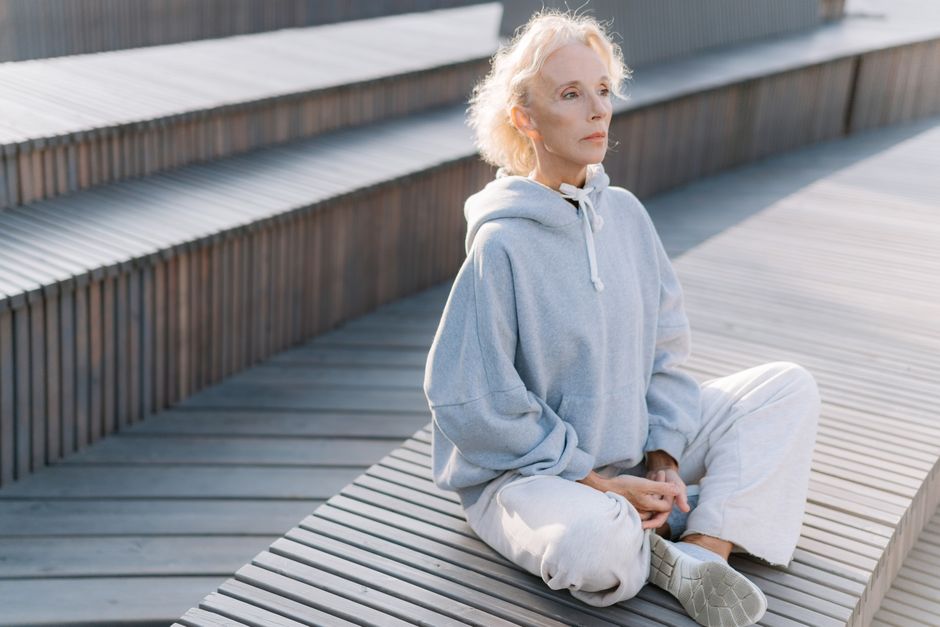
Gray hair does not make you look older. The way you cut, color, and care for it does. Silver hair reflects light differently than pigmented hair, and it changes texture too, becoming coarser and drier for many people. Styles and routines built for dark hair often work against gray hair. Adjust both and gray reads as striking rather than aging.
Why Does Gray Hair Sometimes Make People Look Older?
Hair loses pigment when melanocytes in the hair follicle stop producing melanin. Scientists have identified one mechanism: as we age, melanocyte stem cells can get stuck in a state where they no longer mature into pigment-producing cells. Research on this process was published in Nature in 2023. Gray hair is not a sign of poor health. It is a normal part of aging for most people.
The “looks older” effect comes from three practical changes.
- Texture. Gray hair tends to be drier and coarser. It can frizz and lose shine, which reads as dull.
- Contrast. Dark hair frames the face with strong contrast. Gray lowers that contrast, so shadows and skin tone changes become more visible.
- Shape. Hair that is flat, overgrown, or cut in an outdated style adds years regardless of color.
None of these are about the color itself. Each one can be managed.
How To Look Younger With Gray Hair Not Older: What Actually Works
The single most effective step is a haircut that suits your face shape and hair texture now, not the hair you had at 35. Gray hair holds shape differently. It can look fuller, which is an advantage, but it can also look wiry if cut badly.
A few principles hold up well:
- Keep some length or volume around the face. Flat, scraped-back styles emphasize facial hollows and lines.
- Avoid a heavy, solid block of color. If you color, blended tones with some dimension look more natural than a single flat shade.
- Get regular trims. Gray hair shows split ends and uneven growth more clearly.
- Consider a soft fringe or face-framing layers. These break up the contrast between hair and skin and draw the eye to features rather than shadows.
There is a counterintuitive point here. Many people assume the fix for gray hair is to cover it completely. In practice, a fully dyed, uniform dark shade on aging skin can look harsher than a lighter, blended color. Going lighter, not darker, often looks more natural.
Does Purple Shampoo Really Help Gray Hair?
Yes, for one specific problem. Gray and white hair can develop a yellow or brassy tone over time. This comes from environmental exposure, product buildup, and the natural aging of the hair fiber. Purple shampoo deposits a small amount of violet pigment that neutralizes yellow. Violet sits opposite yellow on the color wheel.
Used occasionally, it can keep silver looking cool and bright. Used too often, it can leave a lavender tint, especially on porous hair. Most people do not need it every wash. Some dermatologists note that overuse can also dry out hair. Start with once a week and adjust.
Purple shampoo does not restore shine or fix texture. It only addresses tone. Shine and softness come from moisture and conditioning.
How Should You Care for Gray Hair Differently?
Gray hair genuinely needs more moisture. As hair loses pigment, it also tends to lose some of the oils and structure that kept it supple. The result is hair that feels rougher and looks less reflective.
Practical steps that make a real difference:
- Use a moisturizing conditioner every wash. This is the most reliable way to reduce roughness and frizz.
- Wash less often. Frequent washing strips oils that gray hair already lacks. Most people do well washing every two to three days.
- Use a leave-in treatment or hair oil on ends. Light oils help seal the hair surface and add shine.
- Protect from heat and sun. Gray hair can be more vulnerable to sun damage and heat styling. Use a heat protectant and lower the temperature on styling tools.
- Avoid harsh sulfates if your hair feels dry. Gentler cleansers can help, though the evidence is more about comfort than measurable repair.
One clarification worth knowing: gray hair is not “dead” hair in any special sense. All visible hair is dead once it leaves the follicle. What changes is the fiber’s condition, not its biology.
Should You Color Gray Hair or Let It Go?
Both are legitimate choices. The evidence does not say one looks younger than the other. What matters is how well the choice is executed.
If you color, blended and lighter shades tend to look more natural than a flat, dark, all-over dye. Root touch-ups become a commitment as gray grows in. Some people find a transition to lighter color easier than maintaining dark dye.
If you go natural, the transition period is the hard part. Many people find it easier to cut shorter during the grow-out, or to work with a colorist on a gradual blend. Once the gray is fully in, the focus shifts entirely to cut and condition.
There is no rule that gray hair must be covered to look youthful. Plenty of people look younger with silver hair than they did with dyed hair, because the color suits their skin tone and the cut flatters their face.
What Else Makes a Difference Beyond the Hair Itself?
Hair is only part of the picture. A few other factors shape how gray hair reads.
Skin tone and contrast. Gray hair can wash out some complexions. A touch of warmth in makeup or a brighter lip can restore contrast. This is about balance, not covering up.
Eyebrows. Brows often thin and lighten with age. Filling them lightly frames the face and keeps it from looking faded next to silver hair.
Clothing color. Near the face, colors that complement your skin tone matter more with gray hair. Cool jewel tones and clear colors often work well with silver. Very pale or very muted colors near the face can blend in and look washed out.
Posture and grooming. These are not hair issues, but they affect how old anyone looks. Neat, well-kept hair in any color reads as intentional.
What Does Not Work
Some popular advice does not hold up.
Gray hair does not need to be cut short. Long gray hair can look striking if it is healthy and well-shaped. The key is condition and cut, not length.
Gray hair is not automatically unhealthy. It is a normal change. Treating it like a problem to fix can lead to over-processing, which actually makes it look worse.
There is no shampoo or supplement proven to reverse gray hair in the general population. Some early research on hair pigmentation is ongoing, but no product currently on the market has strong clinical evidence that it restores color. Be skeptical of bold claims.
Frequently Asked Questions
Does gray hair make you look older?
Not by itself. Gray hair only looks aging when it is dull, dry, or cut in a style that no longer suits your face. Healthy, well-cut gray hair often looks younger than flat dyed hair.
How can I make my gray hair look younger?
Focus on a flattering cut, regular trims, and moisture. Use a moisturizing conditioner, wash less often, and consider occasional purple shampoo to reduce yellow tones.
Should I go lighter or darker when coloring gray hair?
Lighter and blended shades usually look more natural than a flat dark dye. Dark dye on aging skin can create harsh contrast that emphasizes lines.
Can gray hair turn back to its original color?
No proven product or supplement restores pigment in the general population. Some research on hair pigmentation is ongoing, but no treatment currently has strong clinical evidence.
