
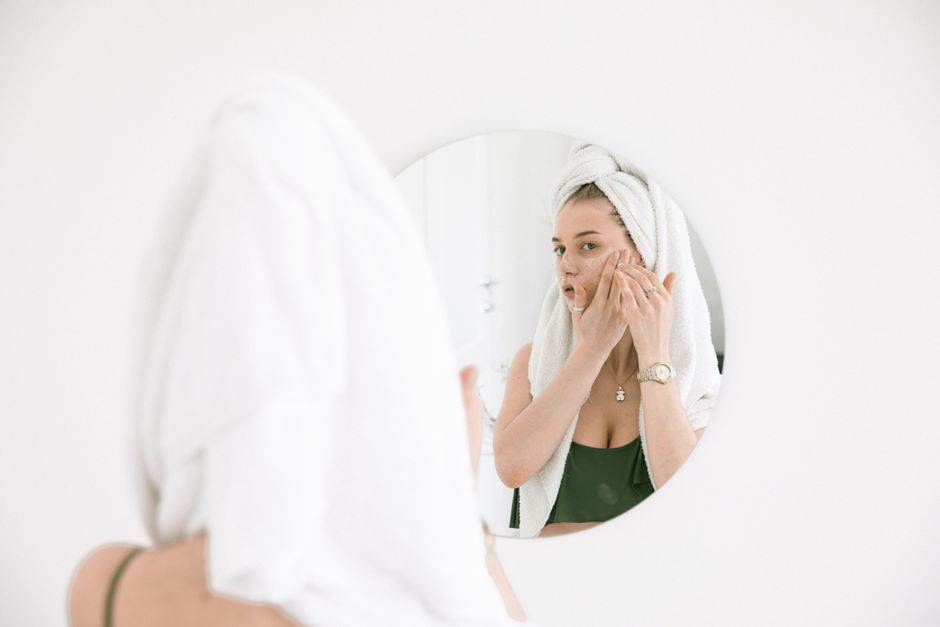
Your 40s are when skin changes stop being subtle. Collagen production has been declining since your 20s, and by now the cumulative effects of sun exposure, genetics, and hormonal shifts become visible. The strategies that actually work are not expensive creams or viral hacks. They are sun protection, proven topical ingredients like retinoids and vitamin C, adequate sleep, not smoking, and for some people, in-office procedures performed by a qualified clinician.
What Happens to Your Skin in Your 40s?
Two structural proteins do most of the visible work in youthful skin: collagen, which gives skin its firmness, and elastin, which allows it to stretch and snap back. Collagen production declines gradually starting in your mid-20s, and the drop accelerates after menopause when estrogen levels fall. Estrogen supports collagen synthesis, so its decline has a measurable effect on skin thickness and elasticity.
At the same time, decades of ultraviolet exposure have been breaking down existing collagen and elastin through a process called photoaging. UV radiation activates enzymes that degrade these proteins faster than the body replaces them. This is why people who spent years in the sun without protection often look older than their chronological age, while those who protected their skin look younger.
Fat pads in the face also shift and shrink with age. This is a key point that many people miss: volume loss, not just skin laxity, drives much of the visible aging in the 40s. The cheeks flatten, the temples hollow slightly, and the midface descends. This is why some treatments that only address skin texture do not fully restore a youthful look.
Hormonal changes add another layer. Lower estrogen means drier skin, slower wound healing, and reduced barrier function. Sebum production often decreases too, which can make skin feel tight or flaky even if it was oily in your 20s.
Does Sunscreen Really Make a Difference?
Yes. Sun protection is the single most evidence-supported intervention for slowing visible skin aging. This is not marketing. It is one of the most consistent findings in dermatology research.
UV exposure accounts for the majority of visible facial aging. Research has consistently shown that people who use sunscreen daily show fewer signs of aging over time compared to those who do not. A landmark study published in the Annals of Internal Medicine found that daily sunscreen use significantly reduced skin aging over four and a half years compared to discretionary use.
The practical takeaway is simple. Use a broad-spectrum sunscreen with an SPF of 30 or higher every day, even when it is cloudy. UV radiation penetrates clouds. Reapply every two hours if you are outdoors for extended periods. If you wear makeup, use a sunscreen underneath or choose a foundation with SPF, though most makeup does not provide enough coverage on its own.
Do not rely on SPF in moisturizer alone unless you are applying enough of it. Most people apply far less than the amount used in testing, which is why dermatologists often recommend a dedicated sunscreen.
Which Skincare Ingredients Have Real Evidence Behind Them?
A handful of ingredients have solid research supporting their use for aging skin. Most others do not.
Retinoids are the most studied. Tretinoin, a prescription retinoid, has decades of clinical evidence showing it improves fine lines, texture, and pigmentation. Over-the-counter retinol is converted to retinoic acid in the skin and is weaker but still effective. Retinoids work by increasing cell turnover and stimulating collagen production. They can cause irritation, especially at first, so start with a low concentration a few nights per week and build up.
Vitamin C is an antioxidant that can brighten skin and may support collagen synthesis. Some studies suggest topical vitamin C reduces fine lines and improves skin tone, though results vary based on formulation and concentration. It is often used in the morning under sunscreen.
Niacinamide is a form of vitamin B3 that can improve skin barrier function and reduce redness. Evidence for its anti-aging effects is moderate. It is generally well tolerated.
Hyaluronic acid is a humectant that draws water into the skin. It can temporarily plump the skin and reduce the appearance of fine lines, but it does not change skin structure. The effect is cosmetic and short-lived.
Ingredients with weak or absent evidence for anti-aging include most “botanical extracts,” collagen creams (collagen molecules are too large to penetrate the skin), and products marketed as “stem cell” or “growth factor” serums without published human trials.
No cream has been shown to reverse deep wrinkles or restore lost facial volume. That is not what topicals can do.





Do In-Office Treatments Work?
Some do, with caveats. In-office procedures can produce results that topicals cannot, but they carry risks, cost, and downtime. Results vary by provider skill, device, and individual healing response.
Laser resurfacing (ablative and non-ablative) can improve wrinkles, pigmentation, and skin texture. Ablative lasers remove the outer skin layer and can produce significant improvement, but recovery can take one to two weeks or longer. Non-ablative lasers are gentler but require multiple sessions and produce subtler results.
Chemical peels range from light (little downtime) to deep (significant peeling and recovery). Medium and deep peels can improve pigmentation and fine lines. Deep peels carry risks including scarring and pigment changes, especially in darker skin tones.
Microneedling creates controlled micro-injuries to stimulate collagen. Some studies show improvement in wrinkles and scars, though results are modest and typically require multiple sessions.
Injectable fillers (hyaluronic acid-based) can restore volume in cheeks, temples, and lips. Results are immediate but temporary, typically lasting six to eighteen months depending on the product and area. Risks include bruising, swelling, and rarely, vascular complications.
Botulinum toxin relaxes muscles that create dynamic wrinkles (frown lines, crow’s feet). It does not treat static wrinkles or volume loss. Results last three to four months on average.
These procedures are not without risk. Choose a board-certified dermatologist or plastic surgeon. Be skeptical of deals that seem too cheap. Complications from improperly performed procedures can be permanent.
What Lifestyle Factors Actually Show Up in Your Face?
Sleep, smoking, alcohol, and diet all affect how your skin looks. The evidence varies in strength.
Smoking is strongly linked to premature facial aging. It reduces blood flow to the skin, damages collagen and elastin, and creates wrinkles through repeated facial movements. The association is consistent across studies.
Sleep matters more than most people think. During sleep, the body repairs tissue, including skin. Chronic poor sleep is associated with increased signs of aging and reduced skin barrier recovery. One study found that poor sleepers had more fine lines and uneven pigmentation than good sleepers, though the research is not as robust as for smoking or sun exposure.
Alcohol dehydrates the skin and can dilate blood vessels, leading to puffiness and redness over time. Heavy drinking is associated with increased facial aging, but the effect of moderate drinking is less clear.
Diet plays a role, though the evidence is moderate. Diets high in fruits and vegetables are associated with fewer wrinkles in some studies. High sugar intake may contribute to glycation, a process where sugar molecules bind to collagen and make it stiffer. The clinical significance of dietary glycation in visible aging is not fully established.
Stress may accelerate aging through multiple pathways, including elevated cortisol, which can break down collagen. The evidence here is suggestive but not definitive.
What About Supplements and Collagen Powders?
This is where marketing often outpaces evidence.
Oral collagen supplements have become popular. Some small studies suggest they may improve skin elasticity and hydration, but the research is limited. Many studies are industry-funded, short in duration, and use different formulations, making it hard to draw firm conclusions. The collagen you eat is broken down into amino acids during digestion. It does not travel intact to your skin.
That does not mean collagen supplements are useless. They provide protein and amino acids, which the body can use. But whether they specifically improve skin aging in a meaningful way is not established.
Other supplements marketed for skin, such as biotin, vitamin E, and “anti-aging” blends, have little to no evidence for visible anti-aging effects in people who are not deficient. Biotin deficiency is rare. Taking extra biotin does not improve skin in people who already have enough.
If you are considering supplements, talk to your doctor. Some can interact with medications or cause side effects.
What Actually Works for Looking Younger in Your 40s?
The honest answer is that no single intervention does everything. The most effective approach combines several evidence-based habits.
- Use broad-spectrum sunscreen SPF 30 or higher every day.
- Use a retinoid (prescription or over-the-counter) consistently.
- Do not smoke.
- Get adequate sleep and manage stress where you can.
- Consider vitamin C and niacinamide if they suit your skin.
- For more significant concerns, consult a board-certified dermatologist about in-office options.
Be skeptical of products that promise dramatic results without evidence. If a cream claims to “reverse” aging or “erase” wrinkles, it is almost certainly overpromising. Real anti-aging is gradual, incremental, and grounded in what research actually supports.
Your 40s are not a deadline. Skin continues to respond to good care at any age. The earlier you start, the more you preserve, but it is never too late to make changes that show up in your skin.
Frequently Asked Questions
What is the most effective anti-aging skincare ingredient?
Retinoids have the strongest evidence for improving fine lines, texture, and pigmentation. Sunscreen is the most effective preventive measure.
Do collagen supplements actually work for skin?
Some small studies suggest possible benefits for elasticity and hydration, but the evidence is limited and many studies are industry-funded. Oral collagen is broken down during digestion and does not reach the skin intact.
At what age should I start using retinol?
There is no single recommended age. Many dermatologists suggest starting in your late 20s or early 30s as a preventive measure, but it can be beneficial at any age.
Can I reverse wrinkles without procedures?
Topicals like retinoids can improve fine lines and texture, but deep wrinkles and volume loss generally cannot be reversed with creams alone. In-office procedures may be needed for more significant changes.
