
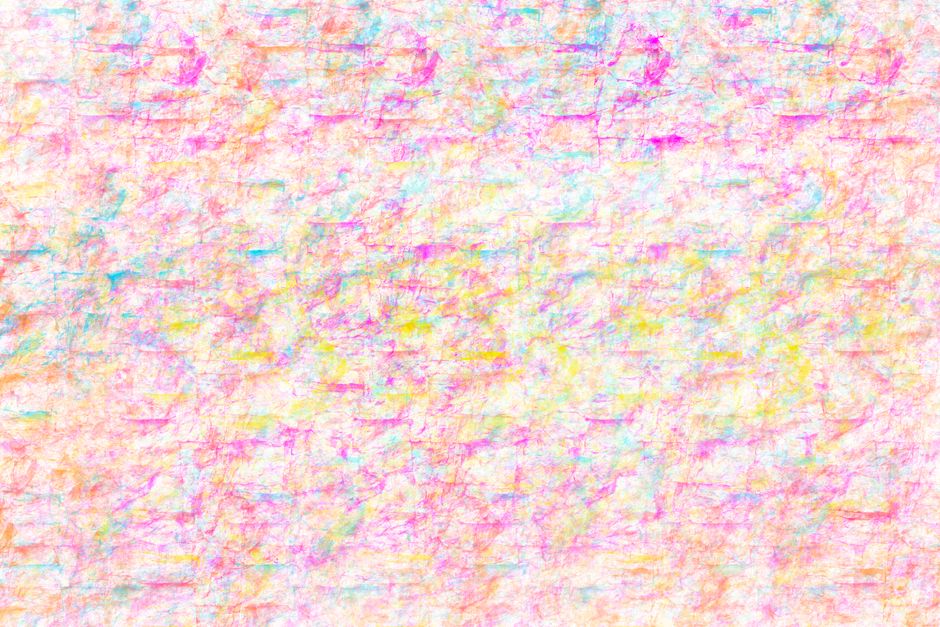
You stare at the pattern. Everyone else says a dolphin pops out. You see wallpaper. The problem is usually not your eyes — it is which way you are aiming them. Parallel viewing and cross-eyed viewing are the two ways to look at a stereogram, and most people naturally succeed at one and fail at the other. Parallel viewing means your eyes focus as if looking at something far away, so your gaze lines stay nearly straight ahead. Cross-eyed viewing means your eyes converge as if looking at something close to your nose. Both methods can reveal the hidden 3D image. They use opposite eye movements, and mixing them up is the single most common reason a stereogram stays flat.
What Is a Stereogram and How Does It Trick Your Eyes?
A stereogram is a flat image that contains a hidden three-dimensional shape. The trick works because of how your brain builds depth.
Your two eyes sit a few inches apart. Each one sees a slightly different view of the world. Your brain compares those two views and calculates distance from the difference. This is called stereopsis, and it is the main way you judge depth up close.
A stereogram feeds your brain two nearly identical repeating patterns, spaced so that each eye lands on a slightly different part of the pattern. When you aim your eyes correctly, your brain matches up the repeats and perceives depth that is not actually printed on the page.
There are two main types. Autostereograms, the ones you see in books and on posters, hide the shape inside a repeating pattern. Random dot stereograms use a field of speckles with no visible picture at all. Both rely on the same principle.
How To Look At Stereograms Parallel Vs Cross Eyed?
The difference comes down to where your eyes point relative to each other.
In parallel viewing, your eyes stay almost parallel, as if you are looking at a wall far behind the image. The left eye locks onto one repeating element and the right eye locks onto the next one over. Your focus stays relaxed and distant.
In cross-eyed viewing, your eyes turn inward toward each other, as if you are looking at the tip of your nose. Here the right eye locks onto the left-side repeat and the left eye locks onto the right-side repeat. The eye movement is the opposite of parallel viewing.
Both can work on the same image, but the depth you perceive may flip. A shape that appears to pop out with one method may appear to sink in with the other. That reversal is normal. It is your brain resolving the same depth cue in two directions.
Here is the part many people never hear: parallel viewing is generally easier for beginners. Your eyes spend most of the day relaxed and roughly parallel when you look at distant objects. Cross-eyed viewing demands active convergence, which feels unnatural and can tire your eyes faster.
How Do You Do Parallel Viewing Step by Step?
Parallel viewing asks your eyes to relax. The goal is to look through the image, not at it.
- Hold the stereogram about 12 to 18 inches from your face at eye level.
- Pick a repeating feature near the top and let your gaze go soft and unfocused.
- Imagine a point several feet behind the image and aim your eyes there.
- Let the pattern seem to double, then wait for the two copies to drift together into a third image.
- When the third image appears, the hidden shape usually reveals itself.
The doubling is not a mistake. It is a sign you are close. Your eyes are landing on different repeats, which is exactly what the image needs.
If nothing happens, try moving the image slowly toward and away from your face. Some people find that a slight distance change triggers the merge. Others do better by looking at a reflection of the image in a window or mirror, which naturally relaxes the gaze.





How Do You Do Cross-Eyed Viewing Step by Step?
Cross-eyed viewing asks your eyes to converge. It is the same motion you use to look at the tip of your finger held near your nose.
- Hold the stereogram at a comfortable reading distance.
- Hold a pen or your finger a few inches in front of the image, between your eyes and the page.
- Focus on the pen tip, not the stereogram behind it.
- Slowly move the pen toward the image while keeping your focus on it.
- When the repeats line up, the hidden shape appears — often inverted compared with parallel viewing.
Cross-eyed viewing can cause more eye strain than parallel viewing. If your eyes ache or you feel a headache coming on, stop and rest. Do not push through discomfort.
Which Method Is Easier and Which Should You Try First?
Try parallel viewing first. It uses a relaxed eye position that most people find more comfortable, and it is the method most stereogram guides assume.
That said, “easier” varies by person. Some people converge naturally and take to cross-eyed viewing right away. Others cannot relax their focus enough for parallel viewing and find the cross-eyed approach clicks faster.
One practical tip: if one method keeps failing, switch. The two techniques use opposite eye movements, so struggling with one does not predict struggling with the other. Many people who cannot crack parallel viewing succeed with cross-eyed viewing on the first attempt.
There is no single correct way. Both are legitimate. The right method is simply the one that works for your eyes.
Why Can’t Some People See Stereograms At All?
Not everyone can see the hidden image, and the reason is usually about vision, not effort.
Stereograms depend on stereopsis — the brain’s ability to fuse two slightly different images into one with depth. A meaningful share of people have reduced or absent stereo vision. This is called stereoblindness, and many people who have it do not know it.
Common reasons include:
- Strabismus, where the eyes do not align properly
- Amblyopia, sometimes called lazy eye, where one eye sends a weaker signal
- Differences in refractive error between the two eyes
- Age-related changes in focusing ability
If you have never been able to see any stereogram despite honest effort, that may point to an underlying binocular vision issue rather than a lack of technique. An eye care professional can assess stereo vision directly. This is not a diagnosis you can make yourself from a poster.
Does Eye Strain or Screen Time Affect Stereogram Viewing?
Tired eyes make stereogram viewing harder. Both methods depend on precise, sustained eye alignment, and fatigue undermines that control.
If you have been staring at a screen for hours, your focusing muscles are already working hard. Try a stereogram after a short break instead. Blink, look at something distant for a minute, and let your eyes reset.
Stop if viewing causes pain, double vision that will not resolve, or a persistent headache. Discomfort is not a sign you are doing it right. It is a sign to rest.
Frequently Asked Questions
What is the difference between parallel and cross-eyed viewing of a stereogram?
Parallel viewing keeps your eyes relaxed and nearly straight, as if looking far away, while cross-eyed viewing turns them inward as if focusing on something near your nose. The two methods use opposite eye movements and can make the same hidden shape appear to pop out or sink in.
Which is easier, parallel or cross-eyed stereogram viewing?
Parallel viewing is generally easier for beginners because it uses a relaxed eye position your eyes already use for distant objects. Cross-eyed viewing requires active convergence and tends to cause more eye strain.
Why can’t I see stereograms even when I follow the steps?
Difficulty seeing stereograms often reflects reduced stereo vision rather than poor technique. Conditions like strabismus, amblyopia, or unequal vision between the eyes can limit depth perception, and an eye care professional can test for this.
Can cross-eyed viewing hurt your eyes?
Cross-eyed viewing can cause temporary strain or headache because it forces sustained convergence. Stop and rest if you feel discomfort, and do not push through pain.
