
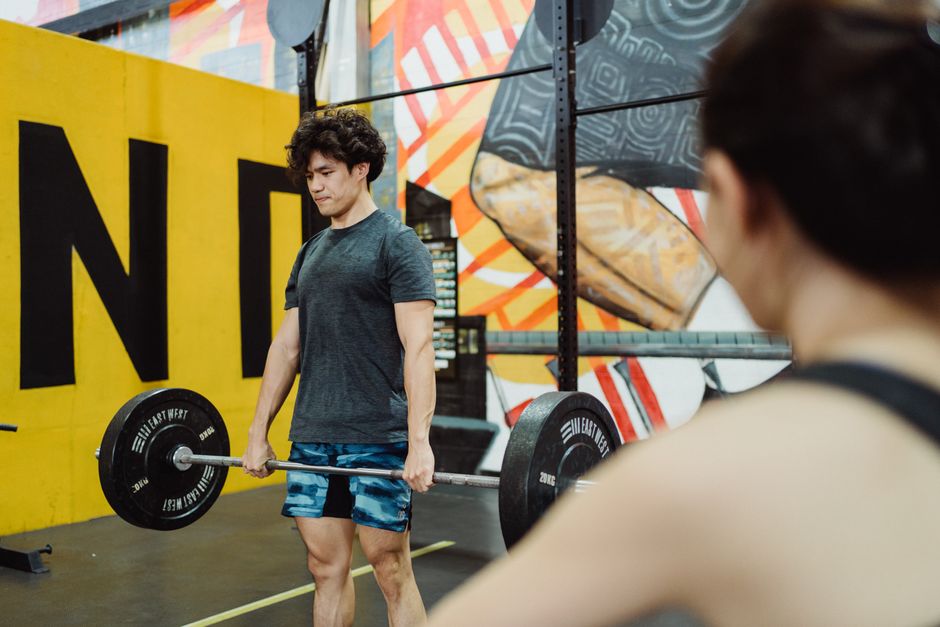
Loading a deadlift bar safely comes down to three things: keep the bar on a stable surface, keep your spine out of flexion as you handle the plates, and load both sides evenly before you lift. The most common mistake is bending over the bar to slide plates on, which loads the lower back in the exact position deadlifting is meant to train you out of. A few simple habits remove most of the risk.
Why Does Bar Loading Cause Injuries?
Most loading injuries are back strains, not dramatic accidents. They happen because people round their spine and twist while holding a plate away from their body. That combination — flexion plus rotation under load — is a well-established mechanism for lumbar injury.
The plates themselves are heavy. A standard 45-pound plate held out at arm’s length puts far more strain on the spine than the same plate held close to your chest. The further a weight sits from your body, the harder your back muscles have to work to hold it. That is basic leverage, and it applies whether you are lifting a barbell or a dinner plate.
There is a second, less obvious risk: the bar itself. An unloaded barbell sitting on the floor can roll. If you are straddling it or stepping over it while carrying a plate, a rolling bar can take your feet out from under you. Loading with the bar in a stable position removes that problem entirely.
What Equipment Makes Loading Safer?
A bar jack is the single most useful tool for deadlift loading. It lifts the end of the bar a few inches off the floor so you can slide plates on without bending to floor level. Many gyms have one near the deadlift platform. If yours does not, a pair of small bumper plates or a folded mat under the bar end can raise it slightly.
A plate tree or vertical plate storage keeps weights off the floor, so you are not bending to pick each plate up. That matters more than most people realize — the lift from the floor to standing is where your spine is most vulnerable, and doing it repeatedly while fatigued adds up.
If you train at home, a deadlift jack is inexpensive and worth owning. So is a mat or platform that keeps the bar from rolling.
How Do You Load a Deadlift Bar Step by Step?
Start with the bar centered on your platform and the collars off. Load one side at a time, and keep your feet clear of the bar’s path.
- Stand close to the bar end, feet shoulder-width apart, and hinge at the hips — not the waist — to reach the sleeve.
- Slide the plate on with both hands, keeping it close to your legs rather than out in front.
- Add plates largest to smallest so the stack sits flush against the collar.
- Load the same weight on the other side before you lift. An unevenly loaded bar can tip.
- Secure the collars once both sides are loaded.
The hinge is the key skill. Push your hips back, keep your chest up, and let your knees bend slightly. Your back stays flat. If you cannot reach the sleeve without rounding your spine, raise the bar with a jack first.
For heavy sets, load in stages. Put the first plate on, then step back, reset your position, and add the next. Rushing to stack several plates in one motion is where form breaks down.
How Should You Handle the Plates Themselves?
Carry plates close to your body, at roughly waist height, with both hands. A plate hugged against your torso is far easier on your back than one held at arm’s length.
When you pick a plate up from the floor, use the same hinge you use to reach the bar. Keep your back flat, drive through your legs, and stand up with the plate close to you. Do not twist to reach a plate off to one side — turn your whole body instead.
Large plates have handles or cutouts for a reason. Use them. A grip that slips mid-carry is how plates get dropped on feet.
What Are the Most Common Loading Mistakes?
Bending at the waist to reach the bar is the big one. It feels quick, so people do it without thinking, especially on the last plate of a heavy set when they are tired.
Loading one side fully before the other is another. A bar with 200 pounds on one end and nothing on the other can flip when you lift it. Load evenly, and if you must load one side at a time, keep the unloaded end weighted down or use a jack.
Dropping plates onto the sleeve from height is a third. It damages the bar and the plates, and a bouncing plate can catch a finger. Set plates down, do not drop them.
Finally, loading while the bar is on a rack or blocks at an awkward height forces you into a bad position. Match the loading height to your body, not the other way around.
Does Loading Differ for Home Gyms and Competition?
In competition, loaders work in pairs and follow strict rules for even loading and collar placement. That is a specialized skill with its own standards, and it is not what most lifters need to worry about.
At home, the main difference is that you may not have a jack or a plate tree. A few workarounds help. Store plates on a low rack rather than the floor. Use a jack or a stack of mats to raise the bar end. Keep the loading area clear so you are not stepping over equipment while carrying weight.
If you train alone, never load a bar you cannot safely unload. A failed lift with no spotters is a separate risk from loading, but the two connect — a bar you can set down safely is a bar you can load with confidence.
How Does Loading Fit Into Your Warm-Up?
Loading is physical work, and it counts toward your warm-up. On a heavy deadlift day, the act of handling plates raises your heart rate and loads your spine before your first working set.
That is not a problem if you load with good form. It becomes one if you rush through loading with a cold, stiff back. A few minutes of easy movement — hip hinges, light carries — before you touch the plates makes the handling safer and easier.
Treat the first few plates as a chance to rehearse your hinge. The position you use to pick up a plate is close to the position you use to start a deadlift. Loading well is practice for lifting well.
Frequently Asked Questions
Should I use a bar jack to load a deadlift bar?
Yes, a bar jack is the safest and most efficient way to load a deadlift bar. It raises the sleeve off the floor so you can slide plates on without bending to ground level.
Is it safe to load a barbell with weight on only one side?
Only if the unloaded end is secured or the bar is on a jack. A bar with heavy plates on one side and nothing on the other can tip when you lift it.
How do I protect my back while loading plates?
Hinge at the hips with a flat back, keep plates close to your body, and avoid twisting. If you cannot reach the bar without rounding your spine, raise the bar first.
Do I need collars when loading a deadlift bar?
Collars keep plates from sliding and are standard practice once both sides are loaded. They are especially important when the bar is unevenly loaded or when plates fit loosely on the sleeve.
