
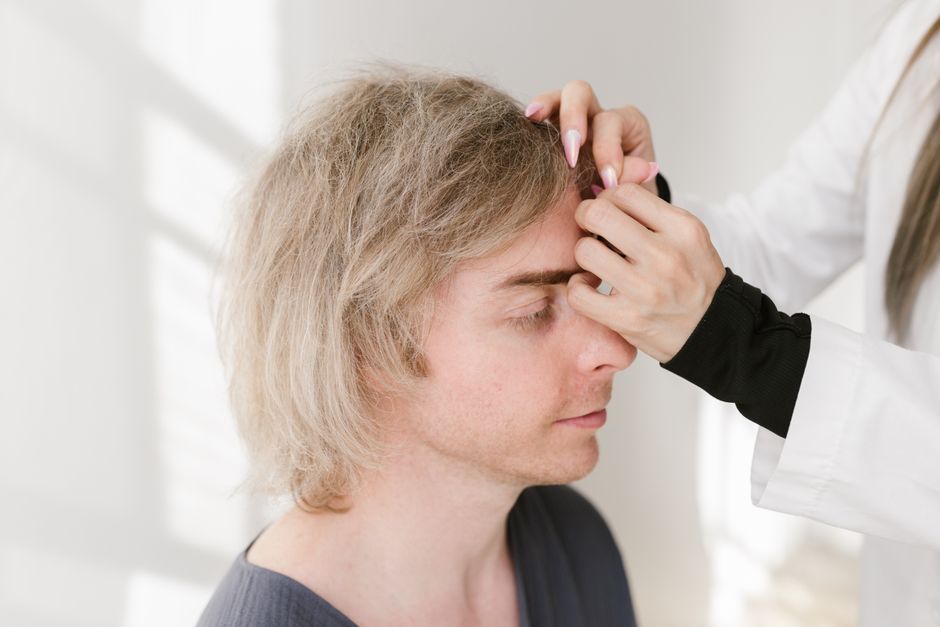
A dark forehead against a lighter face is a common skin concern, and it is usually harmless. The cause is often a specific type of hyperpigmentation triggered by sun exposure, friction, or hormonal changes. Lightening the area is possible, but the right fix depends entirely on getting the cause right, so starting with an accurate skin assessment is the most important step.
What Causes A Dark Forehead?
Several distinct conditions can cause the forehead to appear darker than the rest of the face. The most common is a form of melasma known as malar melasma, which spreads across the cheeks, nose, and forehead. It is heavily influenced by hormones and ultraviolet (UV) light exposure, which is why it often worsens during pregnancy or with birth control use.
Another frequent culprit is post-inflammatory hyperpigmentation (PIH). This occurs after the skin has been irritated or inflamed, often from picking at spots, harsh scrubs, or certain cosmetic procedures. The forehead is a common site for this because it is frequently exposed to the elements and touched throughout the day.
Friction alone can darken the skin. A tight headband, a cap worn for long periods, or even resting your forehead on your hands can cause a type of hyperpigmentation called friction melanosis. The repeated rubbing stimulates melanocytes, the cells that produce pigment, leading to a darker patch.
In rare cases, a dark forehead can signal a systemic issue, such as a vitamin B12 deficiency or a hormonal disorder. If the darkening is accompanied by fatigue, weight changes, or other skin patches in unusual places, a medical evaluation is warranted to rule out an underlying condition.
Why Is The Forehead So Prone To Darkening?
The skin on the forehead is thicker than on other parts of the face and has a high density of melanocytes. It also receives a significant amount of direct sunlight—more than the cheeks or chin—because it is the most forward-facing part of the body. Chronic UV exposure is the primary driver of pigment production in this area.
Heat is an underappreciated factor. Research has shown that infrared radiation and heat from the sun can activate melanocytes even without visible sunburn. This is why hyperpigmentation often persists in people who diligently use sunscreen but spend time in hot environments or use saunas. The heat itself triggers pigment production.
Hormonal fluctuations compound the issue. Estrogen and progesterone can sensitize melanocytes, making them hyper-responsive to UV light. This is why melasma is sometimes called the “mask of pregnancy” and why it frequently appears on the forehead in women in their 30s and 40s.
How To Lighten A Dark Forehead Causes And Fixes
The first and most critical fix is rigorous sun protection. Without it, no topical treatment will work effectively. This means applying a broad-spectrum sunscreen with an SPF of 30 or higher every morning, even on cloudy days, and reapplying every two hours if you are outdoors. Sunscreen is the foundation of every hyperpigmentation treatment plan.
For topical lightening, hydroquinone is considered the gold standard by dermatologists. It works by inhibiting tyrosinase, an enzyme essential for melanin production. It is available over-the-counter in 2% concentrations and by prescription in higher strengths. It is highly effective but must be used under medical supervision to avoid side effects like ochronosis, a bluish-darkening of the skin that can occur with prolonged unsupervised use.
Alternatives to hydroquinone include azelaic acid, kojic acid, and tranexamic acid. These are often used in combination with other agents to improve efficacy and reduce irritation. A common dermatologist-recommended formula combines a retinoid, a corticosteroid, and hydroquinone, known as a triple combination cream. This is potent and should only be used under a doctor’s care.
Chemical peels are an effective in-office option. Glycolic acid peels, typically in concentrations of 20% to 70%, exfoliate the top layers of skin to remove pigmented cells. A series of peels is usually required, spaced several weeks apart, to achieve noticeable results. They are most effective for PIH and less effective for melasma, which tends to be deeper.
Laser and light therapies, such as intense pulsed light (IPL) or Q-switched lasers, target melanin directly. These can be effective but carry a risk of paradoxical darkening, especially in darker skin tones. If you are considering laser treatment, it is essential to see a dermatologist experienced in treating pigmentation in your skin type.





Home Remedies: What Works And What Does Not
Natural ingredients have gained popularity for skin lightening, but the evidence for most is thin. Vitamin C (L-ascorbic acid) is the exception. It is a well-studied antioxidant that inhibits melanin production and is stable enough for home use. A 10% to 20% concentration applied in the morning under sunscreen has demonstrated efficacy in clinical trials.
Licorice extract, which contains glabridin, has some research support for lightening pigmentation. It works by a different mechanism than hydroquinone, making it a gentler alternative for sensitive skin. However, the concentrations in commercial products vary widely, and results are typically slower than with prescription agents.
Lemon juice is a viral home remedy that should be avoided. It is highly acidic and can cause chemical burns and severe irritation, which paradoxically leads to more hyperpigmentation. The same applies to undiluted apple cider vinegar. These are not safe or effective lightening agents.
Aloe vera and green tea extracts have mild anti-inflammatory properties that may help soothe skin, but no clinical evidence supports their use as standalone lightening agents. They may be useful as adjuncts in a broader skincare routine, but they are not substitutes for proven treatments.
When To See A Dermatologist
If over-the-counter products have not produced visible improvement after 8 to 12 weeks of consistent use, a dermatologist should evaluate the area. Persistent hyperpigmentation can be a sign of a more resistant condition, such as dermal melasma, where pigment sits deep in the skin and does not respond to topical agents.
Any dark patch that changes shape, bleeds, or becomes itchy or painful requires immediate medical attention. While most forehead pigmentation is benign, a changing lesion must be evaluated to rule out skin cancer, including melanoma. A biopsy is the only way to confirm a diagnosis.
A dermatologist can also identify whether the darkening is caused by a condition like erythema dyschromicum perstans, a rare skin disorder that produces gray-blue patches, or acanthosis nigricans, which is associated with insulin resistance and appears as velvety dark skin. These require different treatments entirely.
How Long Does It Take To See Results?
Skin cell turnover takes roughly 28 days in young adults and slows with age. Most topical treatments require at least one full cycle of cell turnover, meaning 4 to 6 weeks, before any visible change occurs. Significant lightening typically requires 8 to 12 weeks of consistent use.
Melasma is notably stubborn. Even with prescription treatments, complete clearance is rare, and the condition often recurs with sun exposure or hormonal changes. Maintenance therapy with sunscreen and a lighter topical agent is usually necessary to sustain results.
PIH from acne or injury generally responds faster than melasma because the pigment is closer to the skin’s surface. With consistent treatment, most cases of PIH resolve within 3 to 6 months, though deeper cases in darker skin tones can take up to a year.
Frequently Asked Questions
Can a dark forehead be a sign of a serious medical condition?
Most cases are benign hyperpigmentation from sun or hormones. However, if the area is changing shape, bleeding, or accompanied by other symptoms like fatigue or weight loss, see a doctor to rule out systemic conditions or skin cancer.
Is it safe to use hydroquinone on the forehead?
Yes, when used as directed under medical supervision. Over-the-counter 2% is safe for short-term use, but higher strengths require a prescription, and prolonged use without a doctor’s oversight carries risks of side effects.
Will sunscreen alone lighten a dark forehead?
Sunscreen prevents further darkening but does not lighten existing pigment. It is essential to combine sun protection with an active lightening agent to see visible improvement.
Why does my forehead stay dark even when I avoid the sun?
Heat, friction from headwear, and hormonal fluctuations can trigger pigment production independently of UV light. If you are staying out of the sun but still seeing darkening, consider these other triggers.
