
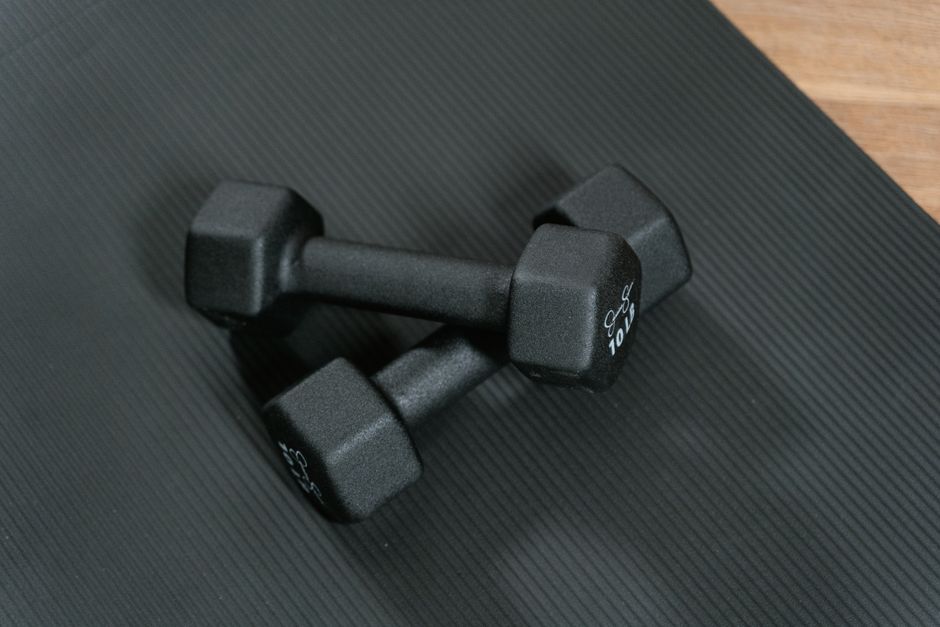
Lifting weights to lose weight works best when you build muscle, challenge your body over time, and pair training with a modest calorie deficit. The goal is not to burn as many calories as possible in a single session. The goal is to keep muscle while you lose fat, because muscle keeps your resting metabolism higher and makes your body look firmer as the scale drops.
How To Lift Weights To Lose Weight Effectively?
There is no single perfect routine. What matters is that you train your whole body, use enough resistance to challenge your muscles, and do it consistently for months, not days.
Most people get good results with two to four full-body sessions per week. Each session should hit the major muscle groups: legs, hips, back, chest, shoulders, arms, and core. Compound movements like squats, deadlifts, lunges, presses, and rows work several muscle groups at once and give you more return for your time.
Choose a weight that feels hard by the last two or three repetitions of a set. If you could easily do ten more reps, the weight is too light. If your form breaks down before you finish the set, it is too heavy. Aim for roughly 8 to 15 repetitions per set for most exercises. This range builds muscle and strength when you push close to your limit.
Rest about 60 to 90 seconds between sets for most exercises. Longer rest, closer to two to three minutes, can help you handle heavier loads on big compound lifts. Both approaches work. Shorter rest may raise your heart rate more during the session, but the total calories burned during a workout are usually smaller than people expect.
That last point matters. A hard 45-minute weight session might burn a few hundred calories. A sandwich can erase that in five minutes. This is why lifting alone rarely produces large weight loss. Training builds and protects muscle. Your eating habits drive the fat loss.
Why Does Building Muscle Help You Lose Weight?
Muscle burns more calories at rest than fat does. That difference is real but often overstated in fitness marketing.
Research on resting metabolic rate shows that each pound of muscle burns only a modest number of extra calories per day compared with a pound of fat. The bigger effect comes from what happens to your metabolism when you lose weight. When you cut calories without resistance training, a meaningful share of the weight you lose can come from muscle. That loss lowers your resting metabolism over time, which makes further fat loss harder and weight regain more likely.
Lifting weights signals your body to hold onto muscle while you are in a calorie deficit. That signal helps preserve the tissue that keeps your metabolism from sliding. It also means more of the weight you lose comes from fat, which is what you actually want.
There is a second effect that is easy to overlook. After a challenging weight session, your body uses extra energy for hours to repair muscle tissue. This is sometimes called excess post-exercise oxygen consumption, or EPOC. The added burn is real, but for most people it is small, often only a fraction of the calories burned during the workout itself. It is not a reason to skip cardio or ignore your diet. It is a small bonus.
One more point worth stating plainly. Muscle is denser than fat. If you lose fat and gain muscle at the same time, the scale may barely move even while your clothes fit better and your waist shrinks. Body weight alone is a poor measure of progress during a lifting program.
How Much Should You Eat While Lifting to Lose Weight?
Weight loss requires a calorie deficit. There is no way around that, and no training program changes it.
A moderate deficit works better than an aggressive one for people who lift. A deficit that is too large speeds up muscle loss, drains your energy for training, and is hard to sustain. A common approach is to eat roughly 300 to 500 calories below your maintenance level per day. This tends to produce steady fat loss without wrecking your workouts.
Protein deserves special attention. Research consistently shows that higher protein intake helps preserve muscle during weight loss and keeps you fuller. A frequently cited target in the sports nutrition literature is roughly 1.6 to 2.2 grams of protein per kilogram of body weight per day for people doing resistance training. For a 180-pound (about 82 kg) person, that is roughly 130 to 180 grams per day. Individual needs vary with age, health status, and kidney function. People with kidney disease should talk to their doctor before raising protein intake.
Carbohydrates fuel hard training. Cutting them very low can work for some people, but it often makes heavy lifting feel harder. Fat supports hormones and helps you absorb certain vitamins. A diet built around lean protein, vegetables, fruit, whole grains, and healthy fats covers the bases for most people.
Do not try to out-train a poor diet. A single fast-food meal can contain more calories than an entire workout burns. Training and nutrition have to work together.





Should You Do Cardio With Weights to Lose Weight?
Cardio is not required for weight loss, but it can help. It burns extra calories and supports heart and lung health, which matters for everyone.
The main risk with adding cardio is recovery. Too much cardio can leave you too tired to lift with real effort, and it can eat into the muscle you are trying to keep. If you add cardio, keep it moderate. Two or three sessions of 20 to 30 minutes per week is a reasonable starting point for many people. Walking, cycling, swimming, and using a rowing or elliptical machine all work.
Order matters less than people think. Some evidence suggests doing cardio after lifting, or on separate days, may preserve strength and muscle better than doing long cardio first. But the difference is small. The best plan is the one you will actually follow.
If your main goal is fat loss, lifting should usually be the priority. Cardio is a helpful addition, not a replacement.
How Often Should You Increase the Weight?
Progressive overload is the principle that makes lifting work. It means gradually asking your muscles to do more over time, whether by adding weight, adding reps, or adding sets.
You do not need to add weight every session. Muscle and strength gains come from consistent effort over weeks and months, not from constant increases. A practical approach is to add a small amount of weight, often 2.5 to 5 pounds, once you can complete all your sets at the top of your rep range with good form. If you cannot add weight, adding a rep or a set is a valid way to progress.
Expect slow progress. Noticeable changes in strength often take several weeks. Visible changes in body composition usually take longer, often two to three months of consistent training and eating well. This timeline varies widely between people based on starting point, age, genetics, sleep, stress, and diet.
Sleep and stress are not optional details. Poor sleep raises appetite hormones and makes it harder to recover from training. Chronic stress can do the same. Neither is a shortcut around calories, but both affect how well your plan works.
What Mistakes Keep People From Losing Weight With Weights?
Several common errors slow progress or stop it completely.
- Lifting too light. If a set feels easy, your muscles have little reason to adapt. Push close to your limit on the last few reps.
- Skipping the calorie deficit. Training builds muscle, but fat loss comes from eating fewer calories than you burn.
- Doing only cardio. Cardio burns calories but does little to protect muscle during weight loss.
- Changing programs constantly. Progress comes from repeating the same basic movements and adding weight over time, not from novelty.
- Ignoring recovery. Muscles grow during rest, not during the workout. Sleep and rest days matter.
- Judging progress by the scale alone. Use a tape measure, how your clothes fit, and photos alongside the scale.
One non-obvious point: soreness is not a reliable sign of a good workout. You can build muscle and strength with little soreness, and you can be very sore after a session that did little for your long-term progress. Track your lifts and how your body changes over weeks, not how you feel the day after.
Frequently Asked Questions
How many days a week should I lift weights to lose weight?
Two to four full-body sessions per week is enough for most people to build and preserve muscle while losing fat. More frequent training can work, but only if you can recover from it.
Will lifting weights make me bulky instead of lean?
No, not in a calorie deficit. Building large amounts of muscle takes years of heavy training and surplus eating, and losing fat while lifting typically makes you look leaner and firmer, not bulky.
Can I lose weight with weights alone without changing my diet?
Usually not much. Weight training protects muscle, but fat loss requires a calorie deficit, so without changing how you eat, the scale often stays about the same.
How long until I see results from lifting weights?
Strength gains often show up within a few weeks, while visible body changes usually take two to three months of consistent training and eating well. Individual timelines vary widely.
