
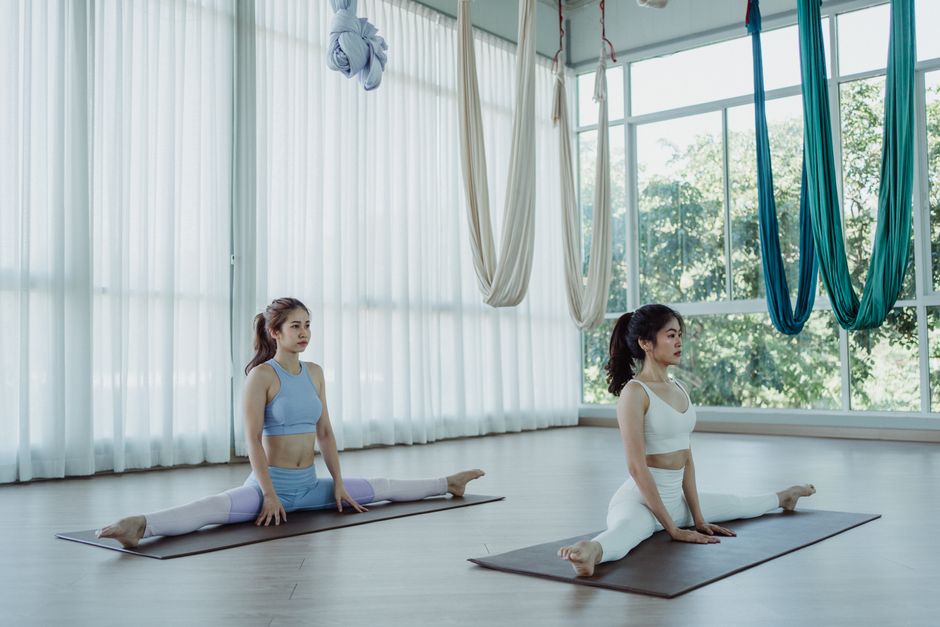
Learning to do the splits is a gradual process of increasing flexibility in your hamstrings, hip flexors, and inner thighs. The safest approach involves daily stretching with a focus on consistent, gentle pressure rather than forcing your body into a deep position quickly. You can expect noticeable progress over several weeks or months, depending on your starting flexibility, but rushing the process is the fastest way to get injured.
How To Learn To Do The Splits? Step by Step
The most reliable method is to practice two main positions: the front split and the middle split. Most people find one easier than the other based on their natural hip structure. For a front split, one leg extends forward and the other extends backward. For a middle split, both legs extend out to your sides.
Begin every session with a light warm-up. Stretching cold muscles increases your risk of strains. Walk briskly for five minutes or do jumping jacks until you break a light sweat. Warm muscles are more pliable and respond better to stretching.
What Is the Difference Between Front and Middle Splits?
Front splits target different muscle groups than middle splits. Understanding this helps you choose where to focus your training.
Front splits primarily lengthen the hamstring of the front leg and the hip flexor of the back leg. The hamstring runs along the back of your thigh, and the hip flexor sits at the front of your hip. Tightness in either muscle will limit your depth.
Middle splits focus on the adductors, or inner thigh muscles, along with the groin. This position requires a different range of motion at the hip joint. Some people have hip bone structures that allow a flat middle split more easily, while others find front splits more accessible.
Try both positions gently to see which feels more natural. Train both, but you can spend more time on the position that matches your goal. Many people aim for the front split first because it requires less extreme hip rotation.
What Are the Key Stretches for Front Splits?
Three stretches build the flexibility needed for a front split. Practice each one after your warm-up. Hold each stretch for 20 to 30 seconds and repeat two to three times per side.
Low lunge stretch: Start in a kneeling position. Step one foot forward so your knee is bent at a 90-degree angle. Your back knee stays on the floor. Gently shift your hips forward until you feel a stretch in the front of your back thigh. Keep your torso upright.
Hamstring stretch: Sit on the floor with one leg extended straight. Bend the other leg so the sole of your foot touches the inner thigh of your extended leg. Reach toward your toes while keeping your back straight. Stop when you feel a pull in the back of your extended leg.
Half split: From the low lunge position, straighten your front leg and shift your hips backward. Your back knee remains on the floor. Reach toward your front foot while keeping your hips square. This combines hamstring and hip flexor stretching in one movement.





What Are the Key Stretches for Middle Splits?
Middle splits require a different set of preparation stretches. These target your inner thighs and groin area.
Butterfly stretch: Sit on the floor and bring the soles of your feet together. Let your knees fall outward toward the floor. Hold your feet with your hands and gently press your knees down. Keep your back straight and avoid bouncing.
Frog pose: Start on your hands and knees. Slide your knees outward as far as comfortable while keeping your ankles aligned with your knees. Your feet should point outward. Gently shift your hips backward toward your heels. This deeply stretches the inner thighs.
Wide-legged forward fold: Stand with your feet wider than shoulder-width apart. Keep your legs straight and hinge at your hips to fold forward. Let your hands touch the floor if possible. This stretches the inner thighs and hamstrings together.
How Often Should You Practice?
Consistency matters more than intensity. Stretching for 15 to 20 minutes daily produces better results than a single long session once per week. Daily practice keeps your muscles in a lengthened state and prevents them from tightening back up between sessions.
Listen to your body. A mild pulling sensation is normal and indicates you are working at an appropriate intensity. Sharp pain, especially in the joint or deep in the muscle, is a sign to stop. Pain signals tissue strain, not productive stretching.
Rest days are still important. You can stretch lightly every day, but take a full rest day once or twice per week if you feel sore. Muscle recovery is part of the flexibility-building process.
What Mistakes Prevent Progress?
Several common errors slow progress or cause injury. Avoid these to stay on track.
Bouncing: Ballistic or bouncing movements can cause microscopic tears in muscle fibers. Use slow, controlled movements instead. Hold your stretch at a point of mild tension, not pain.
Skipping the warm-up: Cold muscles resist lengthening and tear more easily. A five-minute warm-up is not optional. It prepares your muscles for the demands of deep stretching.
Rounding your back: Many people round their spine to reach further in a stretch. This shifts the work away from the target muscles and can strain your lower back. Keep your spine long and hinge from your hips.
Comparing yourself to others: Flexibility varies significantly between individuals based on genetics, joint structure, and injury history. Some people achieve splits in weeks. Others need months or years. Your timeline is unique.
How Long Does It Take to Learn the Splits?
There is no fixed timeline that applies to everyone. Beginners who stretch consistently may see significant progress in 4 to 12 weeks. People who are already flexible might achieve a full split in a shorter period. Those starting with tight hamstrings or hip flexors may need six months or longer.
Age also plays a role. Younger bodies tend to respond to stretching faster because connective tissue is more elastic. That said, adults in their 40s, 50s, and beyond can still learn the splits with consistent practice. Progress just may take longer.
Focus on gradual improvement rather than a deadline. Celebrate small milestones, like touching your toes or lowering your hips by another inch. These markers show your body is adapting.
What Are the Risks and How Do You Avoid Injury?
The main risk of split training is muscle strain, particularly in the hamstring or groin. These injuries happen when you push beyond your current range of motion too quickly. A mild strain may heal in days, but a severe tear can take months and require medical attention.
Warm up thoroughly before every session. Never stretch through sharp pain. If you feel a sudden pop or tearing sensation, stop immediately and rest. Apply ice to reduce inflammation and consult a healthcare professional if pain persists.
People with a history of groin or hamstring injuries should be especially careful. Scar tissue can limit flexibility and increase injury risk. Consider working with a physical therapist if you have had repeated strains in these areas.
Can You Learn the Splits at Any Age?
Yes, but expectations should be realistic. A 20-year-old and a 55-year-old will not progress at the same rate. Connective tissue naturally stiffens with age, and older adults may need more time to see results.
That said, age alone does not prevent you from learning the splits. Consistent, patient stretching improves flexibility at any age. The key is adapting your intensity and expectations to your body’s current state.
If you have osteoporosis, joint replacements, or chronic joint pain, consult your doctor before starting a split training program. These conditions may require modified approaches or make splits inadvisable entirely.
Frequently Asked Questions
How long should I hold each stretch for the splits?
Hold each stretch for 20 to 30 seconds and repeat two to three times per side. Longer holds of 60 seconds can be added once you are comfortable with the basic routine.
Is it better to stretch in the morning or evening?
Evening stretching often feels easier because your muscles have been active all day and are warmer. Morning stretching is fine after a warm-up, but your muscles may feel stiffer early in the day.
Can I learn the splits without a warm-up?
You should not attempt deep stretches without warming up first. Cold muscles are less elastic and more prone to strains. A five-minute light cardio warm-up is the minimum preparation needed.
What should I do if I feel pain while stretching?
Stop immediately if you feel sharp or joint pain. Mild muscle tension is normal, but sharp pain signals potential injury. Rest the area and ease back into stretching only when pain subsides.
