
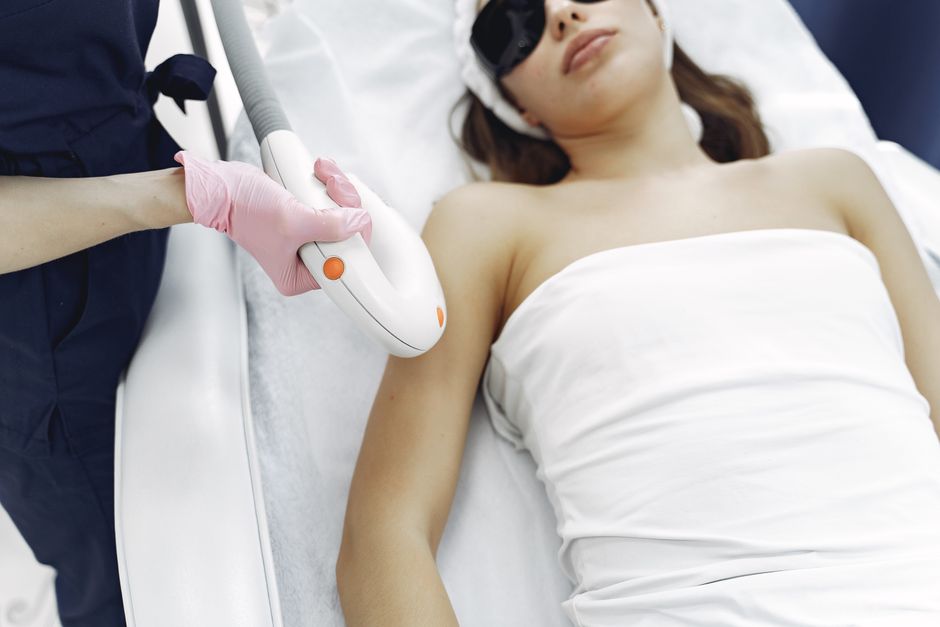
Learning laser hair removal is a structured process. You need formal training, hands-on practice, and a state license or certification to work legally. The fastest path involves completing an accredited course, passing a written and practical exam, and meeting your state’s specific requirements for medical or cosmetic laser operation.
What Does Laser Hair Removal Training Actually Cover?
Training programs teach you the science and the safety behind the laser. You will learn about skin anatomy, hair growth cycles, and how light energy targets melanin in the hair follicle.
Most courses cover laser physics, different wavelengths, and how to match settings to skin type. You also learn about cooling methods, pain management, and what to do if a client has a reaction. This is not just about pointing a machine at skin. It is about understanding why certain settings work and why others cause burns.
Good programs include a practical component. You need to operate a real laser on a live model under supervision. This hands-on time is where you build confidence and learn how the machine feels in your hand. Some states require a minimum number of supervised treatments before you can apply for a license.
How To Learn Laser Hair Removal And Get Certified: The Step-by-Step Path
The process has clear steps. Each one builds on the last. Skipping steps creates gaps in your knowledge and can put clients at risk.
- Research your state requirements first. Laser regulations vary widely. Some states require a medical license. Others allow estheticians to operate lasers after a short course. A few states have no formal requirement at all. Check with your state’s health board before you pay for any training.
- Choose an accredited training program. Look for schools approved by the state or by a national body like the National Council on Laser Excellence. Avoid weekend-only courses that offer no hands-on time.
- Complete the didactic portion. This is the classroom work. It covers theory, safety, and physics. Expect 20 to 40 hours of instruction for basic certification.
- Complete supervised clinical hours. You need to treat real clients under an instructor’s eye. Most states require between 10 and 50 supervised treatments.
- Pass your written exam. The exam tests your knowledge of safety, physics, and skin reactions. You must score high enough to prove you can work independently.
- Pass your practical exam. An evaluator watches you perform a treatment. They check your consultation, your machine settings, and your technique.
- Apply for your license or certification. Submit your proof of training, exam scores, and fees to your state board.
This entire process usually takes two to four months. It depends on how quickly you complete the clinical hours and how often classes are offered.
What Qualifications Do You Need Before You Start?
You do not need a medical degree to become a laser technician. But you do need a baseline education in skin health.
Most states require you to already hold an esthetician or cosmetology license. This ensures you understand basic skin anatomy, sanitation, and client consultation. Some states allow nurses, physician assistants, and doctors to operate lasers with just a short additional course because their medical training already covers skin physiology.
If you have no background in skin care, you have two options. You can complete a full esthetician program first. That takes about six months to a year. Or you can look for states that allow laser-only certification for people with a high school diploma. These states are fewer, but they exist.
High school diploma or GED is the minimum education requirement everywhere. Math and science courses help, but they are not mandatory prerequisites.





How Much Does Laser Certification Cost?
Costs vary significantly by program and location. A basic certification course runs from $1,500 to $5,000. This usually includes the didactic training, a textbook, and some clinical hours.
If you need to add clinical hours beyond what the course includes, expect to pay extra. Supervised hours typically cost $100 to $300 per day. Some schools bundle a set number of hours into the tuition.
You also need to budget for your esthetician license if you do not have one. That program costs another $5,000 to $15,000 depending on the school and your state. Then there are exam fees, which usually run $100 to $300, and your state license application fee, which is typically $50 to $200.
The total investment ranges from $2,000 to $20,000. The wide range reflects how different your starting point can be.
State Licensing Requirements You Need To Know
There is no national laser license in the United States. Each state writes its own rules. This is the most confusing part of the process for many people.
Some states, like Texas and Florida, require a medical director to oversee laser operations. You cannot own or operate a laser without a physician’s supervision. Other states, like Ohio and Michigan, allow licensed estheticians to operate lasers independently after completing a state-approved course.
A few states have no specific laser regulations at all. That does not mean you can skip training. It means you are legally responsible for your own competence. If you injure a client, the lack of a licensing requirement will not protect you in court. Insurance companies also require proof of training before they will cover you.
Your best move is to contact your state’s department of health or board of cosmetology directly. Ask them specifically what credentials you need to operate a laser for hair removal. Get the answer in writing.
How Long Does Certification Take Compared To Other Esthetic Careers?
Laser certification is one of the faster specialty credentials in the esthetics field. A basic esthetician license takes 260 to 600 hours of training, which spans six months to a year. Laser certification adds another 20 to 60 hours on top of that.
Compare that to becoming a registered nurse, which takes two to four years, or a physician assistant, which takes two to three years after a bachelor’s degree. Laser hair removal is accessible as a career change because the training is compressed.
That speed is a double-edged sword. Fast training means you can start earning quickly. But it also means you need to be disciplined about continuing education. Laser technology changes, and skin types respond differently. The best technicians take advanced courses every few years to stay current.
What Job Opportunities Exist After Certification?
Certified laser technicians work in several settings. Medical spas are the most common employer. Dermatology offices also hire laser technicians to handle hair removal while the doctor focuses on medical procedures.
Some technicians start their own businesses. This requires a business license, liability insurance, and often a medical director depending on your state. It is a bigger commitment, but the earning potential is higher.
Salon chains and franchise med spas hire entry-level technicians. These positions offer steady hours and training on specific laser platforms. The pay often starts at $15 to $25 per hour plus commission. Experienced technicians in high-demand areas can earn $50,000 to $80,000 per year.
Your income depends on your location, your skill level, and whether you work for someone else or build your own client base. Commission structures reward speed and safety. Technicians who can treat more clients per hour without causing injuries earn more.
What Are The Risks If You Practice Without Certification?
Operating a laser without proper training is dangerous. Lasers can cause second-degree burns, permanent scarring, and hyperpigmentation. These injuries happen when someone uses the wrong settings for a skin type or fails to recognize a contraindication.
There are also legal consequences. Practicing without a license where one is required is a criminal offense in most states. You could face fines, misdemeanor charges, and a permanent record that blocks future licensing.
Civil liability is another risk. If you injure a client, they can sue you personally. Without certification and insurance, you are personally responsible for medical bills, pain and suffering damages, and legal fees. These costs can easily reach six figures.
Training is not just a formality. It is the difference between a safe procedure and a harmful one.
Frequently Asked Questions
Can I become a laser technician without an esthetician license?
In some states, yes, but most require a cosmetology or esthetician license first. Check your state board’s specific regulations before enrolling in any laser course.
How long does laser hair removal certification take?
Most certification programs take two to four months to complete. This includes classroom instruction, supervised clinical hours, and passing both written and practical exams.
Is laser hair removal training worth the cost?
The training costs $1,500 to $5,000 for certification alone, and it is necessary to work legally in most states. The earning potential makes it a reasonable investment if you plan to work in the field for more than a year.
Do I need to renew my laser certification?
Most states require renewal every one to two years with continuing education credits. The exact requirements depend on your state and the certifying body you used.
