
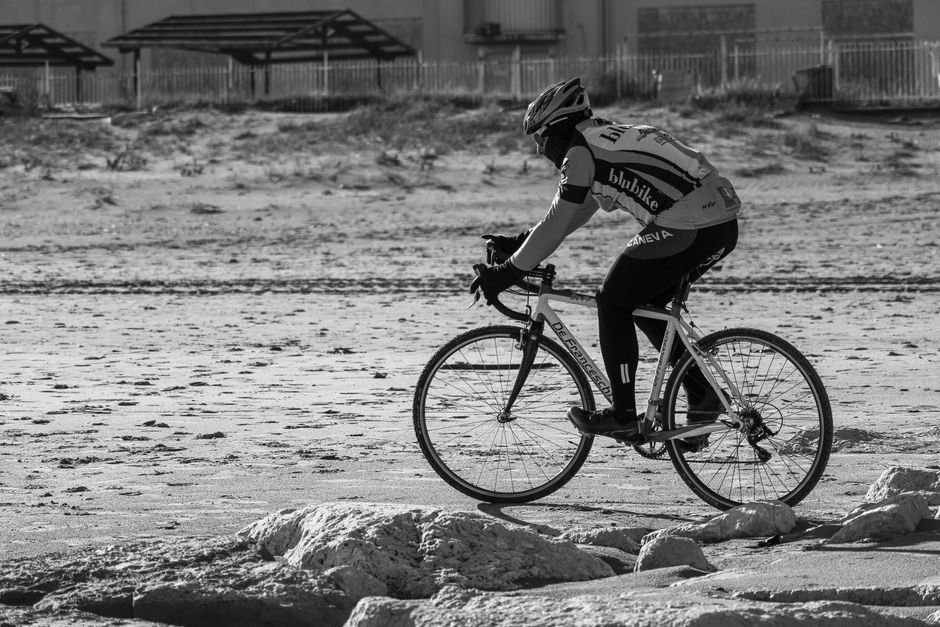
Learning to ride a bike comes down to one core skill: balance. Pedaling is the easy part once you can stay upright. The common mistake is trying to pedal before you have mastered balance. Instead, turn the bike into a balance tool first. Remove the pedals, lower the seat, and push yourself along with your feet. Glide. That is how your body learns to find the center of gravity without the distraction of spinning legs.
Why Balance Must Come Before Pedaling
Pedaling adds speed, but speed does not create balance. Balance comes from your inner ear, your eyes, and the feel of the bike leaning under you. When you pedal too early, your brain splits its attention between two hard tasks at once. You wobble, panic, and put a foot down.
When you glide with your feet off the pedals, your brain focuses on one thing only: staying upright. This is how children learn on balance bikes, and it works for adults too. The physics is simple. A moving bike stays upright because of gyroscopic forces and your own micro-corrections at the handlebar. You need to practice those micro-corrections before you add the rhythm of pedaling.
How To Learn Cycling Balance First Then Pedal: The Step-by-Step Method
Start by converting your bike into a balance bike. You need a few minutes and one tool, usually an Allen wrench or a pedal wrench.
- Remove the pedals completely. This forces your feet to stay off the rotating parts.
- Lower the seat so both feet rest flat on the ground while you are seated. Your knees will bend slightly. That is correct.
- Find a flat, open space. A parking lot or empty schoolyard works well. Avoid grass — it is too soft and slows the wheels, making balance harder.
Now walk while seated. Push with your feet like you are on a scooter. Do this for ten minutes. Then lift both feet and glide. Keep your feet hovering just above the ground, ready to catch yourself. Look ahead, not at the front wheel. Your body follows your eyes.
Once you can glide for ten seconds or more without putting a foot down, you have balance. That is the moment to put the pedals back on. Your body already knows how to stay upright. Now it only needs to learn the circular motion of pedaling.
How Gliding Teaches Your Body What Pedaling Cannot
Gliding teaches you the feel of the fall. Every rider falls slightly toward one side dozens of times per minute. The correction is subtle — a tiny turn of the front wheel toward the fall, a small shift of your hips. On a gliding bike, you feel this correction clearly because there is no pedal stroke to mask it.
You also learn speed control without brakes. When you glide too fast, you naturally straighten up. When you slow down, you feel the bike want to tip. That tipping sensation is exactly what you must learn to manage. Pedaling does not teach you this. It distracts you from it.
Another hidden benefit: gliding removes the fear of the pedal coming around and hitting your shin. That fear makes beginners tense up. Tension is the enemy of balance. A relaxed upper body lets the bike move underneath you while your center of gravity stays stable.




Common Mistakes When Learning Balance First
The biggest mistake is keeping the seat too low. Yes, you need your feet flat for the gliding phase, but once you put the pedals back on, raise the seat. A seat that is too low forces your knees to point outward, which shifts your weight awkwardly and makes balance worse. When you sit on the saddle with the pedal at the bottom of its stroke, your leg should be almost straight, with a slight bend at the knee.
Another mistake is gripping the handlebars too hard. White knuckles mean you are fighting the bike, not riding it. Hold the grips like you would hold a raw egg — firm enough not to drop it, gentle enough not to crush it.
Looking down is a third mistake. The ground moves fast when you look at it. Your brain gets dizzy signals and your balance suffers. Look 10 to 20 feet ahead. That is where you are going, not at your front tire.
Finally, do not practice on a hill. Beginners need flat ground. A slope forces you to manage speed before you have balance, which is exactly the problem you are trying to avoid.
How To Make The Transition From Gliding To Pedaling Smooth
When you reattach the pedals, do not try to ride across the parking lot immediately. Start in the gliding position with your feet on the ground. Push off, glide for three seconds, then find the pedals with your feet. Do not look down. Feel for them.
The first pedal stroke will feel strange. That is normal. Your legs are used to pushing straight down, not in circles. Focus on one full revolution. Then two. If you wobble, put your feet down and start again. There is no shame in stopping.
A useful trick is to practice with one pedal. Put only the right pedal on. Glide, place your right foot on the pedal, and push down. Your left foot stays on the ground, ready to catch you. This bridges the gap between gliding and full pedaling. Once you can push off with the right pedal and coast for a few seconds, add the left pedal and try both legs together.
Most people who master the glide phase transition to full pedaling within one session. The balance is already there. The legs just need to catch up.
What If You Still Cannot Balance After Gliding Practice?
Some people glide confidently but still wobble the moment they pedal. This is usually a gear problem. If you start pedaling in too high a gear, the bike lurches forward and you lose control. Start in a low gear. The bike should accelerate gently, not jump.
Another issue is the saddle height. Recheck it. When you pedal, your leg should extend to about 80 to 90 percent of full extension at the bottom of the stroke. If your hips rock side to side while pedaling, the seat is too high. If your knees point outward, it is too low.
If you still struggle, check your bike. A bent wheel or a loose headset makes balancing significantly harder. Spin the front wheel and watch the rim. If it wobbles, take the bike to a shop. You are not a bad learner — you may just have a bad bike setup.
Consider your own body too. Inner ear issues, recent head injuries, or even some medications can affect balance. If you have practiced correctly for several sessions with no progress, it is reasonable to check with a doctor. But for most people, the problem is simply not enough glide time. Spend another full session on gliding before you try pedaling again.
How Long Does It Take To Learn?
There is no fixed timeline because every body is different. Some people glide for twenty minutes and pedal away. Others need three or four sessions of gliding practice. The research on motor skill learning consistently shows that distributed practice — short sessions over several days — works better than one long session.
A practical schedule is 15 to 20 minutes of gliding practice per day for three to five days. By day three, most beginners can glide across a parking lot. By day five, the transition to pedaling usually takes less than ten minutes.
Age matters less than people think. Adults often learn faster than children because they understand the instruction. The barrier for adults is usually fear of falling, not physical ability. Wearing a helmet, gloves, and padded shorts reduces the consequence of a fall, which reduces the fear, which improves learning.
Frequently Asked Questions
Should I remove the pedals to learn balance?
Yes. Removing the pedals turns your bike into a balance bike, which lets you focus entirely on staying upright without the distraction of pedaling. This is the most effective way to isolate the balance skill.
Can I learn balance on a stationary bike first?
No. A stationary bike holds you upright, so it does not train the real-world balance you need on a moving bicycle. You must practice on a bike that can tip over to train your body’s balance reflexes.
How do I know when I am ready to start pedaling?
You are ready when you can glide for at least ten seconds without putting a foot down while looking ahead. That level of stability means your balance reflexes are working well enough to handle the added motion of pedaling.
Is it easier to learn on a bike with smaller wheels?
Yes, generally. Smaller wheels sit lower to the ground, which reduces the distance you fall and makes it easier to put your feet down quickly. This is why children’s bikes and some adult balance bikes use smaller wheels.
