
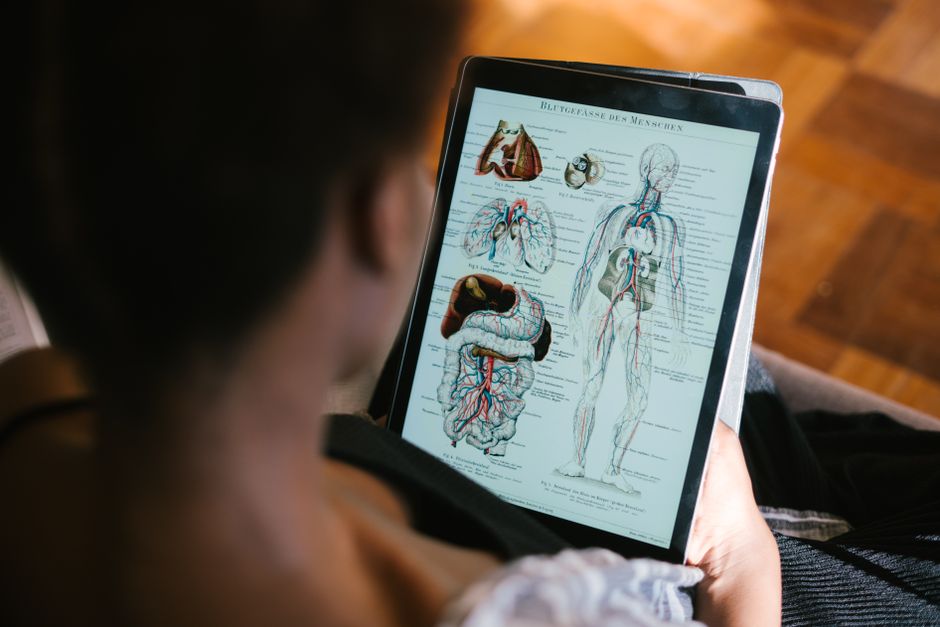
Learning biology on your own is completely possible, but it requires a structured approach rather than random reading. A solid self-study plan focuses on building a foundation of core concepts, using active recall to test yourself, and progressively moving from general principles to specific systems. You do not need a classroom, but you do need a clear roadmap, reliable resources, and a consistent schedule to make real progress.
Why Most Self-Study Attempts Fail Before You Start
Most people fail to learn biology alone not because the subject is too hard, but because they treat it like a memorization task. Biology is not a collection of facts to memorize. It is a logical system built on chemistry, physics, and evolution. If you try to memorize the names of enzymes without understanding how proteins fold, you will forget everything within a week.
Another common mistake is starting with advanced topics like neuroscience or immunology. These fields assume you already understand cell structure, genetics, and basic biochemistry. Jumping into the deep end creates confusion and frustration. A successful self-study plan moves in a deliberate order, starting with the smallest building blocks and working up to complex systems.
What Order Should You Study Biology Topics?
The correct order mirrors how the subject is taught in university programs, but you can move faster on your own. Start with general chemistry and basic biochemistry because biological molecules — proteins, carbohydrates, lipids, and nucleic acids — follow chemical rules. You need to know what an atom is, how covalent bonds form, and why water behaves the way it does before you can understand how cells work.
From there, move to cell biology. Learn the parts of the cell, what each organelle does, and how cells manage energy. This naturally leads to genetics and molecular biology, where you study DNA replication, transcription, and translation. Once you understand how cells store and use information, you can study evolution and natural selection, which explain why organisms look and behave the way they do.
Only after those foundations should you tackle physiology — how organs and organ systems function — and ecology, which examines how organisms interact with each other and their environment. This order matters because each topic builds on the previous one. You cannot understand how the kidney filters blood without first knowing about cell membranes, osmosis, and transport proteins.
Which Resources Actually Work for Independent Learners?
Your choice of resources matters more than your study time. A standard college textbook is the most reliable option because it is reviewed by experts and organized logically. Campbell Biology is the most widely used introductory textbook in university courses and is an excellent choice for self-study. It is dense, but it is accurate and comprehensive. Older editions cost significantly less and contain the same core science as newer editions.
Video lectures help with concepts that are hard to visualize, such as cellular respiration or DNA replication. The Amoeba Sisters produce short, accurate animations that explain complex topics clearly. Khan Academy offers a full biology course with practice questions and progress tracking. Both are free and appropriate for adult learners.
For practice problems, look for study guides that accompany major textbooks. The questions in these guides are written to test understanding, not just memory. Avoid relying on social media posts or random websites for factual information. Anyone can post biology content online, and much of it contains errors. Stick to textbooks, peer-reviewed sources, and established educational platforms.
How Much Time Do You Need to Study Each Day?
Consistency beats intensity. Studying for 45 minutes every day produces better results than studying for five hours once a week. Your brain consolidates information during sleep, and regular exposure helps move knowledge from short-term to long-term memory. A daily session of 45 to 90 minutes is realistic for most adults with jobs or family responsibilities.
Plan to spend roughly three to six months covering introductory biology at a self-study pace. That timeline assumes you study most days and move steadily through the material. Some people finish faster; others need longer. The pace matters less than your actual comprehension. If you cannot explain a concept in your own words without looking at notes, you have not learned it yet.
How To Learn Biology On Your Own A Self Study Plan That Works
Build your plan around active recall and spaced repetition. Active recall means testing yourself instead of rereading notes. After you read a section, close the book and write down everything you remember. Then check your work and identify gaps. This process is uncomfortable, but it is the most effective way to retain information. Research consistently shows that self-testing produces better long-term retention than passive review.
Spaced repetition means reviewing material at increasing intervals. A concept you learned today should be reviewed tomorrow, then in three days, then in a week, then in a month. Anki is a free flashcard program that automates this scheduling for you. Create your own flashcards rather than downloading someone else’s deck, because the act of writing the question and answer helps you learn it.
Here is a practical weekly structure you can adapt:
- Monday through Friday: Study one chapter or one major concept for 45 to 60 minutes.
- Saturday: Review flashcards from the entire week and take a practice quiz on the material.
- Sunday: Rest or do light review. Your brain needs time off to consolidate what you learned.
At the end of each month, take a comprehensive test covering everything you studied that month. This forces your brain to retrieve information from earlier weeks and reveals what you have forgotten. If you score poorly, go back and review those sections before moving forward.
How Do You Know If You Actually Understand the Material?
The best test of understanding is teaching. Explain a concept out loud as if you were giving a lecture. If you stumble, hesitate, or use vague words like “stuff” or “things,” you do not understand it well enough. Record yourself if that helps. This technique, called the Feynman method, exposes gaps in your knowledge quickly and honestly.
Another reliable check is answering application questions. Biology textbooks include questions at the end of each chapter that ask you to apply concepts to new situations. These are harder than simple recall questions because they require you to reason through a problem using your knowledge. If you can answer these correctly without looking at the text, you genuinely understand the material.
Do not mistake familiarity for knowledge. Recognizing a term when you read it is not the same as being able to recall it and use it correctly. This is why passive rereading feels productive but produces poor results. Testing yourself is the only honest measure of what you know.
What About Advanced Topics and Laboratory Skills?
Self-study has limits. You can learn the theory of microscopy, but you cannot gain hands-on experience without access to a laboratory. You can read about PCR and gel electrophoresis, but operating the equipment requires training. If your goal is a career in biology or medicine, you will eventually need formal laboratory coursework. Self-study is excellent preparation, but it cannot replace supervised practical training.
For advanced topics beyond introductory biology, consider open university courses. Many universities publish full lecture materials online for free, including syllabi, lecture notes, and exams. These resources give you a structured path through subjects like genetics, microbiology, or biochemistry without the cost of tuition. Search for course materials from established institutions rather than random online content.
What Mistakes Should You Avoid During Self-Study?
The biggest mistake is skipping the chemistry foundation. Biology without chemistry is like trying to read a book in a language you do not speak. You can memorize individual words, but you cannot understand the sentences. Spend the first few weeks on basic chemistry even if it feels like a detour. It is not a detour. It is the foundation everything else stands on.
Another common mistake is ignoring evolution. Evolution is the organizing principle of all biology. Every fact about anatomy, behavior, and physiology makes more sense when you understand why it evolved. Study natural selection early and return to it often as you learn about specific organisms and systems.
Finally, do not compare your pace to others. Some people grasp genetics quickly but struggle with ecology. Others are the reverse. Your goal is competence, not speed. Move at a pace that allows genuine understanding, and do not advance to a new topic until you can pass a test on the previous one.
Frequently Asked Questions
Can I learn biology completely on my own without any formal education?
Yes, you can learn the theoretical foundations of biology entirely on your own using textbooks, video lectures, and practice questions. However, laboratory skills require supervised training that self-study cannot fully provide.
How long does it take to learn biology by self-study?
Most adults need three to six months of consistent daily study to cover introductory biology. The exact timeline depends on your prior knowledge and how many hours you study each week.
What is the best textbook for learning biology independently?
Campbell Biology is the most widely recommended textbook for introductory self-study because it is accurate, comprehensive, and logically organized. Older editions are affordable and contain the same core science as current editions.
Do I need to learn chemistry before biology?
Yes, a basic understanding of chemistry is necessary before studying biology. Biological molecules, cellular processes, and energy transfer all follow chemical principles that you must understand first.
