
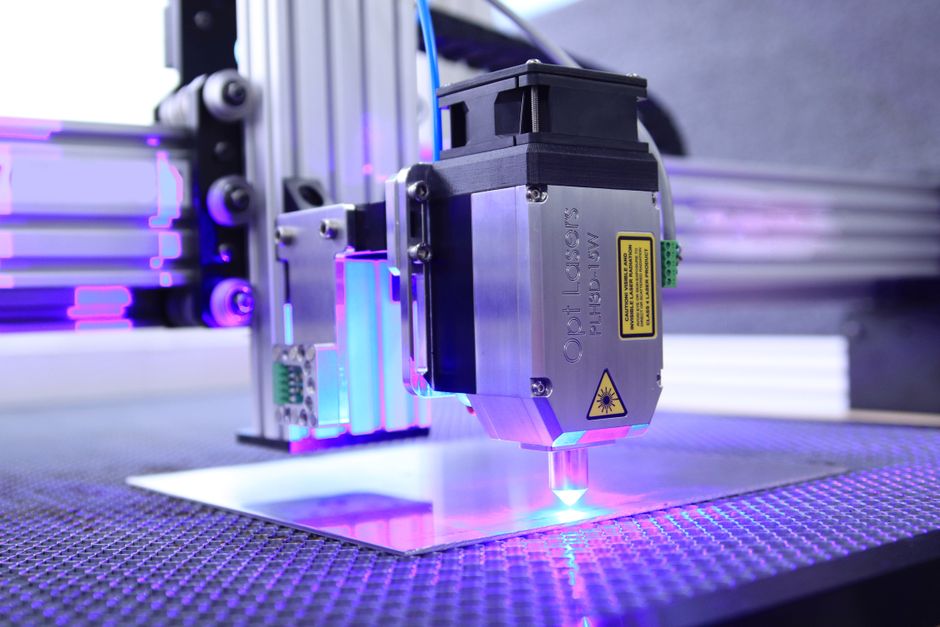
Laser cutting copper with a fiber laser is entirely possible, but it requires specific machine settings and gas choices that differ from cutting steel. Copper’s high reflectivity and thermal conductivity make it a challenging material, so you cannot simply use the same parameters as you would for mild steel. The key is using a laser with the correct wavelength, typically a fiber laser, and optimizing your focus position and assist gas.
Why Is Copper Difficult To Laser Cut?
Copper presents two main challenges to laser cutting. First, it reflects a large portion of the laser beam’s energy, especially at the infrared wavelengths most industrial lasers use. A standard CO2 laser, for example, struggles with copper because much of the beam bounces off the surface rather than being absorbed.
Fiber lasers operate at a different wavelength, around 1064 nanometers. At this wavelength, copper absorbs significantly more energy than it does with CO2 lasers. This makes fiber lasers the preferred tool for cutting copper sheet.
The second challenge is thermal conductivity. Copper conducts heat away from the cut zone very quickly. This means the laser must deliver energy faster than the copper can dissipate it to achieve a clean cut. If the power is too low, the heat spreads out and the material simply melts without vaporizing, leaving a rough edge.
What Kind Of Fiber Laser Do You Need?
Not all fiber lasers are equal when it comes to cutting copper. The laser’s power output and beam quality both matter significantly.
For thin copper sheets, around 1 to 2 millimeters thick, a 1.5 to 3 kilowatt fiber laser can produce good results. For thicker material, you will need more power. Some industrial operations use 6 kilowatt or higher fiber lasers to cut copper up to 10 millimeters thick.
Pulsed fiber lasers are sometimes used for thin copper. These deliver energy in short bursts rather than a continuous beam. This can help manage the heat input and reduce the reflective issues. However, continuous wave fiber lasers with sufficient power are more common in production environments.
One important note: the laser must have a back-reflection protection system. Copper reflects a portion of the beam back toward the laser source. Without proper protection, this reflected light can damage the laser optics or the resonator itself.
What Is The Best Assist Gas For Cutting Copper?
Assist gas does two jobs in laser cutting. It blows molten material out of the cut kerf, and it can add energy to the cut through exothermic reaction. For copper, the choice of gas matters more than for steel.
Nitrogen is the most common choice for cutting copper. It is an inert gas, meaning it does not react with the copper. This produces a clean, oxide-free cut edge. The downside is that nitrogen requires higher pressure and provides no additional cutting energy.
Oxygen can be used but it creates a copper oxide layer on the cut edge. This oxide can be difficult to remove and may require secondary processing. Oxygen also adds energy to the cut, which can help with thicker material, but the edge quality suffers.
For most applications where edge quality matters, nitrogen at high pressure is the recommended choice. The pressure typically ranges from 10 to 20 bar depending on material thickness.





What Laser Parameters Should You Use?
Cutting copper requires careful attention to several parameters. There is no universal setting that works for every machine, but the principles remain consistent.
Focus position is critical. For copper, the focal point should typically be placed slightly below the material surface. This helps direct the beam energy into the cut zone rather than reflecting off the top surface. Many operators start with the focus point at the bottom third of the material thickness.
Cutting speed must be balanced against power. If you cut too slowly, heat builds up and causes excessive melting. If you cut too fast, the beam does not fully penetrate. The optimal speed depends on your laser power and material thickness.
Pulse frequency matters when using pulsed lasers. Higher frequencies create a more continuous cut, while lower frequencies produce more distinct pulses. For copper, higher pulse frequencies generally produce smoother edges.
Nozzle diameter and standoff distance also affect cut quality. A smaller nozzle concentrates the gas flow, which helps with thin material. The standoff distance, or the gap between the nozzle and the material, typically ranges from 0.5 to 1.5 millimeters.
How Do You Prepare Copper Sheet For Cutting?
Surface condition significantly affects cut quality. Copper that is dirty, oxidized, or coated with oils will cut inconsistently.
Clean the copper surface before cutting. Remove any oils, greases, or oxidation layers. A clean surface absorbs laser energy more consistently than a contaminated one.
Consider the copper alloy. Pure copper, sometimes called electrolytic tough pitch copper, behaves differently than alloys like brass or bronze. Pure copper has the highest reflectivity and thermal conductivity, making it the hardest to cut. Copper alloys generally cut more easily.
Material flatness matters. Copper sheet that is warped or bowed can cause inconsistent focus distances across the cut path. Ensure the sheet lies flat on the cutting table.
What Are Common Problems And How Do You Fix Them?
Several issues appear regularly when cutting copper. Recognizing them early saves time and material.
Dross, or molten material that re-solidifies on the bottom edge, is the most common problem. It usually indicates insufficient gas pressure or incorrect focus position. Increasing gas pressure or adjusting the focal point downward often resolves this.
Rough cut edges suggest the parameters are not optimized. This could be from excessive power, slow cutting speed, or incorrect focus. Try reducing power slightly or increasing cutting speed.
Incomplete cuts happen when the beam does not fully penetrate the material. This points to insufficient power or a focus position that is too high. Verify the focus position first, then consider increasing power.
Burn marks on the top surface typically come from excessive heat. This is more common with oxygen assist gas. Switching to nitrogen or increasing cutting speed usually helps.
Is Fiber Laser Cutting Copper Cost-Effective?
The economics of cutting copper with a fiber laser depend on your production volume and material thickness. For small batches, the setup time and parameter testing may not justify the process. For larger production runs, fiber laser cutting is often the fastest method available.
Compared to traditional methods like waterjet cutting or stamping, laser cutting offers greater design flexibility. You can cut complex shapes without tooling costs. The tradeoff is that laser cutting produces a heat-affected zone, which may not be acceptable for all applications.
Copper prices fluctuate, and scrap loss matters. Laser cutting produces a narrow kerf, which minimizes material waste compared to some mechanical methods. This can offset the higher machine operating costs.
Frequently Asked Questions
Can a regular fiber laser cut copper?
Yes, but the laser must have sufficient power and back-reflection protection. Standard fiber lasers without this protection risk damage from reflected light.
What thickness of copper can a fiber laser cut?
With a 1.5 to 3 kilowatt fiber laser, you can cut copper up to about 2 to 3 millimeters thick. Higher power lasers, around 6 kilowatts, can handle up to 10 millimeters.
Why does my fiber laser not cut copper?
Most likely the focus position is wrong or the power is too low for the material thickness. Copper also requires nitrogen assist gas at high pressure for clean cuts.
Is oxygen or nitrogen better for cutting copper?
Nitrogen produces cleaner edges without oxide formation. Oxygen adds cutting energy but leaves a copper oxide layer that requires secondary cleaning.
