
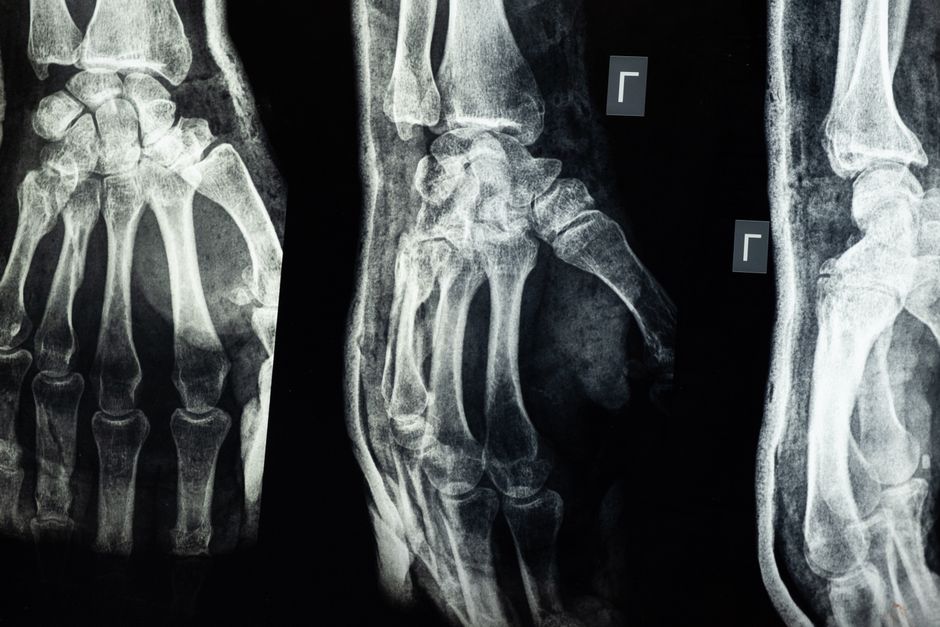
Falling onto an outstretched hand is one of the most common ways people injure a wrist, and the line between a bad sprain and a fracture is not always obvious. The most reliable way to know if you fractured your wrist is to have it examined with an X-ray, but there are clear signs you can check at home that strongly suggest a break. If you have significant pain, visible deformity, or cannot move your wrist or fingers normally, you should treat it as a fracture and seek medical care.
What Does a Wrist Fracture Feel Like?
A broken wrist usually causes immediate, sharp pain at the moment of injury. That pain often gets worse when you try to move your hand or put any weight on it. Many people describe the sensation as a deep ache that does not settle, even when the wrist is resting.
Sprains can also hurt intensely, so pain alone does not confirm a fracture. The difference often shows up in how the wrist looks and functions. Swelling can appear within minutes or build over a few hours. Bruising may develop later, sometimes spreading toward the fingers or up the forearm.
Numbness or tingling in the fingers can occur if swelling presses on nerves. This is a sign that the injury is significant and needs prompt evaluation.
The Step By Step Self-Check for a Possible Wrist Fracture
You can do a simple assessment at home before deciding whether to go to urgent care or the emergency room. This is not a substitute for an X-ray, but it helps you understand the severity of your injury.
Step 1: Look at the shape of your wrist. Compare it to your uninjured wrist. A visible bump, an odd angle, or a bone that looks out of place is a strong sign of a fracture. If the wrist looks deformed, do not try to straighten it.
Step 2: Check for swelling and bruising. Rapid swelling within the first hour is common with fractures. Bruising that appears quickly or spreads widely also points toward a break rather than a simple sprain.
Step 3: Test your range of motion. Try to move your wrist up, down, and side to side. Try to touch your thumb to each fingertip. If movement is severely limited or causes sharp pain, a fracture is more likely.
Step 4: Try a gentle grip. Squeeze a soft object like a rolled towel. If gripping causes intense pain in the wrist, especially on the thumb side, this suggests the scaphoid bone may be involved. Scaphoid fractures are notorious for appearing minor but requiring a cast.
Step 5: Press on the bony landmarks. Gently press along the two bones of the forearm where they meet the wrist. Tenderness directly over the bone, rather than over the soft tissue, increases the chance of a fracture.
If any of these steps produce severe pain, deformity, or an inability to move the wrist, seek medical evaluation. If the pain is mild and you have full range of motion, a sprain is more likely, but you should still monitor the injury over the next 24 to 48 hours.
When You Must Go to the Emergency Room
Some wrist injuries require immediate emergency care rather than a routine clinic visit. Do not delay if you notice any of the following:
- The wrist looks deformed or the bone appears to be pushing against the skin
- The skin is broken or bleeding near the injury site
- Your fingers are numb, pale, or cold to the touch
- You cannot move your fingers at all
- The pain is severe enough that you cannot tolerate any movement
These signs can indicate a compound fracture, nerve damage, or compromised blood flow. Emergency treatment within hours can prevent permanent loss of function.
In most other cases, you can safely visit an urgent care center or your primary care doctor within a day or two. A delay of a few days rarely changes the outcome for a simple wrist fracture, but a delay of weeks can make treatment more complicated.





Sprain vs. Fracture: Why It Is Hard to Tell the Difference
The wrist is a complex joint made of eight small carpal bones, two forearm bones, and a web of ligaments holding everything together. When you fall, the force can stretch or tear ligaments, crack a bone, or do both at the same time.
A severe sprain can produce swelling, bruising, and pain that feels identical to a fracture. Conversely, some fractures, particularly of the scaphoid bone, cause only mild discomfort and minimal swelling. You can have a broken bone and still move your wrist reasonably well.
This is why doctors rarely rely on physical examination alone. X-rays are the standard tool for diagnosing wrist fractures. They clearly show breaks in the radius, ulna, and most carpal bones. Scaphoid fractures sometimes do not appear on an initial X-ray and may require a follow-up scan or a repeat X-ray after a week or two.
What Happens at the Doctor’s Office or Emergency Room
When you arrive with a suspected wrist fracture, the medical team will ask how the injury happened and examine your wrist for swelling, tenderness, and deformity. They will check your pulse and ask you to move your fingers to ensure nerves and blood vessels are working.
You will then have an X-ray. The imaging usually takes only a few minutes. The doctor will review the images and determine whether any bone is broken and whether the pieces are aligned properly.
If the fracture is simple and the bones are in good position, treatment typically involves a cast or a splint. You will wear it for several weeks while the bone heals. If the bones are displaced, meaning they have shifted out of alignment, the doctor may need to reset them. This procedure, called a closed reduction, involves manipulating the bones back into place, often after giving you medication for pain.
Severe fractures with multiple bone fragments or damage to surrounding tissues may require surgery. Metal pins, plates, or screws are used to hold the bones in the correct position while they heal.
How To Know You Fractured Your Wrist: The Definitive Answer
The only definitive way to know you fractured your wrist is through an X-ray. Physical signs can strongly suggest a break, but they cannot confirm it with certainty.
If you experience immediate swelling, tenderness over a bone, pain with gripping, or any visible deformity after a fall, treat the injury as a possible fracture. Protect the wrist by keeping it still, apply ice wrapped in a cloth for 15 to 20 minutes at a time, and elevate the hand above heart level to reduce swelling. Take over-the-counter pain relievers only if you are certain you have no medical reasons to avoid them.
Do not attempt to pop or crack the wrist back into place. Do not apply heat in the first 48 hours, as this can increase swelling. Most importantly, do not assume that being able to move the wrist means it is not broken. Many fractures allow some movement, and delaying treatment can lead to improper healing and long-term stiffness.
Common Wrist Fracture Types and Their Healing Timelines
The most common wrist fracture is a break in the distal radius, the larger of the two forearm bones near the wrist. This typically happens when people catch themselves during a fall. It is sometimes called a Colles fracture when the broken end of the bone tilts upward.
Scaphoid fractures are the second most common type. The scaphoid is a small bone at the base of the thumb. These fractures are easy to miss because they cause less obvious swelling. They also have a higher risk of complications because the blood supply to this bone is limited. If a scaphoid fracture does not heal properly, it can lead to arthritis or even bone death.
Healing times vary based on the specific bone, the severity of the break, and your overall health. Simple fractures typically require a cast for six to eight weeks. More complex fractures that need surgery may take several months to fully heal. Your doctor will take follow-up X-rays to monitor progress and decide when the cast can come off.
What Happens After the Cast Comes Off
Removing the cast is not the end of recovery. The wrist will likely be stiff, weak, and swollen for a while. This is normal and expected.
Your doctor may recommend physical therapy to restore range of motion and strength. Exercises typically start with gentle stretching and progress to strengthening movements over several weeks. Some people regain full function within a few months, while others experience lingering stiffness, especially if the fracture was severe or required surgery.
Follow your doctor’s instructions about activity restrictions. Returning to sports, heavy lifting, or repetitive tasks too soon can delay healing or cause re-injury. Your doctor will tell you when it is safe to resume normal activities based on your specific fracture and healing progress.
Frequently Asked Questions
Can I move my wrist if it is fractured?
Yes, you can sometimes move a fractured wrist, especially if the break is hairline or involves the scaphoid bone. The ability to move the wrist does not rule out a fracture, which is why an X-ray is necessary for an accurate diagnosis.
How long can I wait before seeing a doctor for a possible wrist fracture?
You should seek medical evaluation within a day or two for most suspected fractures. If the wrist is deformed, the skin is broken, or your fingers are numb or cold, go to the emergency room immediately.
Does a wrist fracture hurt more than a sprain?
Not necessarily. Severe sprains can be extremely painful, while some fractures cause only mild discomfort. Pain intensity alone does not reliably distinguish between a sprain and a fracture.
Will a wrist fracture heal without a cast?
No. Most wrist fractures require immobilization with a cast or splint to keep the bones aligned while they heal. Without proper immobilization, bones can shift out of place, leading to improper healing and long-term problems.
