
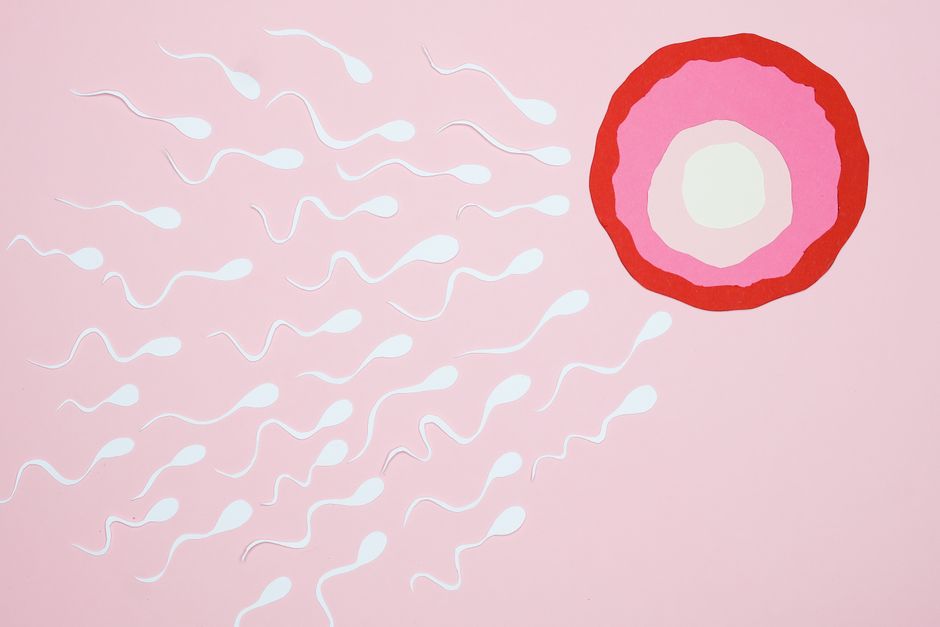
Ovulation is the release of a mature egg from an ovary, and it usually happens about midway through your menstrual cycle. For most people with a typical 28-day cycle, that’s around day 14, but “typical” covers a wide range. The most reliable way to know you’re ovulating is to track more than one sign at once: changes in cervical mucus, a rise in basal body temperature after ovulation, and if you want confirmation, an at-home urine test that detects a surge in luteinizing hormone.
What Actually Happens During Ovulation?
Ovulation is a coordinated event between your brain and your ovaries. It starts in the hypothalamus, which signals the pituitary gland to release follicle-stimulating hormone. That hormone prompts a group of eggs in the ovaries to start maturing.
As one egg matures, it produces estrogen. When estrogen reaches a high enough level, it triggers a sharp release of luteinizing hormone from the pituitary. That surge causes the mature egg to break out of its follicle and travel into the fallopian tube. The egg survives for roughly 12 to 24 hours after release. Sperm can survive in the reproductive tract for up to about five days.
This timing matters because the fertile window is not just ovulation day. It includes the several days before ovulation, when sperm can already be waiting. The American College of Obstetricians and Gynecologists notes that the fertile window spans about six days, ending on the day of ovulation.
After ovulation, the empty follicle becomes a structure called the corpus luteum, which produces progesterone. That hormone prepares the uterine lining for a possible pregnancy. If no pregnancy occurs, progesterone falls, and the lining sheds as a period.
How To Know When You’re Ovulating: The Signs That Matter
No single sign proves ovulation on its own. Each one reflects part of the process, and combining them gives a much clearer picture. Here are the signs that have the most support.
Cervical Mucus Changes
As estrogen rises before ovulation, cervical mucus becomes clearer, thinner, and stretchier. Many people describe it as looking like raw egg white. This change helps sperm survive and move. After ovulation, progesterone makes the mucus thicker and less hospitable. Tracking mucus daily is one of the simplest low-cost methods, though it’s subjective and can be affected by things like infections or medications.
Basal Body Temperature Shift
Basal body temperature is your resting temperature, taken first thing in the morning before you get out of bed. After ovulation, progesterone causes a small rise, typically a few tenths of a degree Fahrenheit. The key limitation: this shift happens after ovulation. It confirms that ovulation occurred, but it does not predict it in advance. You need to track for several cycles to see your own pattern.
Luteinizing Hormone Tests
Over-the-counter ovulation predictor kits detect the surge in luteinizing hormone in urine. This surge usually happens about 24 to 36 hours before the egg is released. These tests can predict ovulation better than temperature tracking, but they have limits. Some people with conditions like polycystic ovary syndrome can have elevated luteinizing hormone levels that produce false positives.
Other Signs
Some people notice mild pelvic pain on one side, called mittelschmerz, around ovulation. Others report breast tenderness, increased libido, or light spotting. These signs are real for some people but unreliable as a primary method because they overlap with other causes.
Can an App or Calendar Predict Ovulation?
Calendar methods estimate ovulation by counting days, usually assuming a 28-day cycle with ovulation on day 14. This works reasonably well for people with very regular cycles. It fails for anyone with irregular cycles, which includes many people with PCOS, thyroid conditions, or perimenopause.
Cycle-tracking apps use the same logic plus your logged data. They can be helpful for spotting patterns over time, but they are estimates, not measurements. An app cannot detect your actual hormone surge. If you are trying to conceive or avoid pregnancy, treat app predictions as a starting point, not a guarantee.





Which Method Should You Use?
The best method depends on what you need. If you want to predict ovulation before it happens, luteinizing hormone tests and cervical mucus tracking are more useful. If you want to confirm that ovulation happened, basal body temperature is the standard at-home option.
Many people combine methods. Tracking mucus and using ovulation tests together gives both a warning sign and a confirmation. Adding temperature tracking over several cycles shows whether your pattern is consistent.
| Method | What It Detects | Timing |
|---|---|---|
| Cervical mucus | Rising estrogen | Days before ovulation |
| LH urine test | Luteinizing hormone surge | About 24-36 hours before |
| Basal body temperature | Progesterone rise | After ovulation |
| Calendar or app | Estimated pattern | Predictive only |
What If You Can’t Tell Whether You’re Ovulating?
If you’ve tracked for several cycles and see no clear signs, that’s worth a conversation with a clinician. Not everyone ovulates every cycle, and that can be normal occasionally. Persistent absence of ovulation, called anovulation, has many possible causes, including PCOS, thyroid disorders, high stress, significant weight changes, and perimenopause.
There’s an important point here that gets lost in online advice: a regular period does not always mean you ovulated. Bleeding can occur without ovulation. This is one reason temperature tracking or hormone testing can add information that a calendar alone cannot.
If you are trying to conceive and it isn’t happening, or if your cycles are very irregular, a clinician can check hormone levels and other factors. This is standard practice, and it can identify treatable issues.
Does Ovulation Pain Mean You’re Fertile?
Mittelschmerz is real, but it’s not a dependable fertility signal. It’s typically a dull ache or sharp twinge on one side of the lower abdomen, lasting from a few minutes to a day or two. It’s thought to come from the follicle stretching or rupturing.
Not everyone feels it, and the same sensation can come from other causes, including digestive issues, ovarian cysts, or other pelvic conditions. If pain is severe, persistent, or new, it should be evaluated rather than assumed to be ovulation.
Common Myths About Ovulation
Several ideas about ovulation circulate widely and aren’t supported by evidence.
- Ovulation always happens on day 14. Day 14 is an average for a 28-day cycle. Cycle length varies, and ovulation timing varies with it.
- You can only get pregnant on ovulation day. The fertile window includes the days before ovulation because sperm survive for several days.
- A regular period proves you ovulated. Bleeding can happen without ovulation.
- Apps are accurate for everyone. They rely on averages and past data, not your current hormones.
When to Talk to a Clinician
See a clinician if your cycles are consistently shorter than 21 days or longer than 35 days, if you go several months without a period, or if you have been trying to conceive for a year without success, or six months if you are over 35. These are general thresholds used in clinical practice, not rigid rules.
Tracking ovulation is a tool, not a diagnosis. It gives you and your clinician useful information. It does not replace an evaluation when something seems off.
Frequently Asked Questions
How many days after your period do you ovulate?
For a 28-day cycle, ovulation typically occurs around day 14, which is about two weeks after the first day of your last period. If your cycle is longer or shorter, ovulation shifts accordingly, usually about 12 to 16 days before your next period.
Can you ovulate without noticing any signs?
Yes, many people ovulate without feeling or noticing any symptoms. Cervical mucus changes and temperature shifts can still be tracked even when you don’t feel anything.
Is basal body temperature reliable for predicting ovulation?
Basal body temperature confirms that ovulation happened, but it rises after the egg is released, so it cannot predict ovulation in advance. It’s most useful when combined with other methods.
How accurate are ovulation predictor kits?
Luteinizing hormone tests can detect the surge that precedes ovulation in most people, but conditions like PCOS can cause false positives. They work best alongside other tracking methods.
