
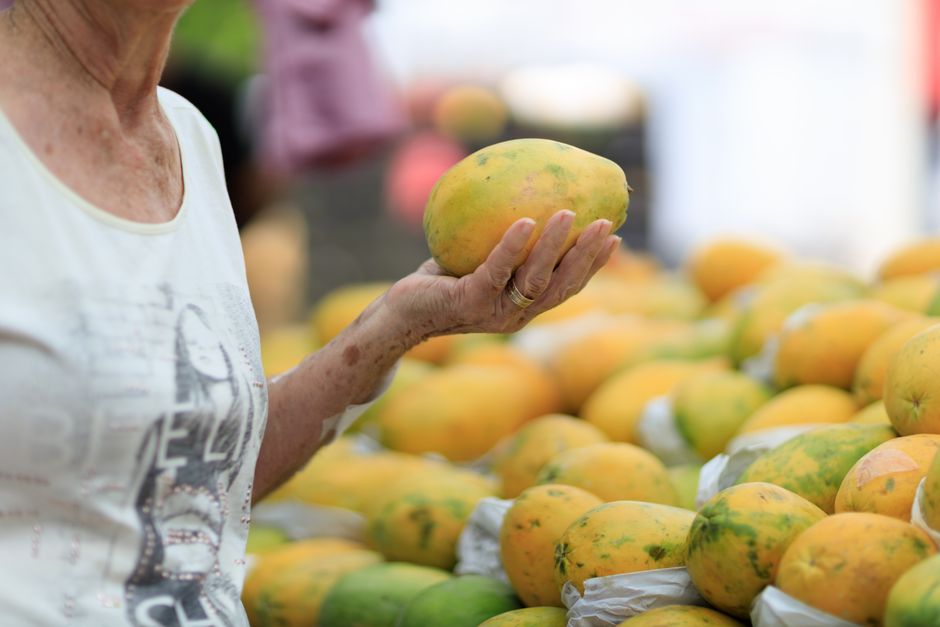
A ripe mango gives way slightly when you press it, smells sweet and fruity near the stem, and often has a full, rounded shape. The skin color is not a reliable guide, since some varieties stay green even when perfectly ripe. The best test combines gentle pressure, scent, and weight rather than relying on color alone.
Why Color Is a Poor Way to Judge Mango Ripeness
Most people pick mangoes by looking at the skin. That method fails more often than it works. Mango varieties differ so much in color that a red blush, yellow background, or green skin tells you little about ripeness.
For example, the popular Tommy Atkins mango develops a red and yellow blush when ripe. But the Kent variety stays mostly green even at peak ripeness. The Ataulfo, or honey mango, turns a bright golden yellow. If you judge every mango by the same color standard, you will cut into many unripe fruits.
Color can help within a single variety once you know what to expect. But it should never be your primary test. The flesh inside matters more than the skin outside.
The Squeeze Test: How Firm Should a Ripe Mango Feel
Firmness is the most reliable physical sign of ripeness. A ripe mango yields to gentle pressure, similar to a ripe peach or avocado. It should not feel mushy or soft anywhere.
Hold the mango in the palm of your hand, not with your fingertips. Squeeze it gently. Fingertip pressure can bruise the fruit and create soft spots that look like ripeness but are actually damage.
A mango that feels hard as a baseball needs more time. A mango that feels soft all over is likely overripe. The ideal ripe mango gives slightly along its whole surface but retains structure. If you press and the indentation stays, it is past its best.
Unripe mangoes firm up as they ripen on the counter at room temperature. This process usually takes two to five days depending on the starting state and the temperature of your kitchen. Do not refrigerate a mango until it has reached the ripeness you want, since cold air stops the ripening process.
The Smell Test: Trust Your Nose Near the Stem
Ripe mangoes release a sweet, fruity aroma that is hard to miss. The scent is strongest at the stem end of the fruit. Lift the mango to your nose and sniff the area where the stem was attached.
If you smell a sweet, tropical fragrance, the mango is likely ripe or nearly ripe. If you smell nothing, it needs more time. If you smell a sour or fermented odor, the mango is overripe and may be fermenting inside.
The smell test works especially well for varieties that stay green when ripe. A green-skinned mango that smells sweet at the stem is ready to eat even though its color suggests otherwise.
Some research indicates that aroma compounds in mangoes increase significantly as the fruit ripens. The sweet scent comes from natural sugar development and the breakdown of certain acids during the ripening process.





The Weight Test and Other Physical Signs
A ripe mango feels heavy for its size. This indicates the flesh is full of juice rather than dry or fibrous. Compare two mangoes of similar size. The heavier one is usually riper.
Look at the shape as well. Ripe mangoes often develop a slight flattening or fullness around the cheeks, the rounded sides of the fruit. A mango that looks plump and rounded rather than flat and angular has likely matured properly.
The stem area can also give clues. In some varieties, the stem end lifts slightly or develops a small depression as the fruit ripens. This is not universal across all mango types, but it can help when combined with the squeeze and smell tests.
Skin texture matters too. A ripe mango may develop slight wrinkling on the skin, particularly near the stem. This is normal and does not mean the fruit is bad. Wrinkled skin on a mango that smells sweet and yields to pressure often indicates excellent ripeness.
How To Speed Up or Slow Down Mango Ripening
If your mango is hard, leave it on the counter at room temperature. Do not put it in the refrigerator. Cold temperatures halt the ripening process and can cause the flesh to become mealy or watery without ever developing full sweetness.
To speed up ripening, place the mango in a paper bag with a banana or an apple. These fruits release ethylene gas, a natural plant hormone that triggers ripening. The bag traps the gas around the mango and accelerates the process, usually by a day or two.
Do not use a plastic bag for ripening. Plastic traps moisture and can promote mold growth on the skin. Paper allows airflow while still concentrating the ethylene gas.
Once a mango reaches the ripeness you want, move it to the refrigerator. A ripe mango will keep for about five days in the fridge. The cold slows further softening and prevents the fruit from becoming overripe too quickly.
Cut mangoes should always be refrigerated. Store cut pieces in an airtight container and eat them within two to three days for best quality and food safety.
What to Do With a Mango That Is Cut Too Early
Everyone has cut into a mango too soon. The flesh is pale, hard, and sour. You cannot fix this once the fruit is cut open. Unripe mango flesh will not continue to ripen after being separated from the skin.
You can still use underripe mango in certain dishes. Green mango is a common ingredient in Southeast Asian salads and chutneys. Its tartness and firm texture serve a purpose in those recipes.
If you want the sweet, juicy mango experience, you need to start with a fruit that was ripe when cut. Practice the squeeze and smell tests together, and you will improve your success rate quickly.
For a mango that is slightly underripe but not hard, some people find it acceptable for smoothies or blended drinks where the texture matters less. The flavor will be less sweet, but it will not be unpleasant in a mixed beverage.
How To Know When Mangoes Are Ripe: Quick Summary
Use all three tests together for the best results. Squeeze gently with your palm and look for slight give. Smell the stem end for sweetness. Compare weight between similar-sized fruits.
Color is the least reliable indicator. A green mango can be ripe, and a red mango can be hard. Let the physical and aromatic signs guide you instead.
If the mango yields slightly, smells sweet, and feels heavy, it is ready to eat. If it is hard and has no scent, give it more time on the counter. If it is soft and smells sour, it has gone too far.
Ripening takes patience, but the payoff is worth it. A properly ripened mango is sweet, juicy, and aromatic in a way that an unripe or overripe fruit can never match.
Frequently Asked Questions
How long does it take for a mango to ripen on the counter?
Most mangoes ripen in two to five days at room temperature. The exact time depends on how ripe the fruit was when you bought it and the temperature of your kitchen.
Can you eat a mango that is still green and hard?
You can eat it, but it will be tart and crunchy rather than sweet and juicy. Green mango is used in some salads and chutneys where its sourness is intentional.
Does putting a mango in the refrigerator ripen it faster?
No. Refrigeration stops the ripening process. Keep mangoes at room temperature until they reach the ripeness you want, then move them to the fridge.
What does an overripe mango look and smell like?
An overripe mango feels soft all over, may have dark spots on the skin, and smells sour or fermented. The flesh may be mushy and the flavor unpleasant.
