
A peach can go from perfectly ripe to past its prime faster than almost any other fruit. The good news is you do not need to guess. Your senses — sight, touch, and smell — will tell you everything you need to know. In short: toss a peach if it has visible mold, a fermented smell, or large soft spots with wrinkled, dark skin. Keep it if it is just slightly soft with minor bruising and no signs of decay. Here is exactly how to tell the difference.
What Does a Bad Peach Look Like?
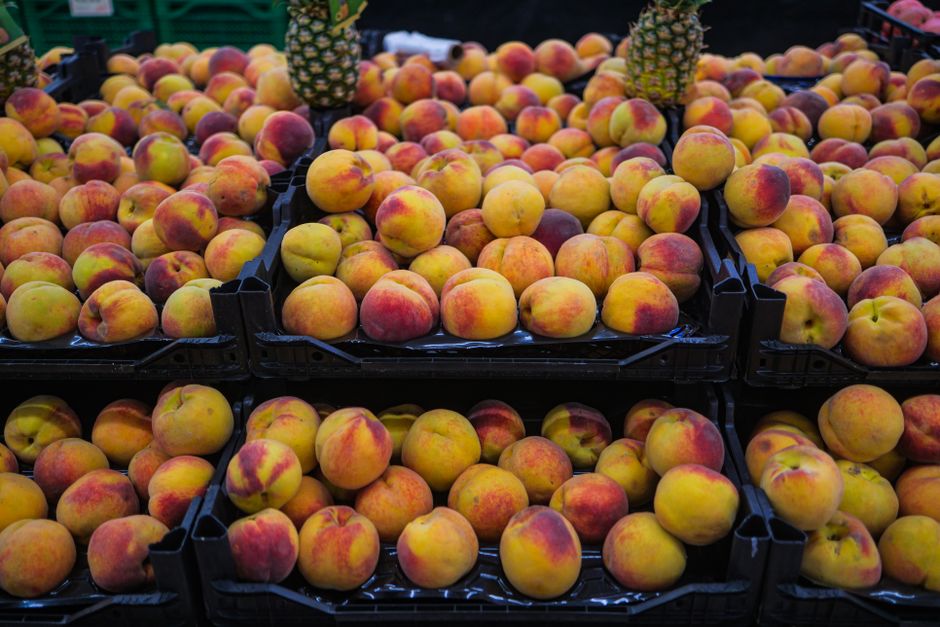
Start with your eyes. A healthy peach has vibrant color — usually deep yellow or orange with a red blush. That blush is not a ripeness indicator, by the way. It is just sun exposure. The background color matters more.
Look for these warning signs:
- Mold — fuzzy patches in white, gray, or blue-green. This is the clearest sign to toss it.
- Wrinkled, tight skin — this means the peach is drying out and losing moisture. It may still be edible but will taste mealy.
- Dark, sunken spots — these are bruising or early decay. Small spots can be cut away, but large ones mean the flesh underneath is likely brown and soft.
- Leaking or sticky juice — a cracked or weeping peach is past its prime and invites mold and bacteria.
Color changes alone do not mean a peach is bad. A peach that is fully red but firm can still be underripe. A peach that is dull yellow with no sheen may be overripe. The key is combining what you see with what you feel and smell.
How Should a Ripe Peach Feel?
Touch is the most reliable test. A ripe peach gives slightly to gentle pressure, similar to the fleshy pad at the base of your thumb. It should feel heavy for its size — that means it is juicy inside.
A bad peach feels different. If it is mushy — meaning your finger sinks in and leaves a lasting dent — the flesh is breaking down. If it is hard as a baseball, it is underripe, not bad. Underripe peaches will ripen on the counter in a day or two. Mushy peaches will not recover.
One trick many people miss: check the stem end. Press gently near where the stem was attached. This area ripens first. If it is soft and slightly wrinkled there, the peach is at its peak or just past it. If it is dark and leaking, toss it.
What Does a Bad Peach Smell Like?
Smell is a powerful tool. A ripe peach has a sweet, floral, unmistakable aroma. If you can smell it from across the counter, it is ready to eat.
A bad peach smells different. The most common off-smell is fermented — like wine, vinegar, or sour beer. This happens when natural sugars begin fermenting as the fruit breaks down. The peach is not dangerous in the way spoiled meat can be, but it will taste unpleasant and may cause mild stomach upset in sensitive people.
Another smell to watch for: a musty or moldy odor even if you cannot see mold. Mold can grow inside the pit cavity before it shows on the surface. If a peach smells musty, do not eat it.




Can You Cut Off a Bad Spot and Eat the Rest?
Sometimes yes. If the peach has a small bruised area or a tiny dark spot, you can cut it out and eat the rest. The flesh around a small bruise is usually fine. Just remove the damaged part with a generous margin — about half an inch around the spot.
Toss the peach if any of these are true:
- Mold is visible anywhere on the surface
- The peach smells fermented or musty
- More than a quarter of the peach is soft, dark, or wrinkled
- The skin is broken and leaking
Mold is the critical factor. Mold roots can extend below the visible surface even when the top looks clean. This is why food safety guidance generally says to discard soft fruits with visible mold rather than cutting it off. Peaches are soft and porous, so mold spreads easily through the flesh. The visible spot is rarely the whole problem.
How To Know When a Peach Is Bad — Keep or Toss?
Here is the practical decision framework. Use this when you are standing over the fruit bowl wondering what to do.
Keep it if the peach is firm with slight give, smells sweet, and has only minor bruising. A peach that is slightly underripe is also a keeper — just give it time at room temperature.
Toss it if you see mold, smell fermentation, or feel mushiness. Also toss it if the skin is heavily wrinkled, the peach is leaking, or the flesh has turned brown inside when you cut it open.
One more thing: a peach that is overripe but not spoiled can still be used. If it is very soft but smells fine and has no mold, you can cook it. Baked peaches, peach jam, or peach smoothies are good uses for peaches that are too soft to eat out of hand. Cooking does not fix a moldy peach, but it does make good use of a soft one.
How Long Do Peaches Last?
Peaches are perishable. At room temperature, a ripe peach lasts about 1 to 2 days before it starts to decline. An underripe peach can sit on the counter for 2 to 3 days until it ripens.
In the refrigerator, ripe peaches last 3 to 5 days. Cold slows the ripening process and helps prevent mold growth. The trade-off is that cold temperatures can make the flesh mealy or dry. This is why many people only refrigerate peaches they plan to eat within a few days.
Do not wash peaches until you are ready to eat them. Moisture on the skin encourages mold growth. Store them in a single layer if possible — peaches bruise easily when stacked. A paper bag at room temperature speeds up ripening because it traps ethylene gas, the natural ripening hormone the fruit produces. Do not use plastic bags for ripening; they trap too much moisture.
Peaches do not freeze well on their own. The high water content forms ice crystals that destroy the texture. If you want to freeze peaches, slice them first and toss them with a little lemon juice and sugar to preserve color and flavor. Frozen peaches are best used for smoothies or cooking, not for eating raw.
Are Overripe Peaches Safe to Eat?
Yes, with one important caveat. An overripe peach that is very soft but has no mold, no off-smell, and no visible decay is safe to eat. It will be sweeter and juicier than a ripe peach, though the texture may be mushy.
The caveat is mold. Once mold appears, the peach is not safe to eat, even if you cut the mold off. Research on soft fruits shows that mold spores and toxins can spread invisibly through the flesh. This is not a case where you can just trim around the problem.
If you eat a slightly overripe peach, you are fine. If you eat a moldy peach, you might experience mild nausea or stomach discomfort. In healthy adults, this is rarely serious. But it is not worth the risk when a fresh peach costs less than a dollar.
Does a Bad Peach Look Different on the Inside?
Sometimes the outside looks fine but the inside tells a different story. Cut a peach open and check the flesh near the pit. It should be creamy yellow or orange, juicy, and uniform in color.
Brown or dark flesh near the pit means the peach is past its prime. This is called internal breakdown, and it happens as the fruit ages. The peach may still smell fine, but the flavor will be off and the texture will be mealy.
Another internal sign: the flesh should not be dry or cottony. A dry, pale, cotton-like texture means the peach was picked too early and never fully ripened. This is not a safety issue — it is a quality issue. The peach is edible but disappointing.
Frequently Asked Questions
Can you eat a peach with a brown spot?
Yes, if the spot is small and the rest of the peach looks and smells fine. Cut the spot out with a generous margin and eat the rest.
What does a spoiled peach smell like?
A spoiled peach smells fermented, like wine, vinegar, or sour beer. A musty or moldy odor is also a clear sign to toss it.
Is it safe to eat a peach with mold on it?
No. Mold on soft fruits like peaches can spread invisible roots through the flesh, so cutting off the visible mold does not make it safe.
How long can peaches sit on the counter?
Ripe peaches last about 1 to 2 days at room temperature. Underripe peaches can sit for 2 to 3 days until they ripen.
