
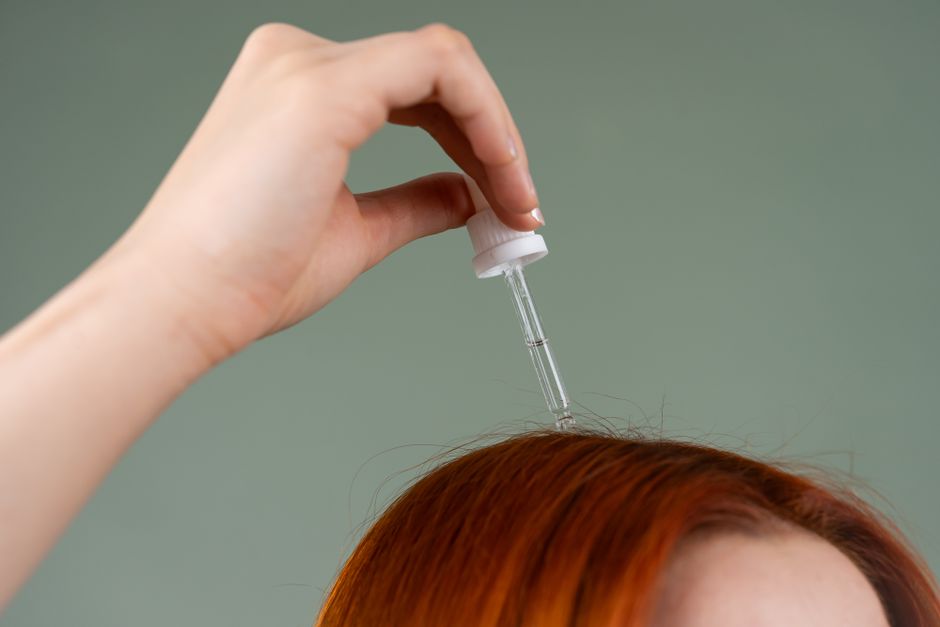
Knowing your hair type is the first step to choosing products that actually work for your hair. The most common system divides hair into four categories: straight (Type 1), wavy (Type 2), curly (Type 3), and coily (Type 4). Within each type, there are subcategories (A, B, C) that describe the diameter of the curl or wave. To find your type, wash your hair with a clarifying shampoo, let it air dry without any products, and examine the shape of your individual strands. This simple test gives you a reliable starting point for choosing shampoos, conditioners, and styling techniques that match your hair’s natural structure.
What Is the Standard Hair Typing System?
The most widely used hair typing system was created by hairstylist Andre Walker. It is not a scientific classification, but it is practical and used by salons and product brands everywhere. The system sorts hair into four main types based on the shape of the hair follicle and the resulting strand pattern.
Type 1 is straight hair. The follicle is round, and the hair shaft lies flat against the scalp. Type 2 is wavy hair. The follicle is slightly oval, and the hair forms an “S” shape. Type 3 is curly hair. The follicle is more curved, and the hair forms distinct spirals. Type 4 is coily or kinky hair. The follicle is very curved, and the hair forms tight zigzag patterns.
Each type has three subcategories: A, B, and C. These describe the diameter of the wave, curl, or coil. For example, 2A is a loose, barely-there wave, while 2C is a defined wave that starts near the scalp. Type 3A curls are large and loose, while 3C curls are tight corkscrews. Type 4A coils are springy and S-shaped, while 4C coils are tightly packed and have no defined curl pattern.
The American Academy of Dermatology does not officially endorse the Andre Walker system, but it is the most common reference point in consumer hair care. It is a helpful tool, not a strict diagnosis.
How To Know What Type Of Hair I Have: The Wash-and-Go Test
The most reliable way to find your hair type is to do a wash-and-go test at home. This removes all product buildup and allows your hair to show its natural pattern. Start by washing your hair with a clarifying shampoo. This removes silicones, oils, and styling residues that can alter your hair’s shape.
Do not apply any conditioner, leave-in product, or styling cream. Gently towel dry your hair so it is damp but not dripping. Let it air dry completely without touching it, brushing it, or scrunching it. Once it is fully dry, look at individual strands in natural light. The American Academy of Dermatology recommends this method for assessing hair texture and pattern.
Here is what to look for:
- Straight (Type 1): Hair lies flat from root to tip. No bend or wave.
- Wavy (Type 2): Hair forms an “S” shape. It may be straight at the root and wavy toward the ends.
- Curly (Type 3): Hair forms defined spirals or ringlets. The curl is visible from root to tip.
- Coily (Type 4): Hair forms tight zigzag or coiled patterns. The strands may shrink significantly when dry.
If your hair shows multiple patterns, like straight roots with curly ends, you likely have wavy hair. Many people have more than one curl pattern on their head. Focus on the dominant pattern in the majority of your hair.
What Does Your Hair’s Porosity Tell You?
Hair porosity refers to how well your hair absorbs and holds moisture. It is separate from curl type but equally important for choosing products. Porosity is determined by the condition of your hair’s cuticle layer — the outer protective layer of each strand.
Low porosity hair has tightly closed cuticles. Water and oils sit on top of the hair rather than soaking in. Products can feel heavy or greasy. High porosity hair has raised or damaged cuticles. It absorbs water quickly but loses moisture just as fast. This type is prone to frizz and breakage. Medium porosity hair has a balanced cuticle layer that holds moisture well.
To test porosity at home, take a clean, dry strand of hair and drop it into a glass of room-temperature water. If it floats on top for several minutes, you have low porosity. If it sinks slowly, you have medium porosity. If it sinks immediately, you have high porosity. This test is not scientifically validated, but many hair professionals find it useful as a rough guide.
Research published in the Journal of Cosmetic Science has shown that porosity is influenced by chemical treatments, heat styling, and environmental damage. Your porosity can change over time, while your curl pattern is mostly genetic and stable.




How Does Hair Density and Thickness Affect Your Type?
Hair density is how many individual strands you have per square inch of scalp. Hair thickness (also called diameter) is how wide each individual strand is. Both are independent of curl pattern but affect how your hair behaves and what products work best.
Low density hair means you can see your scalp easily when your hair is parted. High density hair feels thick and full. You can test density by pulling a small section of hair to the side and looking at how much scalp shows through. The more scalp you see, the lower your density.
Hair thickness is measured by feeling a single strand between your fingers. Fine hair feels like silk thread. Medium hair feels like cotton thread. Coarse hair feels like wool or a thin piece of wire. A 2016 study in the International Journal of Trichology found that hair diameter varies significantly across ethnic groups, but there is wide individual variation within every group.
Knowing your density and thickness helps you choose product weight. Fine, low-density hair does best with lightweight mousses and sprays. Coarse, high-density hair can handle heavier creams and butters. Curly and coily hair types often have lower density but coarser individual strands.
Hair Type vs. Hair Condition: Why the Difference Matters
Many people confuse hair type with hair condition. Your hair type is genetic and does not change. Your hair condition is how healthy your hair is right now. Damaged hair can mimic certain curl patterns or make your natural pattern harder to see.
Heat styling, chemical relaxers, bleach, and frequent coloring can alter your hair’s curl pattern temporarily or permanently. A 2019 study in the Journal of the American Academy of Dermatology found that chemical straightening can reduce curl diameter by up to 60%. This means someone with Type 3 curls can appear to have Type 2 waves after treatment.
If your hair has been chemically treated or heat styled regularly, the wash-and-go test may not show your true genetic pattern. You may need to wait for new growth — about 6 to 12 months — to see your natural curl pattern return. The new growth at your roots will show your true type.
Hair condition also affects how your hair responds to products. High porosity from damage needs protein treatments. Low porosity from healthy cuticles needs lightweight humectants. Do not choose products based only on your curl type. Consider your porosity and condition first.
Comparison Table: Hair Types at a Glance
| Type | Pattern | Follicle Shape | Common Traits |
|---|---|---|---|
| 1A | Straight, fine | Round | Shiny, oily easily, hard to hold a curl |
| 1B | Straight, medium | Round | Some volume, slight bend at ends |
| 1C | Straight, coarse | Round | Thick, resistant to curling, can be frizzy |
| 2A | Loose wave | Slightly oval | Fine, straight at roots, wavy at ends |
| 2B | Defined wave | Slightly oval | More S-shape, frizz-prone, waves start mid-length |
| 2C | Thick wave | Slightly oval | Coarse, frizzy, some spiral strands |
| 3A | Loose curl | Curved | Large ringlets, shiny, prone to frizz |
| 3B | Medium curl | Curved | Springy corkscrews, volume, needs moisture |
| 3C | Tight curl | Curved | Dense coils, shrinkage, very dry |
| 4A | Soft coil | Very curved | S-shaped coils, defined pattern, fragile |
| 4B | Zigzag coil | Very curved | Less defined, cottony texture, high shrinkage |
| 4C | Tight coil | Very curved | No visible curl pattern, extreme shrinkage, most fragile |
Common Misconceptions About Hair Typing
One of the biggest myths is that hair type determines everything about your hair care routine. It does not. Two people with the same curl type can have completely different porosity, density, and thickness. Their product needs will be different.
Another myth is that you can permanently change your hair type. You cannot. Heat and chemicals can temporarily alter the shape of your hair shaft, but your genetic curl pattern is fixed. When new hair grows, it will revert to your natural type. The only exception is hormonal changes, such as pregnancy or menopause, which can alter hair texture in some people. Research in Dermatology Practical & Conceptual notes that these changes are usually temporary.
Some people believe that curly hair is always dry. This is generally true because the natural oils from the scalp have a harder time traveling down curved hair shafts. But porosity and damage play a larger role in dryness than curl type alone. A person with Type 2A hair and high porosity can be drier than someone with Type 4C hair and low porosity.
Finally, do not get hung up on your exact subcategory. The A, B, C distinctions are subjective. Many people have multiple subcategories on the same head. Focus on the broad type — straight, wavy, curly, or coily — and then pay attention to porosity and condition. That combination will guide your product choices far better than an exact letter grade.
Frequently Asked Questions
How do I know my hair type without washing it?
You cannot accurately determine your hair type without washing it because product buildup and styling changes the natural pattern. A clarifying wash followed by air drying is the only reliable method.
Can my hair type change over time?
Your genetic hair type does not change, but hormones, medications, and aging can temporarily alter your texture. New growth will always return to your genetic pattern.
What if I have two different curl patterns on my head?
This is very common. Focus on the dominant pattern in the majority of your hair and treat your hair according to its overall needs rather than individual strands.
Does hair typing work for all ethnicities?
The Andre Walker system was designed with straight to coily hair in mind and is less accurate for very fine or very coarse textures. It is a useful guide but not a universal standard.
