
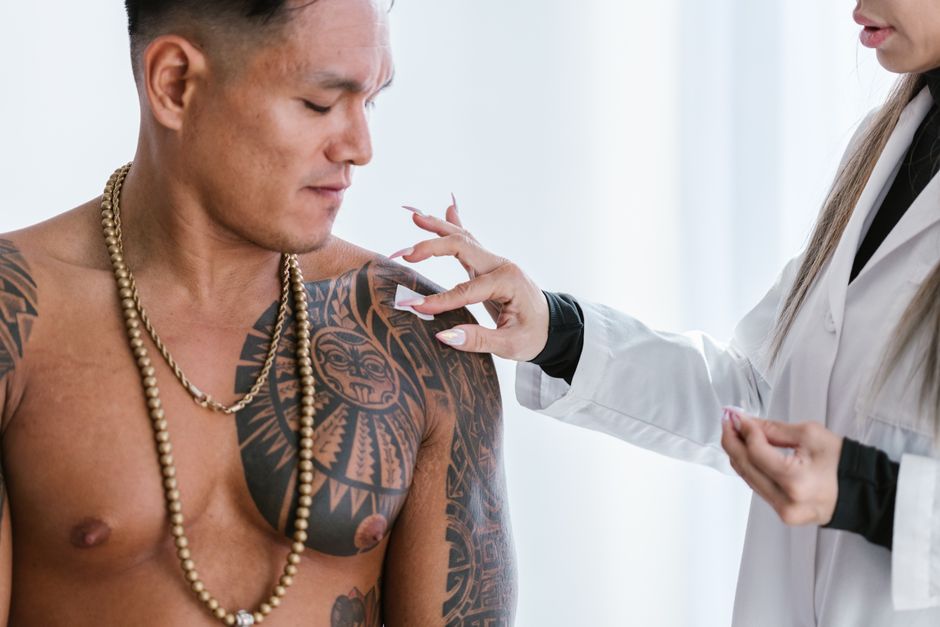
A new tattoo is an open wound, and how it heals depends on the size, placement, and how well you care for it. You can tell a tattoo is healing well when the redness and swelling fade over the first few days, the surface dries and begins to flake, and the skin feels less tender each week. Signs of a problem include spreading redness, increasing pain after day three, pus, a foul smell, or a fever.
Most tattoos heal on the surface in two to three weeks, while the deeper skin takes longer. Knowing what each stage looks like helps you tell normal healing from an infection or an allergic reaction.
What Does Normal Tattoo Healing Look Like, Stage by Stage?
Tattoo healing moves through predictable stages, though the timeline varies from person to person. A small tattoo on the forearm often heals faster than a large piece on the ribs or ankle. Age, general health, and how well you follow aftercare instructions all affect the pace.
The first stage is the inflammatory phase. For the first day or two, the area is red, warm, and tender, and it may ooze a clear or slightly blood-tinged fluid. This is normal. The skin is responding to thousands of tiny punctures, and the immune system is sending cells to start repair.
The second stage, roughly days two through five, is when the surface begins to dry. You may see a thin, shiny layer form. Swelling usually peaks in the first 48 hours and then eases. Pain should be decreasing, not increasing. That direction matters more than the exact number on any scale.
The third stage is peeling and flaking, usually starting around day four to seven and lasting into the second or third week. The top layer of skin sheds in small, colored flakes. This is the ink mixed with dead skin, and it is expected. The skin underneath may look slightly dull or patchy during this time. That is not a sign the ink is disappearing.
The final stage is the settling of the deeper skin, which can take a month or longer. The surface may look healed while the tissue below is still repairing. This is why protecting the tattoo from sun and friction matters well past the point where it looks finished.
How To Know If Your Tattoo Is Healing Well
Healing well follows a clear direction: symptoms should improve over time, not worsen. Redness that fades, swelling that goes down, and pain that decreases are the core signs that your body is doing what it should.
Watch for these markers of normal healing:
- Redness and warmth that peak in the first two days and then steadily decline
- Swelling that goes down after the first day or two
- Pain that lessens each day rather than building
- Clear or slightly blood-tinged fluid early on, then a dry surface
- Flaking and peeling in the first two weeks without deep cracks
- No spreading redness, no pus, and no fever
The single most useful thing to track is the trend. A tattoo that looks a little red on day two but is clearly calmer on day four is healing. A tattoo that looks fine on day two and is more red, more swollen, and more painful on day five is not.
Keep in mind that tattoos on the hands, feet, and joints are subject to more movement and friction, so they can take longer and may need touch-ups. That is a placement issue, not necessarily a healing problem.
What Are the Warning Signs of Infection or Other Problems?
Infection is the main concern, and its signs are specific. Spreading redness, increasing pain after the first few days, pus, a foul odor, or a fever are reasons to seek medical care rather than wait and see.
An infection can develop even with careful aftercare, because bacteria can enter during or after the procedure. According to the CDC, a wound infection may show up as redness that spreads, warmth, swelling, and drainage of pus. Fever and chills point to a more serious problem. If you have these signs, contact a healthcare provider. Do not try to treat a suspected infection on your own.
Allergic reactions are a separate issue. Some people react to certain tattoo pigments, and this can appear days, weeks, or even years later. A reaction often shows up as itchy, raised, or bumpy areas, sometimes limited to one color. Red pigment is a common culprit, though reactions can occur with other colors too. If a tattoo becomes persistently itchy or raised, that warrants a medical evaluation.
Other problems to watch for include:
- Thick, raised scarring along the tattoo lines, which can indicate a keloid or hypertrophic scar
- Small, itchy bumps that may suggest a reaction to the ink
- Blistering or weeping that does not improve
- Red streaks spreading away from the tattoo
If any of these appear, get medical advice. Tattoo complications are treatable, but they need to be identified correctly first.





What Does Proper Tattoo Aftercare Actually Involve?
Good aftercare is simple, and the goal is to keep the area clean, moisturized, and protected without overdoing it. Most artists give specific instructions, and those instructions should come first.
In general, aftercare involves gently washing the tattoo with mild soap and water, patting it dry, and applying a thin layer of a recommended ointment or fragrance-free moisturizer. You should not soak the tattoo in baths, pools, or hot tubs while it heals, because prolonged soaking can soften the skin and increase the risk of infection. Showers are generally fine.
Do not pick or scratch at peeling skin. Picking can pull ink out, cause scarring, and open the skin to bacteria. Let flakes fall off on their own.
Protect the tattoo from the sun. Fresh tattooed skin is more vulnerable to sun damage, and UV exposure can fade the ink and slow healing. Once healed, sunscreen helps preserve the color. This is one of the few aftercare points that applies for the life of the tattoo, not just the healing period.
Avoid tight clothing and friction over the area while it heals. Friction irritates the skin and can disrupt the forming scab.
One point worth clarifying: there is no single aftercare routine that has been proven best in large clinical trials. Recommendations vary between artists and clinics, and much of the guidance rests on general wound care principles rather than tattoo-specific studies. Following your artist’s instructions and general wound care basics is reasonable, but no product is guaranteed to speed healing.
How Long Does a Tattoo Take to Heal?
The surface of a tattoo usually heals in about two to three weeks, but the deeper skin can take a month or longer to fully settle. The timeline depends on the size, location, and your individual healing response.
Small, simple tattoos on areas with good circulation may look healed in under two weeks. Large pieces, tattoos over joints, and tattoos on the lower legs or feet can take longer. People with certain health conditions, such as diabetes, may heal more slowly and may be at higher risk of complications. If you have a condition that affects wound healing, talk to your healthcare provider before getting a tattoo.
Even after the surface looks normal, the skin may still be repairing underneath. During this phase, the tattoo may look slightly dull or uneven. In many cases, this evens out as the skin fully recovers. If areas look patchy after full healing, a touch-up by the artist is common.
When Should You See a Doctor About a Tattoo?
See a doctor if you have signs of infection, a reaction that is getting worse, or any symptom that concerns you. It is better to be evaluated than to wait.
Specific reasons to seek care include spreading redness, increasing pain, pus or foul-smelling drainage, fever, red streaks, or a rash that spreads beyond the tattoo. Also seek care if you have a medical condition that affects healing or immune function, since your risk of complications is higher.
Most tattoos heal without problems. When something goes wrong, it is usually manageable with prompt medical care. The key is recognizing the difference between normal healing and a problem early, so you can act on it.
Frequently Asked Questions
How do I know if my tattoo is healing properly?
Your tattoo is healing properly if redness, swelling, and pain steadily decrease after the first few days and the skin dries and flakes without pus or spreading redness. Worsening symptoms in the second week are a warning sign.
What does an infected tattoo look like?
An infected tattoo often shows spreading redness, increasing pain, warmth, pus, or foul-smelling drainage, sometimes with a fever. These signs warrant prompt medical care rather than home treatment.
Is it normal for a tattoo to peel and itch?
Yes, peeling and itching are normal parts of healing as the top layer of skin sheds, usually in the first two weeks. Do not scratch or pick at it, because that can pull out ink and cause scarring.
How long until a tattoo is fully healed?
The surface usually heals in about two to three weeks, while the deeper skin can take a month or longer to settle. Healing time varies with the size and location of the tattoo and your general health.
