
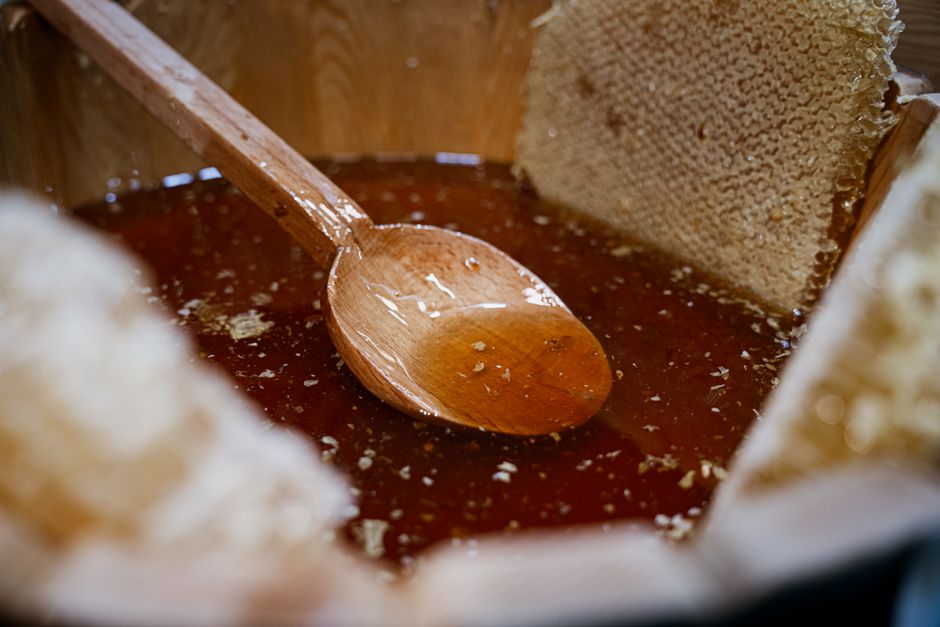
Honey is one of the most adulterated foods in the world. Studies consistently show that a large portion of commercial honey has been filtered, heated, or blended with syrups from corn, rice, or sugar cane. The honest answer is that you cannot reliably tell pure honey from fake honey in your kitchen. Many popular tests, like the flame test or the water test, are misleading and often give false results. The most reliable way to know what you are buying is to understand how honey is labeled, where it comes from, and what processing actually does to the product.
Why Is Honey So Commonly Faked?
Honey is expensive to produce. Bees need to visit millions of flowers to make a single jar, and that labor costs real money. Syrup from corn or rice costs a fraction of the price. When a producer blends cheap syrup into honey, the profit margin grows significantly.
This is not a small problem. Regulatory agencies and food quality researchers have found that adulteration is widespread in certain markets. Some imported honey has been tested and found to contain little to no actual honey. The practice is illegal, but it continues because testing every batch is difficult and enforcement is inconsistent.
Another reason honey is targeted is that its natural composition is similar to syrup. Both are primarily sugars. Detecting the difference requires sophisticated laboratory equipment that looks at specific sugar ratios and pollen content. A simple taste test or texture check cannot reveal what is in the jar.
What Does “Pure” Honey Actually Mean?
Pure honey is honey that comes directly from the beehive and has not had anything added to it. It contains the natural sugars, enzymes, pollen, and trace compounds that bees produce. It has not been blended with other sweeteners.
But “pure” does not mean “raw.” Most honey sold in grocery stores is pasteurized. Pasteurization heats honey to kill yeast and prevent crystallization. This process also destroys some of the natural enzymes and can change the flavor. Pasteurized honey is still pure in the sense that nothing was added, but it is not raw.
Raw honey is honey that has not been heated above the natural hive temperature. It is typically strained to remove large particles but not filtered to remove pollen. Raw honey may crystallize faster and look cloudy. That is normal and does not mean it is spoiled.
There is also a difference between “pure honey” and “raw honey” on labels. Both can be legitimate. The key distinction is processing, not purity. A jar labeled “pure honey” may be perfectly fine but heavily processed. A jar labeled “raw honey” has been handled less.
The Popular Home Tests Are Not Reliable
You have probably seen videos of people testing honey with a lighter, a glass of water, or a piece of bread. These tests are popular on social media but they do not work reliably.
The flame test is the most common. The idea is that pure honey will burn because it is a natural sugar. The truth is that many adulterated honeys also contain sugar, so they burn too. Moisture content, temperature, and the wick material all affect whether honey ignites. A fake honey with high sugar syrup can pass this test easily.
The water test suggests that pure honey does not dissolve quickly in water and settles at the bottom. This is also unreliable. Honey is denser than water, so it sinks regardless of whether it is pure. The rate at which it dissolves depends on temperature, agitation, and the specific sugar composition.
The bread test claims that pure honey hardens bread while fake honey makes it soggy. This reflects moisture content, not purity. Many pure honeys have higher moisture levels, especially in humid climates, and will soak into bread.
There is no home test that can reliably detect adulteration. The sugar profiles that distinguish pure honey from syrup require laboratory analysis. If someone tells you a simple kitchen test can prove honey purity, they are repeating misinformation.




What To Look For On The Label
Label reading is the most practical step you can take. It will not guarantee purity, but it will help you avoid the most common forms of adulteration.
First, check the ingredient list. Real honey should have one ingredient: honey. If you see “high fructose corn syrup,” “glucose syrup,” “rice syrup,” or “sugar syrup,” that product is not pure honey. It is a honey-flavored syrup blend.
Second, look for the country of origin. This matters because adulteration rates vary by region and because some countries have weaker testing standards. Honey labeled as a blend of multiple countries is harder to trace. If the label says “Product of” a single country, that is more transparent.
Third, look for terms like “raw” or “unfiltered.” These terms are not regulated as strictly as you might hope, but they signal that the producer is at least marketing a less processed product. Be aware that “raw” does not mean “pure.” A producer could label syrup-blended honey as raw, though this is less common because it invites scrutiny.
Finally, be suspicious of very cheap honey. Real honey has a production cost. If a large jar costs less than the price of the syrup used to make it, something is wrong. Extremely low prices are a red flag, though not proof of adulteration.
What About Crystallization And Color?
Many people believe that pure honey always crystallizes over time. That is partially true. Raw honey crystallizes because it contains glucose and pollen particles that give the sugar something to cling to. But some pure honeys crystallize very slowly, and some adulterated honeys crystallize too.
Heavily processed honey is often filtered to remove pollen and other particles. This filtration slows crystallization and produces a clear, smooth product that stays liquid for a long time. This is why many grocery store honeys look identical for months. That does not automatically mean they are fake, but it does mean they have been processed.
Color is not a reliable indicator either. Honey ranges from nearly white to dark amber depending on the flowers the bees visited. Buckwheat honey is dark and strong. Clover honey is light and mild. Both can be pure. Color tells you about the floral source, not the purity.
The texture of honey can vary widely. Some honeys are thick and creamy, others are thin and runny. This depends on moisture content and the specific sugars present. A thin honey is not necessarily diluted. Some floral sources naturally produce higher moisture honey.
How To Buy Honey With More Confidence
Your best option is to buy from a local beekeeper. Local beekeepers sell honey that comes from their own hives. You can ask them directly about their process. You can visit the apiary. You can see the bees and the hives. This transparency is the closest thing to a guarantee you can get.
Farmers markets and local food co-ops often have honey from nearby producers. These sellers have a reputation to protect in their community. They are less likely to sell adulterated product because they would lose customers quickly.
If you buy from a store, choose a brand that is transparent about its sourcing. Some brands list the specific farm or region where the honey was produced. Others use a single-origin approach, meaning the honey comes from one place rather than a blend of many countries.
Consider buying honey that carries a certification from a recognized testing program. Some countries have quality seals or traceability programs for honey. These are not perfect, but they add a layer of accountability that generic imported honey does not have.
There is also value in buying honey with visible pollen or a cloudy appearance. This suggests the honey was not ultra-filtered. Ultra-filtration removes pollen and is sometimes used to hide the geographical origin of honey. Honey that still contains pollen is harder to fake because the pollen can be tested.
What To Do If You Suspect Your Honey Is Fake
If you have already bought honey and you are worried about it, there is not much you can do at home to confirm your suspicion. You can contact the manufacturer and ask for testing documentation. Some companies will provide certificates of analysis showing that their honey passed purity tests.
You can also report suspected adulteration to your country’s food safety authority. In the United States, that is the Food and Drug Administration. They do not test every product, but they do investigate complaints and can take action against companies that are committing fraud.
If you are concerned about the honey you are eating, the safest choice is to switch to a source you trust. Local honey from a beekeeper you can meet is always a better option than an opaque supply chain. The peace of mind is worth the extra cost.
Remember that even pure honey is still mostly sugar. It has some antioxidants and trace compounds, but it is not a health food. The decision to buy pure honey is about quality and honesty, not about avoiding a health risk. Adulterated honey is not poisonous. It is just a cheaper product sold at a higher price.
Frequently Asked Questions
Does pure honey dissolve in water?
Pure honey sinks to the bottom of a glass of water because it is denser than water. The rate it dissolves depends on temperature and agitation, so this test cannot reliably tell pure honey from fake honey.
Is crystallized honey a sign of purity?
Crystallization is common in raw honey because it still contains pollen and glucose particles. However, some pure honeys crystallize slowly, and some adulterated honeys also crystallize, so this is not a reliable test.
Can I test honey purity with a flame?
No. The flame test is unreliable because many adulterated honeys contain enough sugar to burn. Moisture content and the wick material also affect whether honey ignites.
What is the most reliable way to buy pure honey?
Buy from a local beekeeper you can talk to directly. This gives you the most transparency about how the honey was produced and handled.
