
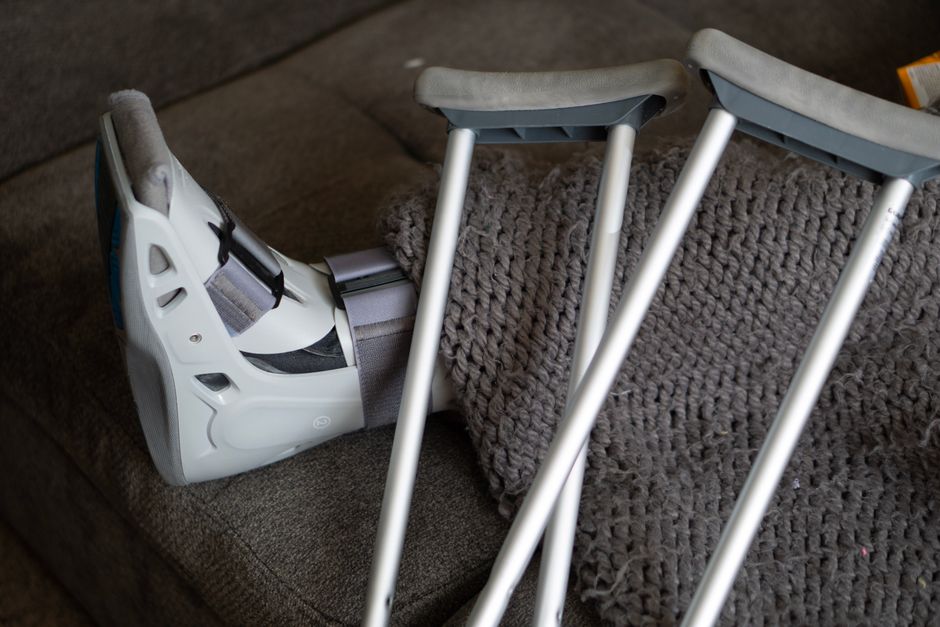
You twisted your ankle stepping off a curb. The pain is sharp. You are not sure if it is a sprain or a break. Here is the short answer: You cannot know for certain without an X-ray. But there are clear signs that make a fracture much more likely. The single best tool is the Ottawa Ankle Rules, a set of clinical guidelines doctors use. If you cannot put weight on your ankle for four steps right after the injury, or if the bone is tender at specific points, you need an X-ray. This article walks you through those steps and explains what to expect.
What Is the Ottawa Ankle Rule and Why Does It Matter?
The Ottawa Ankle Rule is not a trendy app or a home remedy. It is a clinical decision guide developed in the 1990s by Dr. Ian Stiell and colleagues at the Ottawa Hospital. Research published in the Journal of the American Medical Association showed it can rule out fractures with over 98% accuracy when used correctly. That means if you follow these steps and none of the red flags appear, your chance of having a broken ankle is extremely low.
The rule applies to adults and children over five years old. It is designed for injuries that happened within the last 10 days. If your injury is older, the rule is less reliable. The rule has two main parts: the ability to bear weight and the location of bone tenderness. Doctors use it to decide whether an X-ray is needed. You can use it the same way at home, but it does not replace a medical exam. It just tells you whether you should go get one.
One non-obvious point: the Ottawa Ankle Rule is better at ruling out a fracture than ruling one in. A negative result is very trustworthy. A positive result means you need an X-ray, but it does not guarantee a break. Some people with positive results end up having only a bad sprain. The rule is a screening tool, not a diagnosis.
Step 1: Can You Bear Weight Immediately After the Injury?
This is the most important question. The Ottawa Ankle Rule asks: Can you take four steps right after the injury, even if it hurts? Those four steps can be with or without help from crutches or a person. The key word is “immediately.” If you could not put any weight on your ankle in the first few minutes after the injury, that is a strong sign of a fracture.
Research shows that immediate inability to bear weight is one of the most sensitive indicators of a broken ankle. A study in the British Medical Journal found that this single factor catches about 85% of fractures. If you could walk on it right away, even limping, the chance of a fracture drops significantly. But here is where people get confused: you might be able to walk on a broken ankle after the initial pain fades. The adrenaline wears off, and some people can hobble. The rule specifically asks about the immediate moment, not an hour later.
If you tried to stand and felt like the ankle would give out, or you simply could not put any pressure on it, that is a positive result. You need an X-ray. If you walked four steps without major trouble, move to the next step.
Step 2: Check for Bone Tenderness at Specific Points
The Ottawa Ankle Rule identifies two key areas on the ankle where tenderness indicates a possible fracture. The first is the back edge of the fibula, the bony bump on the outside of your ankle. The second is the back edge of the tibia, the bump on the inside. You need to press firmly along the entire back edge of both bumps, not just the tip. If pressing on either spot causes sharp pain, that is a positive sign for a fracture.
There are also two points on the foot itself that matter. The first is the base of the fifth metatarsal, the bony lump on the outside of your foot about halfway between your ankle and your toes. The second is the navicular bone, which is on the top of your foot near the ankle. Tenderness at either of these points also suggests a possible fracture. The rule is considered positive if any one of these four spots is tender.
A common mistake is pressing too lightly. You need enough pressure to indent the skin slightly. If you wince when pressing, that counts as tenderness. If you feel nothing, move on. The rule works best when you check all four spots systematically. Do not just poke the most painful area. Check each one separately.





Step 3: Compare Your Symptoms to a Sprain
Sprains and fractures share many symptoms, which is why people get confused. Both cause swelling, bruising, and pain. But the pattern differs. A severe sprain often causes swelling across the entire ankle, while a fracture may cause swelling that is more localized to one spot. Bruising that spreads down into the foot or up the leg within a few hours is more common with fractures.
The type of pain matters too. A sprain usually causes a dull ache that worsens with movement. A fracture often produces a sharp, stabbing pain at a specific point when you press on it. Some people report hearing or feeling a snap at the moment of injury. That sound does not automatically mean a break—ligaments can pop too—but it is worth noting.
Here is a table that compares common signs:
| Symptom | More Likely with Sprain | More Likely with Fracture |
|---|---|---|
| Swelling | Diffuse around the ankle | Localized to one bone area |
| Bruising | Appears hours later | Appears quickly, may spread |
| Weight bearing | Painful but possible | Impossible immediately |
| Pain location | Over ligaments, not bone | Over specific bone points |
| Deformity | Rare | Possible with displaced fracture |
No single symptom is definitive. A sprain can be so bad that you cannot walk. A fracture can be so minor that you can hobble. That is why the Ottawa Ankle Rule combines multiple factors. Use the table as a guide, not a verdict.
What Are the Signs That Require Immediate Emergency Care?
Some ankle injuries need more than an urgent care visit. If your ankle looks visibly deformed, like the foot is pointing in an odd direction, that is a clear sign of a displaced fracture. You need to go to the emergency room. Do not try to pop it back in place. Keep it still and get medical help.
If the skin over the ankle is broken and you can see bone, that is an open fracture. This is a medical emergency. Cover the area with a clean cloth, do not push the bone back in, and call 911. Numbness or tingling in your foot or toes can mean nerve damage from the injury. That also requires immediate evaluation. The same goes for a foot that feels cold or looks pale compared to the other one. That suggests a blood flow problem.
These signs are rare but serious. Most ankle fractures do not involve deformity or open wounds. But if you see any of these, skip the Ottawa Ankle Rule and go straight to a hospital. The rule is not designed for these situations.
How To Know If Your Ankles Broken? Step By Step Summary
Here is the entire process in a simple list you can follow right now:
- Step 1: Try to take four steps immediately after the injury. If you cannot, assume a possible fracture and get an X-ray.
- Step 2: Press firmly along the back edge of both ankle bumps. If either spot is tender, that is a positive sign.
- Step 3: Press on the base of the fifth metatarsal and the navicular bone on your foot. Tenderness at either suggests a fracture.
- Step 4: Check for visible deformity, open wound, numbness, or cold foot. If present, go to the ER immediately.
- Step 5: If none of these signs apply, you likely have a sprain. But if pain persists for more than a few days, see a doctor anyway.
This system is not perfect, but it is the best tool we have without an X-ray. The Ottawa Ankle Rule has been validated in dozens of studies across multiple countries. It reduces unnecessary X-rays by about 30% while missing very few fractures. If you follow these steps carefully, you will make a better decision than guessing based on pain or swelling alone.
One final note: swelling and bruising can take hours to develop. Do not wait for them to appear before checking the rule. The rule works best in the first few hours after injury. If you are unsure after 24 hours, see a doctor. Some hairline fractures do not show up on X-ray for a week or more. If your pain does not improve with rest and ice, follow up with an orthopedist.
Frequently Asked Questions
Can you walk on a broken ankle?
Some people can walk on a broken ankle, especially if the fracture is hairline or nondisplaced. But most people with a fracture cannot bear weight immediately after the injury.
How long after an ankle injury should you check for a fracture?
Check within the first few hours using the Ottawa Ankle Rule. The rule is most reliable within 10 days of injury but works best immediately.
Does a broken ankle always swell?
Most broken ankles swell, but minor fractures may have very little swelling. Lack of swelling does not rule out a fracture.
What does a broken ankle feel like compared to a sprain?
A fracture often causes sharp pain at a specific bone point, while a sprain causes a dull ache over a wider area. Both can be very painful.
