
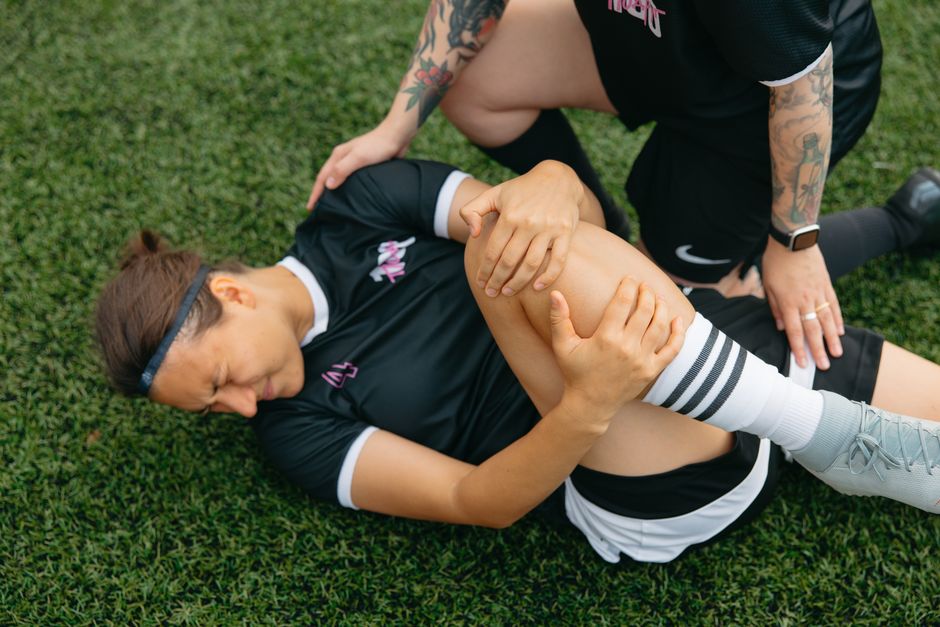
You feel a sharp snap or a deep ache at the back of your lower leg and wonder if you have hurt your Achilles tendon. The Achilles is the thick band of tissue that connects your calf muscles to your heel bone, and it is the largest tendon in the body. Injuries range from mild inflammation to a complete tear, and the signs differ depending on which one you have. Most people can tell a minor strain from a serious tear by how the injury happened and whether they can still push off the ground.
What Does The Achilles Tendon Do?
The Achilles tendon attaches your calf muscles to the back of your heel bone. Every time you walk, run, jump, or stand on your toes, this tendon transfers the force from your calf muscles to your foot.
It handles enormous loads. When you run, the force through the Achilles can reach several times your body weight. That is why it is prone to overuse problems and sudden tears, especially in people who are active or who increase their activity quickly.
The tendon has a poor blood supply in its middle section, which is one reason it heals slowly compared with many other tissues. This anatomy matters when you are trying to work out what kind of injury you have.
What Are The Main Types Of Achilles Injury?
There are two broad categories: injuries that build up over time and injuries that happen suddenly. They feel different and need different care.
- Tendinopathy. This is a gradual breakdown and inflammation of the tendon from repeated strain. It develops over weeks or months and causes pain that worsens with activity.
- Partial tear. Some fibers of the tendon rip, usually during a sudden push or stretch. You can often still walk, but it hurts.
- Complete rupture. The tendon tears all the way through. This is a medical emergency that needs prompt assessment.
Knowing which category you fall into is the first step. The next sections explain the signs of each.
How To Know If You Hurt Your Achilles Tendon: Signs To Look For
The clearest sign of a sudden Achilles injury is a sharp pain at the back of the ankle or lower calf at the moment it happens. Many people describe a feeling like being kicked or hit from behind, even when no one is there.
For a complete rupture, a few signs are strongly associated with the injury:
- A loud pop or snap at the moment of injury
- Sudden weakness and an inability to push off the affected foot
- Difficulty standing on tiptoe on that leg
- Swelling and bruising at the back of the ankle within hours
- A visible gap or dent in the tendon about an inch or two above the heel
Some clinicians use a simple squeeze test. If you squeeze the calf muscle while lying face down and the foot does not move, that suggests the tendon is no longer connected. A trained clinician should perform this, because it is easy to misread on your own.
For tendinopathy, the picture is different. Pain builds up gradually at the back of the ankle, often worse in the morning or after activity. The tendon may feel stiff or thickened. It usually eases with gentle movement and worsens with load.
Can You Still Walk With A Torn Achilles?
Yes, some people can still walk with a partial tear or even a complete rupture, which is why the injury is sometimes missed. The foot does not stop working entirely because other muscles can compensate to some degree.
Walking ability alone is not a reliable way to rule out a serious tear. What matters more is whether you can push off strongly and stand on tiptoe on that leg. If that is difficult or impossible, get medical help quickly.
This is one of the most common reasons people delay care. A rupture that is not treated promptly can be harder to repair and can lead to a longer recovery. If you have any doubt, treat it as urgent.
What Causes Achilles Injuries?
Most Achilles problems come from doing too much, too fast. A sudden increase in running distance, a switch to hill work, or returning to sport after a break all load the tendon faster than it can adapt.
Certain factors raise the risk. Age matters because tendons lose some elasticity over time. Being male is associated with a higher rate of rupture. Flares of gout, some antibiotics in the fluoroquinolone class, and certain inflammatory conditions have also been linked to tendon problems. If you take any medication and have tendon pain, mention it to your clinician.
Tight calf muscles, weak calf strength, and sudden changes in footwear or training surface can all add strain. None of these guarantees an injury, but they shift the odds.
When Should You See A Doctor?
See a doctor promptly if you heard a pop or snap, cannot push off or stand on tiptoe, have a visible gap in the tendon, or have sudden severe pain and swelling at the back of the ankle. These point toward a tear and need urgent assessment.
For gradual pain that has lasted more than a week or two, or that keeps you from your normal activity, book an appointment. Tendinopathy usually responds well to a structured loading program, but it needs the right diagnosis first.
Do not try to “walk it off” if you suspect a tear. Rest the leg, avoid pushing through pain, and get it looked at. The sooner a rupture is identified, the more options you have.
How Are Achilles Injuries Diagnosed?
A clinician starts with your history and a physical exam. They will ask how the injury happened, feel along the tendon for a gap or swelling, and test your strength and range of motion.
Imaging is used when the exam is unclear or when surgery is being considered. Ultrasound can show the tendon in real time and is often used first. An MRI gives a more detailed picture of partial tears and tendon quality.
For tendinopathy, imaging is not always needed. A clear story of gradual pain and tenderness on the tendon is often enough to make the diagnosis and start treatment.
What Does Recovery Involve?
Recovery depends on the type of injury. Tendinopathy is usually managed with a progressive exercise program that loads the tendon gradually, along with relative rest from the activities that aggravate it. Many people improve over weeks to months, though the timeline varies and setbacks are common.
Partial tears may be treated with rest, bracing, and physical therapy, or with surgery depending on the size and location. Complete ruptures are treated either with surgery or with a structured non-surgical program using a cast or boot, and the choice depends on your age, activity level, and other health factors.
No single timeline fits everyone. Recovery from a rupture typically takes months, and full return to sport can take longer. Your clinician can give you a realistic plan based on your specific injury.
One point worth knowing: the old idea that you should rest completely until the pain is gone is not supported for tendinopathy. Gradual loading is generally what helps the tendon rebuild. Complete rest often leads to stiffness and weakness.
How Can You Lower Your Risk?
Build up activity gradually rather than in jumps. Increase training load in small steps and give your body time to adapt between hard sessions.
Keep your calf muscles strong with regular strengthening work. Strong, flexible calves take load off the tendon. Warm up before activity and choose footwear that fits well and suits what you are doing.
If you feel pain at the back of the ankle, pay attention to it early. Catching a problem when it is mild is far easier than managing it once it has become chronic.
Frequently Asked Questions
How do I know if I tore my Achilles tendon?
A pop or snap at the back of the ankle, sudden weakness, and trouble standing on tiptoe on that leg are common signs of a tear. A visible gap in the tendon or swelling and bruising within hours also point to a rupture, which needs urgent medical care.
Can I walk with a hurt Achilles tendon?
You may be able to walk with a partial tear or even a complete rupture, so walking ability does not rule out a serious injury. Difficulty pushing off or standing on tiptoe on the affected leg is a stronger warning sign.
How long does an Achilles injury take to heal?
It depends on the type and severity. Tendinopathy often improves over weeks to months with a loading program, while recovery from a rupture typically takes several months. Your clinician can give a timeline for your specific case.
Should I rest or exercise a sore Achilles tendon?
For tendinopathy, gradual loading through exercise is generally more helpful than complete rest. For a suspected tear, rest the leg and seek medical assessment before doing any loading.
