
You got a piercing. Weeks later, there is a bump next to it. Now you are staring at it in the mirror trying to figure out what it is. The answer usually comes down to three things: when the bump appeared, what it looks like, and whether it keeps growing.
Most bumps that form next to a new piercing are not keloids. They are irritation bumps or hypertrophic scars. A keloid is a specific type of overgrown scar tissue that extends beyond the original injury site. A piercing bump stays at the piercing site. That difference matters because the two need very different care.
What Is The Difference Between A Keloid And A Piercing Bump?
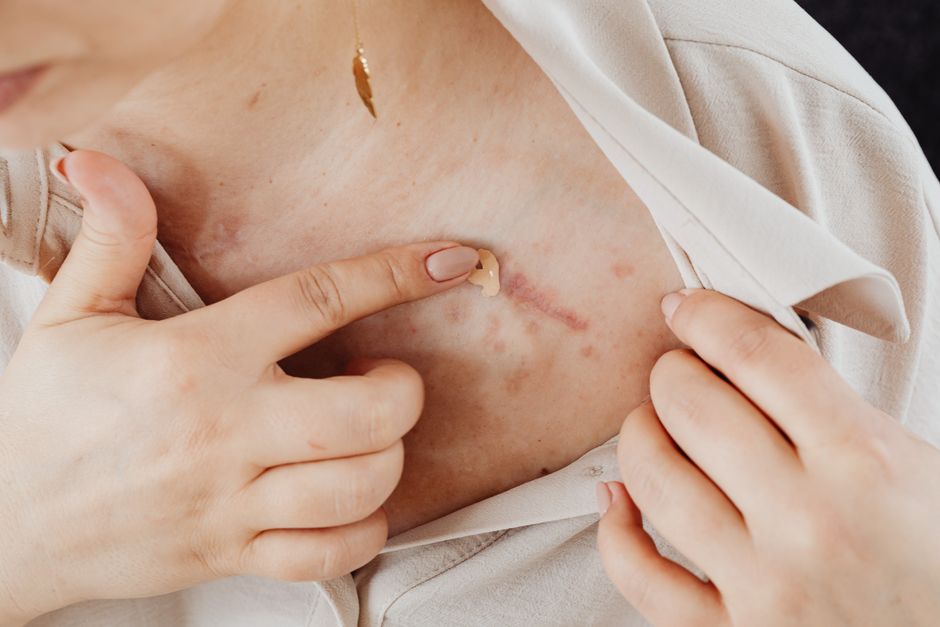
A keloid is scar tissue that grows past the boundaries of the original wound. A piercing bump stays contained at the piercing site.
When skin is injured, the body lays down collagen to close the wound. In most people, that process stops when the wound is closed. In some people, the collagen keeps building. The result is a raised, firm growth called a keloid.
Piercing bumps come in a few types, and none of them are keloids:
- Irritation bumps are red, tender, and often filled with fluid. They form because of friction, pressure, or movement of the jewelry.
- Hypertrophic scars are raised but stay within the original wound area. They often flatten over time.
- Granulomas are small, firm bumps that can form around the piercing channel. They are a reaction to trauma or the jewelry itself.
The key visual difference: a keloid keeps spreading outward, past the edge of the piercing. A piercing bump stays put at the site.
How To Know If You Have A Keloid Or Piercing Bump
The single most reliable sign of a keloid is growth beyond the original wound. If the bump stays within the piercing site and does not spread, it is almost certainly not a keloid.
Here is a side-by-side look at how the two compare:
| Feature | Keloid | Piercing Bump |
|---|---|---|
| Location | Extends beyond the piercing site | Stays at the piercing site |
| Growth | Keeps growing over months | Usually stable or shrinks |
| Texture | Firm, rubbery, sometimes shiny | Soft, red, sometimes fluid-filled |
| Color | Pink, red, or darker than skin | Red or pink, often inflamed |
| Timing | Can appear weeks to months after injury | Appears during healing, often early |
| Response to pressure | Does not go away on its own | Often improves with care |
Keloids can feel itchy or tender. Some people describe a pulling or tight sensation. They do not usually drain fluid unless they are irritated or infected.
Piercing bumps often come with redness, swelling, and sometimes a small amount of clear or yellowish discharge. That discharge is usually lymph fluid, not pus. Pus would suggest infection, which is a different problem.
What Causes A Keloid To Form?
Keloids form when the body produces too much collagen during wound healing. The exact trigger is not fully understood, but several factors are well established.
Genetics play a large role. Keloids run in families. They are more common in people with darker skin tones, particularly those of African, Asian, or Hispanic descent. They are also more common in people between the ages of 10 and 30.
Certain areas of the body are more prone to keloids. The chest, shoulders, upper back, and earlobes are common sites. Piercings in these areas carry a higher risk.
Anything that prolongs healing or adds trauma can increase risk. That includes infection, repeated friction, and removing or changing jewelry too soon.
One point that often gets lost: not every raised scar is a keloid. Hypertrophic scars look similar but behave differently. They stay within the wound and often improve with time. Keloids do not.




What Causes A Piercing Bump?
Piercing bumps are usually a reaction to something mechanical or chemical, not a genetic tendency.
Common causes include:
- Movement of the jewelry, especially during sleep or when clothing rubs against it
- Sleeping on the pierced side
- Tight jewelry that presses into the skin
- Cheap metals that contain nickel or other irritants
- Cleaning with harsh products like alcohol or hydrogen peroxide
- Touching or picking at the piercing
- An awkward angle that puts pressure on the tissue
Some piercing bumps are actually infections. Signs of infection include spreading redness, warmth, swelling, throbbing pain, and pus that is thick and yellow or green. If you see those signs, see a doctor. Do not try to treat an infection at home with piercing aftercare products.
When Should You See A Doctor?
See a doctor if the bump is growing, spreading, or showing signs of infection.
Specific reasons to get medical attention:
- The bump extends beyond the piercing site
- It keeps getting bigger after the piercing has healed
- There is thick yellow or green discharge
- The skin around it is hot and spreading red
- You have a fever
- The bump is painful enough to interfere with sleep or daily activity
- You have had keloids before
A dermatologist can usually tell the difference between a keloid and a piercing bump by looking at it. In some cases, they may take a small sample to confirm. That is not common, but it happens when the diagnosis is unclear.
If it is a keloid, treatment options include steroid injections, silicone sheets, pressure therapy, cryotherapy, and in some cases surgery. Results vary. Keloids often come back after removal, especially without additional treatment. No single treatment works for everyone.
How Are Piercing Bumps Treated?
Most piercing bumps improve with gentle care and time. The goal is to stop the irritation, not to attack the bump.
What often helps:
- Use a sterile saline solution to clean the piercing once or twice a day
- Do not touch, pick, or rotate the jewelry
- Avoid sleeping on the pierced side
- Switch to jewelry made of titanium, niobium, or 14k or 18k gold if you suspect a metal reaction
- Keep the area dry and clean
- Do not use alcohol, hydrogen peroxide, or antibacterial ointments unless a doctor tells you to
What does not help: tea tree oil, crushed aspirin paste, or homemade salt solutions. These can irritate the skin further and delay healing.
If the bump does not improve after several weeks of gentle care, see a piercer or a doctor. A piercer can check the angle and jewelry fit. A doctor can rule out infection or other skin conditions.
Can You Prevent A Keloid From A Piercing?
If you are prone to keloids, the only reliable prevention is to avoid unnecessary skin injury, including piercings. That is the honest answer.
There is no proven way to guarantee a piercing will not form a keloid. Some clinicians recommend silicone gel or pressure therapy after a piercing in high-risk areas, but the evidence for preventing keloids this way is limited.
If you already have keloids, talk to a dermatologist before getting a new piercing. They can help you weigh the risk based on your history and the location you are considering.
Frequently Asked Questions
How can I tell if my piercing bump is a keloid?
A keloid grows beyond the original piercing site and keeps expanding over time. A piercing bump stays at the site and often improves with gentle care.
Do piercing bumps go away on their own?
Most piercing bumps improve or go away with time once the irritation is removed. Keloids do not go away on their own and usually need medical treatment.
Are keloids dangerous?
Keloids are not cancerous and are not dangerous to your health. They can be itchy, tender, or cosmetically bothersome, but they do not spread to other parts of the body.
Should I take my piercing out if I have a bump?
Do not remove jewelry from an infected piercing without talking to a doctor first. Removing it can trap infection inside. For irritation bumps, a piercer can help you decide whether to change jewelry or adjust the fit.
