
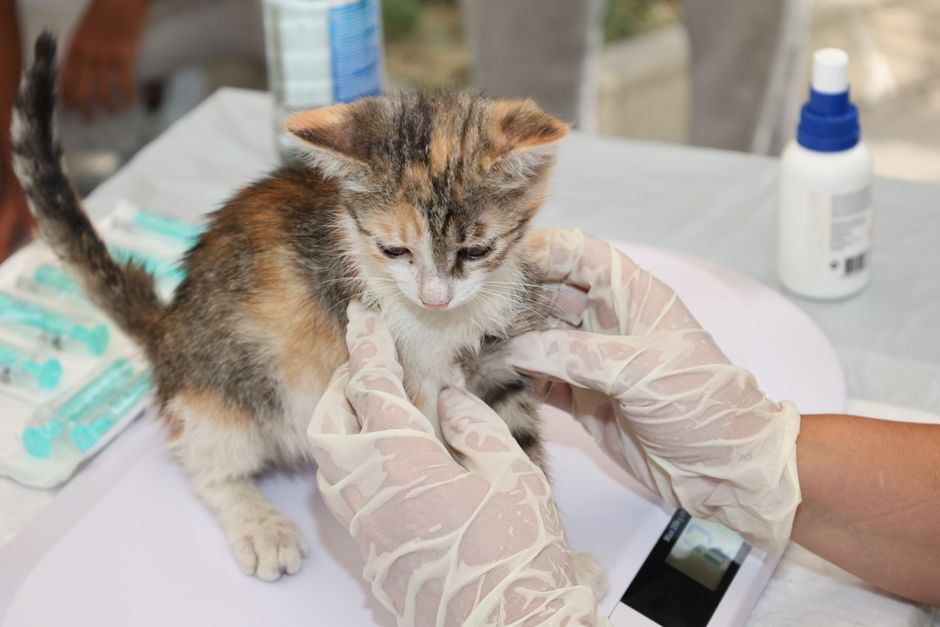
The first week with a newborn kitten is stressful, especially when you are trying to figure out if they are eating enough. The quickest way to know is to weigh them daily on a kitchen scale; a healthy kitten should gain roughly 7 to 14 grams per day. If they are steadily gaining weight, sleeping peacefully between feedings, and crying only when they are hungry, they are almost certainly getting enough milk.
Why Weight Gain Is the Most Reliable Sign
Kittens cannot tell you if they are full. They cannot tell you if they are starving. Their behavior alone is often misleading because a hungry kitten will cry, but a sick or weak kitten may be too lethargic to cry at all. This makes body weight the single most objective measure of feeding success.
You need a digital kitchen scale that measures in grams. Weigh the kitten at the same time every day, ideally before the first morning feeding. Write the number down. A consistent daily increase of 7 to 14 grams is the benchmark for a thriving newborn. If the kitten is not gaining, or worse, losing weight, that is a red flag that requires immediate attention from a veterinarian.
Keep in mind that a kitten may lose a few grams in the first 24 hours after birth. This is normal and expected. After that first day, the scale should only move upward.
What a Full Kitten Looks and Sounds Like
Behavior offers useful clues, but only when paired with weight data. A kitten that has just nursed well will typically fall asleep immediately. Their belly will look round and full, not tight or distended. When you gently pick them up, they feel solid and relaxed rather than limp or hollow.
A well-fed kitten is quiet between meals. They wake up, root around for the nipple, nurse, and then go back to sleep. This cycle repeats every two to three hours. If a kitten is crying persistently, even after what looks like a long nursing session, they may not be latching properly or the mother may not be producing enough milk.
You should also watch the mother cat. A nursing mother spends most of her time in the nest with her kittens. If she is frequently leaving the nest or avoiding her kittens, this can indicate a problem with milk supply or a health issue in the mother.
How to Tell If a Kitten Is Actually Nursing
Sometimes kittens appear to be nursing when they are not getting much milk. You need to verify that the kitten is latched on correctly. During nursing, you should hear soft sucking and swallowing sounds. The kitten’s head will bob gently, and their paws may knead the mother’s belly.
If a kitten is just mouthing the nipple without rhythmic sucking, they may be too weak to nurse effectively. This is common in the smallest kitten of the litter, often called the “runt.” Weak kittens may need help latching on or may require supplemental bottle feeding until they grow stronger.
Pay attention to which nipple the kitten is using. The rear nipples typically produce the most milk. If the same kitten is always pushed to the front nipples, they may be getting less milk than their siblings. Rotating kittens to the rear nipples during feeding sessions can help ensure everyone gets enough.





Checking Hydration and Elimination
Milk provides hydration as well as nutrition. A kitten that is getting enough milk will also be getting enough water. You can check hydration by gently pinching the skin between the kitten’s shoulder blades. It should spring back into place immediately. If the skin stays tented for a moment, the kitten is dehydrated and needs veterinary care.
Elimination is another strong indicator. A mother cat stimulates her kittens to urinate and defecate by licking their genital area. If you are caring for orphaned kittens, you must do this with a warm, damp cotton ball after every feeding. A well-fed kitten should urinate at least once per feeding cycle. Stools should be soft and yellow-brown. Hard, pale stools suggest dehydration or inadequate milk intake.
If a kitten is not urinating regularly, they are not getting enough fluid. This is an emergency situation that requires prompt veterinary attention.
When to Worry About a Kitten’s Growth
The first two weeks are the most critical. During this period, kittens double their birth weight. A kitten born at 100 grams should weigh around 200 grams by day 14. If growth is slow but steady, the kitten may still be fine. If growth has stalled entirely for 24 hours, intervention is needed.
Crying that does not stop after feeding is a concern. So is a kitten that feels cold to the touch. Kittens cannot regulate their own body temperature for the first few weeks. They rely on their mother and littermates for warmth. A cold kitten will stop nursing because their body redirects energy to staying warm. If the nest is too cold, even a healthy kitten with a good milk supply will fail to gain weight.
The nest area should be warm, around 85 to 90 degrees Fahrenheit for the first week. If the mother is absent or the kittens are orphaned, you must provide supplemental heat with a heating pad set on low, placed under only half of the nest so kittens can move away if they get too warm.
How To Know If Kittens Are Getting Enough Milk When the Mother Is Unavailable
If you are bottle-feeding orphaned kittens, the same rules apply, but you have more control over the process. You know exactly how much formula each kitten consumes. A newborn kitten needs approximately 2 to 4 milliliters of formula per feeding during the first week, fed every two to three hours. This increases as the kitten grows.
Watch the kitten’s belly while bottle-feeding. It should become gently rounded. If the belly becomes hard and tight, stop feeding. You are overfeeding. If the kitten turns away from the bottle, they are full. Never force a kitten to finish a bottle.
Weighing is even more important for bottle-fed kittens because you cannot observe the mother’s nursing behavior. Daily weight gain of 7 to 14 grams remains the target. If a bottle-fed kitten is not gaining weight, the formula may be too diluted, the feeding frequency may be too low, or the kitten may have an underlying health issue.
Common Mistakes That Hide Feeding Problems
One common mistake is assuming that a crying kitten is always hungry. Crying can also mean the kitten is cold, in pain, or ill. Always check the temperature of the nest and the kitten’s body before assuming hunger is the issue.
Another mistake is supplementing with cow’s milk. Cow’s milk does not contain the right balance of nutrients for kittens and can cause severe diarrhea, which leads to dehydration and weight loss. Only use kitten milk replacer formulas designed specifically for feline nutrition.
Some people also mistake a kitten’s round belly for fullness when it is actually a sign of constipation or gas. A healthy full belly is soft and rounded. A belly that feels tight and firm, especially if the kitten is straining or crying, may indicate a digestive problem rather than successful feeding.
When to Call the Veterinarian
Do not wait for a kitten to become visibly ill before seeking help. Kittens can decline rapidly. Call a veterinarian if any of the following occur:
- The kitten is not gaining weight for 24 hours
- The kitten is losing weight
- The kitten is crying constantly and cannot be soothed
- The kitten feels cold and lethargic
- The kitten has diarrhea or is not urinating
- The mother cat is ignoring her kittens or showing signs of illness
A veterinarian can assess whether the mother is producing milk, whether the kitten has an infection or birth defect, and whether supplemental feeding is necessary. Early intervention dramatically improves survival rates for kittens that are struggling.
Trust your observations. If something feels wrong, it probably is. Weighing daily and watching for steady weight gain is the most dependable way to confirm that kittens are getting enough milk. Everything else is secondary.
Frequently Asked Questions
How much weight should a newborn kitten gain each day?
A healthy newborn kitten should gain about 7 to 14 grams per day during the first few weeks of life. Weigh them at the same time daily to track this progress.
How often do kittens need to nurse?
Newborn kittens need to nurse every two to three hours around the clock. They should sleep peacefully between feedings and cry only when they are hungry.
What does a dehydrated kitten look like?
A dehydrated kitten has skin that stays tented when gently pinched, a dry mouth, and may be lethargic. Dehydration is an emergency that requires immediate veterinary care.
Can I feed a kitten cow’s milk if the mother cannot nurse?
No, cow’s milk is harmful to kittens and can cause severe diarrhea and dehydration. Use only commercial kitten milk replacer formula designed for feline nutrition.
