
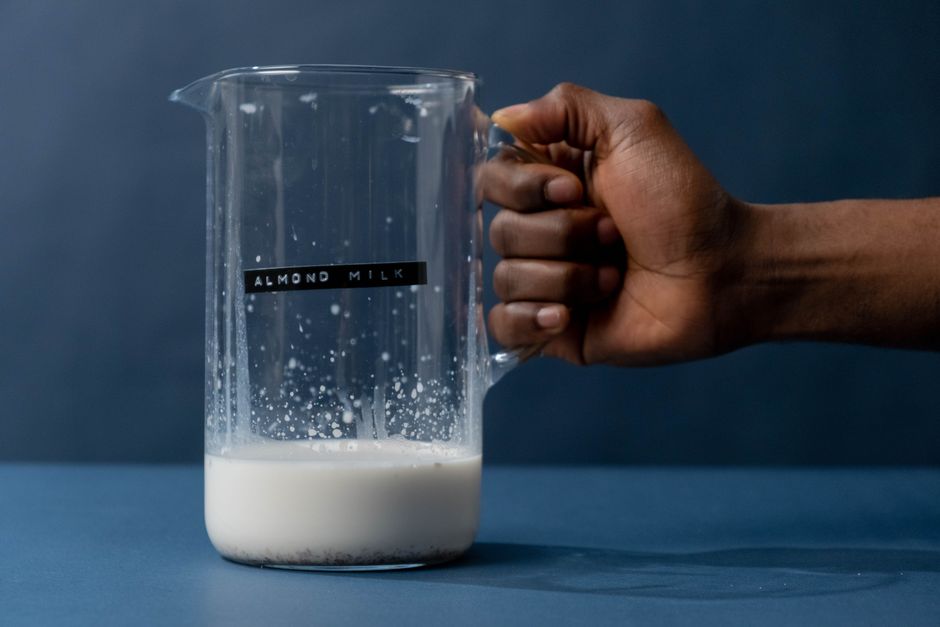
Almond milk can go bad before you notice anything wrong. The first sign is usually a change in smell — a sour, slightly fermented odor that wasn’t there when you opened the carton. After that comes texture changes like clumping or separation that won’t mix back in, and finally visible signs like discoloration or mold. If any of these appear, throw it out.
How long almond milk lasts depends heavily on which type you bought. Shelf-stable cartons can keep for months unopened. Refrigerated cartons typically last about seven days after opening. Homemade almond milk spoils much faster — often within three to four days. The type matters as much as the date on the package.
How To Know If Almond Milk Is Bad
Your senses will catch most spoilage before it becomes a health risk. The tricky part is that almond milk doesn’t always spoil the way dairy milk does.
Dairy milk develops a distinct sour smell and taste as bacteria ferment lactose. Almond milk has no lactose. Its spoilage is driven by different organisms, and the signs can be subtler. A carton that smells fine can still have begun to turn.
Here’s what to check, in order:
- Smell: A sour, bitter, or fermented odor. Fresh almond milk smells faintly nutty or nearly neutral. If it smells off, it is off.
- Texture: Pour a small amount into a glass. If it’s watery when it should be creamy, or thick and slimy when it should be smooth, that’s a problem.
- Clumping: Small lumps or curds that don’t disappear when you stir or shake. Separation alone isn’t always spoilage — many almond milks separate naturally and need shaking. But lumps that won’t blend back in are a different story.
- Color: Any gray, yellow, or greenish tint. Fresh almond milk is off-white to beige, depending on added ingredients.
- Mold: Visible fuzz or spots, especially around the cap or the top of the liquid. Discard the whole container. Do not scoop out the moldy part.
- Taste: Only taste it if the smell and appearance are normal. A sharp, sour, or bitter taste means it’s spoiled.
One clarification that matters: separation is not the same as spoilage. Almond milk is an emulsion of ground almonds and water. Without stabilizers, that emulsion breaks down over time. Shaking usually fixes it. If shaking doesn’t fix it, that’s your signal.
How Long Does Almond Milk Last?
Shelf life depends on the type, the packaging, and whether it’s been opened. There’s no single answer.
Shelf-stable almond milk is processed with ultra-high-temperature (UHT) heat treatment and sealed in sterile cartons. Unopened, it can last for months — often well past the printed date if stored properly. The date on the carton is a quality guideline, not a safety deadline. Once opened, it must be refrigerated and typically lasts about seven to ten days.
Refrigerated almond milk is also usually UHT-treated but sold cold. Unopened, it lasts roughly according to its printed date. After opening, about seven days is the common window.
Homemade almond milk has no preservatives and no commercial sterilization. It typically keeps three to four days in the refrigerator. Some sources say up to five. It spoils faster than anything you buy in a store.
These are general ranges, not guarantees. Storage temperature, how often you open the container, and whether you drink straight from the carton all affect how fast it turns. Drinking from the carton introduces bacteria from your mouth into the liquid. That shortens its life.
Does Almond Milk Actually Spoil Differently Than Dairy Milk?
Yes, and the difference matters for how you judge freshness.
Dairy milk spoils primarily through bacterial fermentation of lactose, which produces lactic acid. That’s why sour milk tastes distinctly sour and curdles visibly. It’s a fairly reliable signal.
Almond milk spoils through a mix of pathways. Bacteria, yeast, and mold can all grow in it. Yeast and mold are common culprits in plant-based milks because they thrive in the slightly acidic, nutrient-containing liquid. Yeast spoilage often shows up as a fermented or yeasty smell before visible changes appear. Mold can grow on the surface or around the cap.
The practical takeaway: don’t wait for almond milk to taste sour the way dairy does. By the time a strong sour taste develops, spoilage is well underway. Smell and texture are your earlier warnings.





Is It Safe to Drink Almond Milk Past Its Date?
The printed date is not a safety cutoff. It’s the manufacturer’s estimate of peak quality.
For shelf-stable almond milk stored unopened in a cool, dark place, the product can remain safe past the date. For opened almond milk, the date is nearly irrelevant — what matters is how long it’s been open and how it’s been stored.
Safety comes down to the signs. If it smells normal, looks normal, and has no lumps or mold, it’s likely fine. If anything is off, discard it. The risk isn’t worth the carton.
This is where people get into trouble. Foodborne illness from spoiled plant milks is uncommon but not impossible. Mold can produce mycotoxins, and some of those are not destroyed by heat. You cannot make spoiled almond milk safe by cooking with it or blending it into a smoothie.
How Should You Store Almond Milk to Make It Last?
Proper storage extends shelf life more than most people realize.
- Keep unopened shelf-stable cartons in a cool, dark pantry. Heat and light degrade quality.
- Refrigerate immediately after opening. Don’t leave it on the counter.
- Store it in the main body of the fridge, not the door. The door is the warmest part and temperature fluctuates every time you open it.
- Keep the cap closed when not pouring.
- Never drink directly from the carton. Pour into a glass.
- Use a clean glass or cup each time. Don’t double-dip a used spoon.
For homemade almond milk, refrigerate it right away in a sealed container. Some people add a pinch of salt as a mild preservative, though this is a traditional practice rather than a proven method. It won’t extend shelf life dramatically.
What About Almond Milk That Separates or Looks Watery?
Separation is normal. Watery texture is not always a spoilage sign either — some almond milks are simply thinner than others, especially “original” or “unsweetened” varieties with lower almond content.
The key question is whether the change is new. If your almond milk was creamy when you opened it and is now watery, that’s a change. If it was always thin, that’s just the product.
Shake the carton well. If the texture returns to normal and the smell is fine, it’s likely okay. If it stays separated, looks curdled, or smells off, discard it.
One thing worth knowing: almond milk that’s been frozen and thawed often separates and becomes grainy. Freezing isn’t recommended for almond milk for this reason. It’s not unsafe, but the texture suffers.
When Should You Definitely Throw It Out?
Some situations leave no room for judgment calls.
- Any visible mold, regardless of how small.
- A sour, fermented, or rancid smell.
- Curdling or lumps that won’t blend back in.
- Discoloration — gray, yellow, or green.
- It’s been open for more than ten days, even if it looks fine.
- It was left out at room temperature for more than two hours.
The two-hour rule is a standard food safety guideline for perishable items. Bacteria multiply rapidly in the temperature range between 40°F and 140°F. If your almond milk sat out on the counter overnight or in a hot car, don’t risk it.
When in doubt, throw it out. A carton of almond milk costs a few dollars. A bout of foodborne illness costs far more.
Frequently Asked Questions
How can you tell if almond milk has gone bad?
Smell it first — a sour or fermented odor is the most reliable early sign. Then check for clumping, discoloration, or mold. If any of these are present, discard it.
Can you drink almond milk after the expiration date?
Unopened shelf-stable almond milk is often safe past its printed date if stored properly. Once opened, the date matters less than how long it’s been open and how it’s been stored.
What happens if you drink spoiled almond milk?
You may experience nausea, stomach cramps, or diarrhea from bacteria or mold toxins. Symptoms usually appear within hours to a day. Seek medical care if symptoms are severe or persistent.
Does almond milk spoil faster than regular milk?
Opened almond milk and opened dairy milk have similar refrigeration windows of about seven days. Unopened shelf-stable almond milk lasts far longer than fresh dairy milk because of its packaging and heat treatment.
