
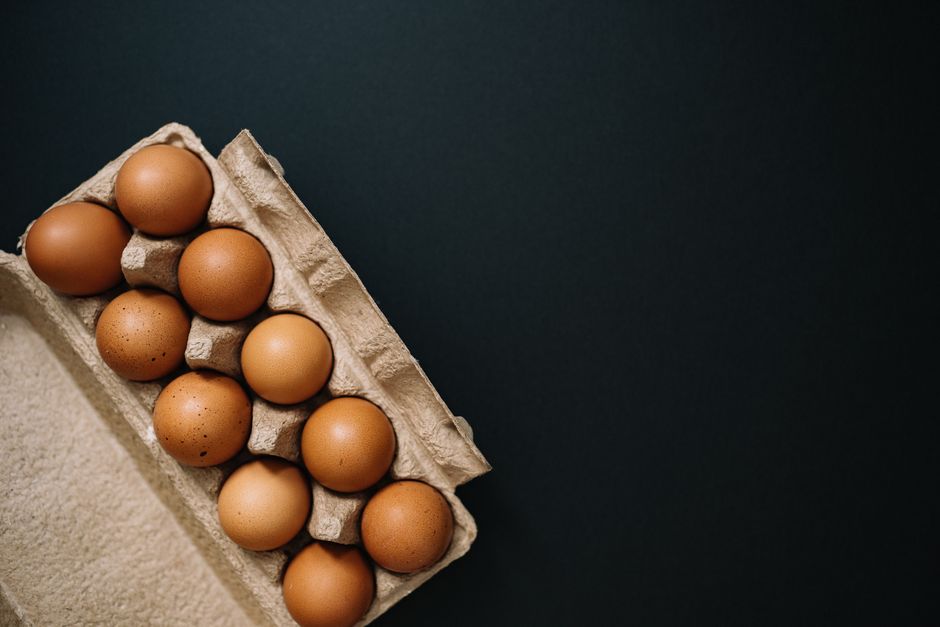
You crack an egg into a hot pan and it looks fine, smells fine, and cooks up like always. So how do you actually know an egg is good before you get that far? The short answer: check the sell-by date, refrigerate eggs at 40°F or below, and use your senses—a fresh egg has a clean shell, no off odor, and a thick white that holds together. If an egg smells rotten or looks moldy, throw it out without tasting it.
That covers the basics. But there is more to egg quality than “good or bad.” Shell condition, storage temperature, and how long an egg has sat in your fridge all affect how it performs in the pan—and whether it is still safe to eat.
How To Know Eggs Are Good: What To Check First
The most reliable sign of a fresh egg is a clean, uncracked shell with a dull matte finish. A freshly laid egg has a natural protective coating called the bloom that gives the shell a slightly chalky look. Once that coating wears off or is washed away, the shell looks shinier and becomes more porous.
Cracks matter because they let bacteria in. Even a hairline crack that looks minor can allow Salmonella to reach the inside of the egg. If you find a cracked egg in the carton, either use it right away in a fully cooked dish or discard it. Do not eat it raw or lightly cooked.
Color is not a quality indicator. Brown eggs and white eggs are nutritionally the same. The breed of hen determines shell color, nothing else. A speckled shell is also normal and does not mean the egg is bad.
What should concern you:
- A shell that feels slimy or sticky
- Visible mold, especially greenish or black patches
- A powdery or chalky white coating that looks like fungus
- Any crack, even a small one
- A sulfur or rotting smell when you open the carton
Does the Float Test Actually Work?
The float test tells you how old an egg is, not whether it is safe to eat. Here is the science behind it.
As an egg ages, moisture evaporates through the shell and the air pocket inside grows larger. A very fresh egg has a tiny air cell and sinks to the bottom of a bowl of water. An older egg has a bigger air cell and floats.
But floating does not automatically mean the egg is spoiled. It means the egg is old enough that its air cell has expanded significantly. An egg can float and still be perfectly safe. It can also sink and still be contaminated with Salmonella, because bacteria do not change buoyancy.
The float test is a rough freshness gauge, not a safety test. If an egg floats, crack it into a separate bowl and smell it. If it smells fine and looks normal, it is likely still usable for baking or well-cooked dishes. If it smells off in any way, toss it.
How Long Do Eggs Stay Good?
Refrigerated eggs typically keep for three to five weeks from the date of purchase, according to USDA food safety guidance. That window assumes you bought them before the sell-by date and stored them properly the whole time.
Eggs stored at room temperature age much faster. In the US, commercially sold eggs are washed, which removes the bloom and makes them more vulnerable to bacteria. That is why refrigeration is standard here. In some countries, eggs are not washed and can be stored at room temperature, but that is not the US system.
Hard-cooked eggs are a different story. They keep for about one week in the refrigerator. Peeled hard-cooked eggs should be eaten within a few days.
Frozen eggs behave differently again. Raw eggs can be frozen for up to one year, but you need to remove them from the shell first. Freezing in the shell causes expansion and cracking.
If you are unsure how long your eggs have been in the fridge, use the sell-by date as your anchor. That date is not a safety deadline—it is a quality date. Eggs are often still good after it, but the further past it you go, the more you should rely on your senses.





What a Fresh Egg Looks Like When You Crack It
A fresh egg holds its shape. The yolk sits up high and round. The white is thick and stays close to the yolk rather than spreading out across the pan.
An older egg spreads. The yolk flattens, and the white becomes thin and watery. This happens because the egg’s internal proteins break down over time and the yolk membrane weakens. An old egg is not necessarily unsafe, but it will not perform as well for frying or poaching.
Cloudiness in the white is normal and actually a sign of freshness. It comes from carbon dioxide dissolved in the egg white. As the egg ages, the CO2 escapes and the white becomes clearer.
What you should not see:
- A pink, green, or iridescent tint to the white—this can indicate spoilage bacteria
- Blood spots or meat spots—these are harmless and safe to eat, though some people prefer to remove them
- A yolk that breaks immediately and runs
- Any off odor
Blood spots occur when a small blood vessel on the yolk surface ruptures during formation. They are not a sign of a fertilized egg. They are not a sign of disease. They are safe.
Why Refrigeration Matters More Than You Think
Refrigeration slows bacterial growth. At 40°F or below, Salmonella and other bacteria multiply much more slowly than at room temperature. The USDA recommends keeping eggs refrigerated at 40°F or below and never leaving them out for more than two hours.
That two-hour rule matters more in summer. At temperatures above 90°F, the window shrinks to one hour.
Some people keep eggs on the counter for baking because they believe room-temperature eggs whip better. That is true for some recipes—room-temperature egg whites do whip more easily. But the safety trade-off is real. If you want room-temperature eggs, take them out shortly before you need them and do not leave them sitting for hours.
A less obvious point: the refrigerator door is the warmest part of the fridge. Eggs stored in the door experience more temperature fluctuations than eggs stored on a shelf. For maximum shelf life, keep eggs in their original carton on an interior shelf, not in the door.
Do Egg Grades and Labels Tell You Anything About Quality?
Egg grades in the US—AA, A, and B—are based on interior quality and shell condition at the time of packing. Grade AA eggs have thick, firm whites and high, round yolks. Grade A eggs have slightly less firm whites. Grade B eggs are typically used in processed foods and not sold directly to consumers.
Grades do not measure nutrition. A Grade A egg has the same protein, vitamins, and minerals as a Grade AA egg. The difference is appearance and cooking performance.
Labels like “cage-free,” “free-range,” and “organic” refer to how the hens were raised, not to the egg’s nutritional content or safety. Some research suggests pasture-raised eggs may have different fatty acid profiles than conventionally raised eggs, but the differences are modest and not a reason to choose one over the other for health reasons alone.
“Omega-3 enriched” eggs come from hens fed a diet supplemented with flaxseed or fish oil. These eggs do contain more omega-3 fatty acids than standard eggs. Whether that difference matters for your health depends on your overall diet.
The one label that does matter for safety is “pasteurized.” Pasteurized eggs have been heated to kill Salmonella without cooking the egg. They are the safest choice for raw or lightly cooked preparations like homemade mayonnaise, Caesar dressing, or soft-boiled eggs.
When To Throw an Egg Away
Throw it out if it smells bad. That is the single most reliable rule. A rotten egg has a distinct sulfur odor that is hard to mistake. If you crack an egg and the smell hits you, do not taste it. Do not cook with it. Discard it and wash your hands and any surface it touched.
Also discard an egg if:
- The shell is cracked and the egg has been sitting out
- You see mold on the shell
- The white is discolored—pink, green, or black
- It has been left at room temperature for more than two hours
When in doubt, throw it out. The cost of one egg is not worth a foodborne illness. Salmonella infection can cause fever, diarrhea, and abdominal cramps that last several days. For young children, older adults, pregnant women, and people with weakened immune systems, the risk of severe illness is higher.
Frequently Asked Questions
How can I tell if an egg is still good without cracking it?
Check the sell-by date and give the egg a sniff through the shell—a bad egg often has a faint sulfur smell even before you crack it. You can also try the float test as a rough freshness gauge, but it does not confirm safety.
Is it safe to eat eggs past the sell-by date?
Often yes, if they have been refrigerated continuously and pass the smell and appearance check. Sell-by dates are about quality, not safety, and eggs are frequently still good for a week or more past that date.
What does a cloudy egg white mean?
Cloudiness is a sign of freshness. It comes from carbon dioxide trapped in the white, which escapes as the egg ages and makes older whites look clearer.
Can I eat a cracked egg if I cook it thoroughly?
The USDA advises discarding cracked eggs because bacteria can enter through the crack, and thorough cooking reduces but does not eliminate that risk. If you choose to use one, cook it until both yolk and white are firm.
