
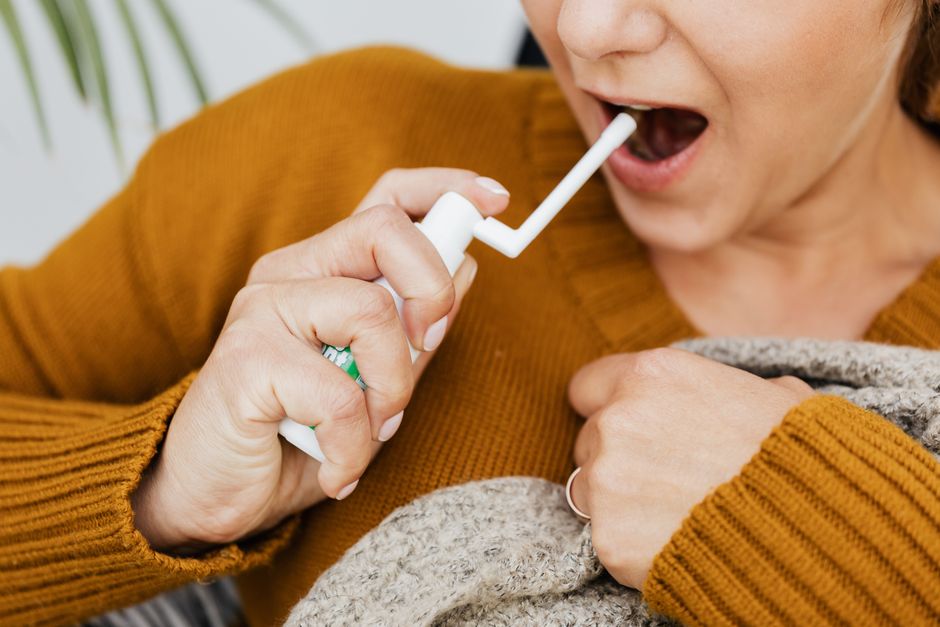
A dry throat at night is usually caused by mouth breathing, dry indoor air, or reduced saliva flow during sleep. Saliva production drops naturally at night, so any added factor — a blocked nose, a fan, dry heat, or certain medications — can leave your throat feeling scratchy by morning. Keeping it moist comes down to three things: breathing through your nose, adding moisture to the air, and supporting saliva flow before bed.
Why Does Your Throat Get Dry While You Sleep?
Saliva is your throat’s main moisture source, and saliva flow slows during sleep. That is normal. The problem starts when something makes it slow further or dries the tissue directly.
The most common culprit is mouth breathing. When your nose is blocked — by a cold, allergies, or a deviated septum — your body switches to breathing through your mouth. Air moving across the back of your throat all night evaporates the thin layer of moisture that keeps tissue comfortable. You wake up with a dry, rough feeling.
Dry air does the same thing. Heated indoor air in winter holds very little moisture, and air conditioning can dry a room out too. A fan blowing across your face speeds up evaporation even more.
Several other factors can play a role:
- Medications — antihistamines, decongestants, and some blood pressure drugs reduce saliva flow.
- Alcohol in the evening — it dries the mouth and relaxes the muscles that keep your airway open.
- Caffeine late in the day — a mild diuretic effect and reduced saliva.
- Nasal congestion from allergies or a cold.
- Sleeping with your mouth open, even without a blocked nose.
Age matters too. Saliva production tends to decline somewhat with age, and many people in the 35-65 range take at least one medication that affects moisture.
How Can You Keep Your Throat Moist While Sleeping?
The most effective approach targets the cause, not just the symptom. If you breathe through your mouth because your nose is blocked, clearing the nose is the single biggest step. If the air is dry, adding moisture to the room helps. Most people need a combination.
A few practical steps that address the main causes:
- Clear your nose before bed. A saline nasal rinse or spray can help if congestion is mild. If allergies are the cause, treating them consistently matters more than a one-off fix.
- Add moisture to the air. A humidifier in the bedroom raises humidity. Keep it clean — a dirty humidifier tank can grow mold and bacteria that get blown into the air you breathe.
- Try a nasal strip or breathe-right style device. These gently open the nostrils and can reduce mouth breathing in some people. Evidence varies, and they work better for some noses than others.
- Adjust your sleep position. Sleeping on your side or slightly elevated can reduce congestion and make nose breathing easier.
- Keep the bedroom cool and skip the fan aimed at your face. Moving air increases evaporation from your mouth and throat.
None of these is guaranteed. What works depends on why your throat is dry in the first place. Someone with seasonal allergies needs a different fix than someone who simply sleeps in a dry, heated room.
Does a Humidifier Actually Help?
A humidifier can help if the air in your bedroom is genuinely dry. It adds water vapor to the air, which slows evaporation from your throat and nasal passages. That is straightforward physics, and many people notice a difference.
The evidence is less clear on how much humidity is ideal for throat comfort specifically. General indoor humidity recommendations often fall in the 30-50% range, but this is a broad comfort guideline rather than a precise threshold for throat moisture. Too much humidity — above roughly 60% — can encourage mold and dust mites, which is worse for allergies and asthma.
Practical points if you use one:
- Clean the tank regularly. Follow the manufacturer’s instructions. Mold and bacteria in a humidifier tank are a real risk.
- Use distilled or demineralized water if your tap water is hard — mineral dust can be released into the air.
- Cool-mist humidifiers are generally preferred over warm-mist for safety around children, though both add moisture.
- Don’t overdo it. A room that feels damp or shows condensation on windows is too humid.
A humidifier is a reasonable tool, not a cure. If your throat is dry because you mouth-breathe through a blocked nose, humidity alone won’t fix the cause.





What About Drinking Water Before Bed?
Staying hydrated during the day supports saliva production. Drinking a glass of water before bed is fine and may help a little, but it won’t keep your throat moist for eight hours. The water you drink is absorbed and used by your body; it doesn’t coat your throat for the night.
There’s a common belief that sipping water through the night solves dry throat. It can provide temporary relief if you wake up, but it disturbs sleep and doesn’t address why the throat dried out. Hydration matters more as a daily habit than as a bedtime fix.
How much water you need varies by body size, activity, climate, and diet. General guidance from national health authorities suggests roughly 2 to 3 liters of total fluid per day for adults, including fluid from food, but individual needs differ. There’s no established amount that specifically prevents nighttime throat dryness.
Can Sleeping Habits Make Dry Throat Worse?
Yes. Several sleep-related habits directly worsen throat dryness, and changing them can help more than any product.
Mouth breathing is the biggest one. If you consistently wake with a dry mouth and throat, it’s worth asking whether you breathe through your mouth at night. A partner may notice. You may also wake with a dry mouth, cracked lips, or a dull headache.
Alcohol in the evening relaxes the muscles that hold your airway open and reduces saliva. Even one or two drinks close to bedtime can leave your throat drier by morning.
Sleeping with your mouth open — sometimes linked to nasal obstruction or sleep apnea — keeps air moving across your throat all night. If you snore heavily, wake unrefreshed, or feel sleepy during the day, it’s worth discussing sleep apnea with a clinician. Chronic mouth breathing and dry throat can be a sign.
Room temperature and airflow matter too. A warm, stuffy room or a fan pointed at your face increases evaporation. A cooler room with still air tends to be kinder to your throat.
When Should You See a Doctor About a Dry Throat?
Occasional morning throat dryness is common and usually harmless. But some patterns deserve medical attention.
See a clinician if you have:
- A dry throat that persists most nights despite home measures.
- Dry mouth along with increased thirst and frequent urination — this can be a sign of diabetes.
- Persistent dry mouth with difficulty swallowing, chewing, or speaking.
- Dry eyes and dry mouth together — this can be associated with autoimmune conditions such as Sjögren’s syndrome.
- Loud snoring, gasping, or witnessed pauses in breathing during sleep — possible sleep apnea.
- A sore throat, hoarseness, or a lump feeling that lasts more than a few weeks.
Some medications cause dry mouth as a side effect. If you suspect a drug is involved, don’t stop it on your own — talk to your prescriber about alternatives or timing.
Dry mouth that is persistent and not explained by environment or habits is worth investigating. Saliva protects your teeth and gums as well as your throat, and ongoing dryness can raise the risk of dental problems.
What Actually Works and What Doesn’t
Some remedies help, some are harmless, and some are marketing. Here’s an honest breakdown.
| Approach | What the evidence shows |
|---|---|
| Treating nasal congestion | Addresses a common root cause of mouth breathing. Strong rationale, though individual response varies. |
| Humidifier in a dry room | Reasonable for dry air. Keep it clean and avoid over-humidifying. |
| Staying hydrated during the day | Supports saliva production. No specific bedtime amount is established. |
| Avoiding alcohol near bedtime | Reduces a known contributor to dryness and airway relaxation. |
| Nasal strips | Can help some people breathe through the nose. Response varies. |
| Throat lozenges or sprays marketed for nighttime moisture | May give temporary relief. No strong evidence they keep the throat moist for hours. |
| Special pillows or “anti-snore” devices | Evidence is limited and mixed. Some may help positional issues; claims often outrun data. |
The most reliable approach is to figure out why you’re drying out. Is your nose blocked? Is the air dry? Are you drinking alcohol late? Are you on a medication that reduces saliva? Fixing the cause beats layering on products.
One clarification worth making: a dry throat in the morning is not the same as chronic dry mouth (xerostomia). Morning dryness is usually environmental. Persistent dry mouth throughout the day is a different issue and deserves a medical conversation.
Frequently Asked Questions
Why is my throat so dry when I wake up?
Mouth breathing, dry indoor air, and reduced nighttime saliva flow are the most common causes. Alcohol in the evening and some medications can make it worse.
Does drinking water before bed keep your throat moist all night?
Not really. It supports hydration but doesn’t coat your throat for hours. Daily hydration matters more than a single glass at bedtime.
Can a humidifier stop a dry throat at night?
It can help if the air in your bedroom is dry. Keep the tank clean and aim for moderate humidity, not a damp room.
When is a dry throat a sign of something serious?
Persistent dry mouth with increased thirst, dry eyes, trouble swallowing, or loud snoring with gasping warrants a medical visit. Occasional morning dryness usually does not.
