
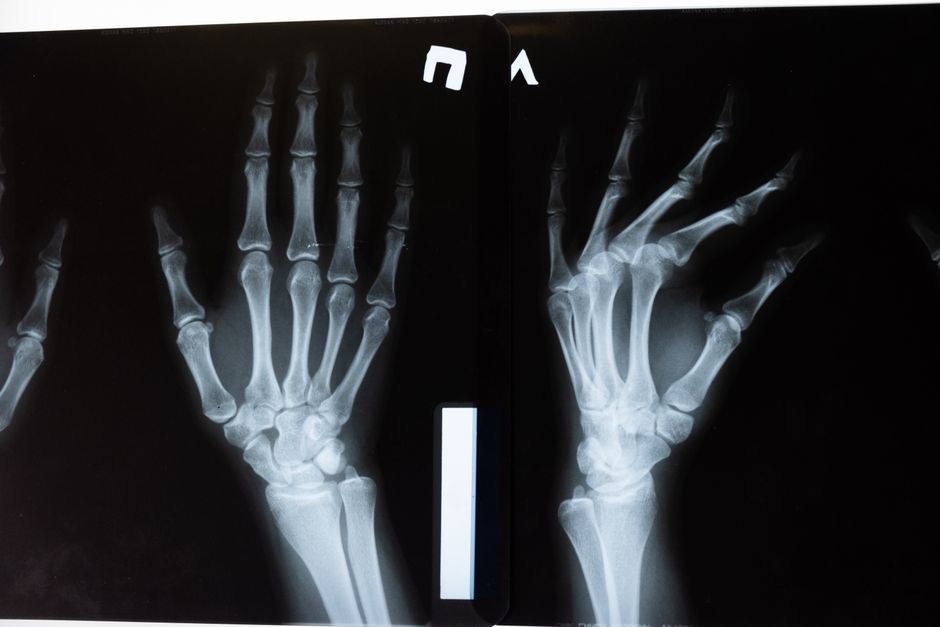
Your bones are living tissue. They rebuild themselves constantly through a process called remodeling, where old bone is broken down and new bone is formed. Up until about age 30, you build more than you lose. After that, the balance gradually shifts. For women, bone loss accelerates sharply in the first several years after menopause. The core strategy for protecting your skeleton is straightforward: build as much bone as you can early, slow the loss as you age, and reduce your risk of falls and fractures.
What Actually Happens to Your Bones As You Age?
Bone is not a static scaffold. It is active tissue with its own blood supply, nerves, and constant cellular turnover. Two cell types do the work. Osteoblasts build new bone. Osteoclasts break down old bone. When osteoblasts keep pace with osteoclasts, bone density holds steady. When breakdown outpaces building, bone density declines.
Peak bone mass — the maximum density your skeleton achieves — is typically reached by the late 20s. Genetics strongly influence this peak, but nutrition and physical activity during childhood and young adulthood also play significant roles. After peak is reached, bone mass stays relatively stable for a decade or so, then begins a slow decline in both men and women.
In women, estrogen plays a direct role in restraining osteoclast activity. When estrogen drops during menopause, that restraint is removed and bone loss accelerates. Research consistently shows that women can lose a substantial percentage of trabecular bone — the spongy inner structure of bones — in the years surrounding menopause. Men experience bone loss too, but typically later and more gradually.
How To Keep Your Skeletal System Healthy As You Age
The most effective approach combines three things: adequate nutrition for bone building, weight-bearing and resistance exercise to stimulate bone formation, and fall prevention to protect bones that have already lost some density.
Nutrition matters most for the raw materials. Calcium is the primary mineral in bone. Vitamin D is required for calcium absorption in the gut. Protein provides the collagen framework that mineralizes into bone. Without enough of all three, the remodeling process lacks what it needs.
Exercise sends mechanical signals to bone cells. When bone is loaded — through walking, running, jumping, or lifting — osteoblasts respond by depositing new mineral. This is why weight-bearing activity matters more for bone than swimming or cycling, which support body weight and place less load on the skeleton.
Fall prevention becomes increasingly important with age. A fall that would bruise a young person can fracture a hip in someone with low bone density. Balance training, vision checks, medication reviews, and home safety modifications all reduce fall risk.
Which Nutrients Matter Most for Bone Health?
Calcium, vitamin D, and protein are the three nutrients with the strongest evidence for skeletal health. Other nutrients — magnesium, vitamin K, potassium — contribute to bone metabolism, but the evidence for supplementing them in otherwise healthy adults is weaker.
Calcium recommendations vary by age and sex. For most adults aged 19 to 50, the recommended daily allowance is 1,000 mg. For women over 50 and men over 70, it rises to 1,200 mg. These figures come from the Institute of Medicine (now the National Academy of Medicine) and remain the standard reference in US clinical practice.
Vitamin D is harder to get from food alone. Fatty fish, egg yolks, and fortified milk are the main dietary sources. Sunlight triggers vitamin D synthesis in skin, but production varies widely based on latitude, season, skin tone, and sunscreen use. The recommended daily allowance for most adults is 600 international units (IU), rising to 800 IU after age 70. Some clinicians recommend higher doses, but the evidence that higher doses improve bone outcomes in healthy adults is mixed.
Protein often gets overlooked. Bone is roughly half protein by volume, mostly type I collagen. Some studies suggest that higher protein intake is associated with better bone density in older adults, though the relationship is not fully settled. Current evidence does not support restricting protein for bone health in people with normal kidney function.





Does Exercise Really Strengthen Bones?
Yes, but the type of exercise matters. Bone responds to mechanical loading — the force placed on it during movement. Activities that generate higher impact or greater muscle pull on bone stimulate more bone formation than low-impact activities.
Research consistently shows that resistance training and high-impact activities like jumping or brisk walking support bone density. Swimming and cycling, while excellent for cardiovascular health, do not load the skeleton enough to produce the same bone-building effect.
The evidence is strongest for a combination approach:
- Weight-bearing cardio — walking, jogging, stair climbing, dancing
- Resistance training — free weights, resistance bands, bodyweight exercises
- Balance work — tai chi, single-leg stands, heel-to-toe walking
For adults who already have osteoporosis or are at high risk of fracture, the exercise conversation changes. High-impact activity may be unsafe. Some clinicians recommend working with a physical therapist to design a safe program. This is one area where individual guidance from a healthcare provider matters more than general recommendations.
When Should You Get a Bone Density Test?
Bone density testing uses dual-energy X-ray absorptiometry, commonly called a DXA scan. It measures bone mineral density at the hip and spine and produces a T-score. A T-score of -1.0 or above is considered normal. Between -1.0 and -2.5 is classified as osteopenia (low bone mass). At -2.5 or below, the diagnosis is osteoporosis.
The US Preventive Services Task Force recommends screening for osteoporosis in women aged 65 and older. For younger women who have risk factors — such as early menopause, long-term corticosteroid use, or a family history of hip fracture — screening may be recommended earlier. The task force states that evidence is insufficient to recommend routine screening in men, though some professional organizations suggest it for men over 70 or younger men with risk factors.
Risk factors that may prompt earlier screening include:
- Previous fracture from a minor fall
- Long-term use of glucocorticoid medications
- Low body weight
- Smoking
- Excessive alcohol use
- Rheumatoid arthritis
- Malabsorption conditions like celiac disease
DXA results guide treatment decisions, but they are not the only factor. Fracture risk depends on bone density, age, prior fractures, and other clinical factors. Some clinicians use a tool called FRAX to estimate 10-year fracture probability.
What About Supplements and Medications?
Calcium and vitamin D supplements can help people who cannot get enough from food. But supplements are not automatically beneficial. Some research suggests that calcium supplements may carry cardiovascular risks, though findings are mixed and this remains debated. Food sources of calcium are generally preferred when possible.
For people diagnosed with osteoporosis, prescription medications can reduce fracture risk. Bisphosphonates are the most commonly prescribed class. They work by slowing osteoclast activity. Other options include hormone-related therapies, monoclonal antibodies, and anabolic agents that stimulate bone formation. These are medical decisions that require a conversation with a physician.
No supplement has been shown to reverse osteoporosis. Marketing claims for “bone-building” supplements are not supported by large clinical trials. The evidence for strontium, ipriflavone, and similar products is limited or inconsistent.
Can You Prevent Bone Loss Entirely?
No. Some age-related bone loss is unavoidable. The goal is to slow it and reduce fracture risk, not to stop it completely.
What you can control: getting enough calcium, vitamin D, and protein; doing weight-bearing and resistance exercise regularly; not smoking; limiting alcohol; and taking steps to prevent falls. These measures have the strongest evidence behind them.
What you cannot control: genetics, age at menopause, certain medical conditions, and some medication effects. Knowing your risk factors helps you and your doctor decide when screening and treatment are appropriate.
How Does Menopause Affect Bone Health?
Menopause is the single biggest driver of bone loss in women. Estrogen protects bone by limiting osteoclast activity. When estrogen levels fall, that protection disappears. Bone loss accelerates for several years around the menopausal transition.
Not every woman experiences the same rate of loss. Body weight, genetics, physical activity, and calcium intake all influence how much bone is lost. Women who enter menopause with higher peak bone mass have more reserve to draw from.
Hormone therapy can slow bone loss during and after menopause, and some evidence indicates it reduces fracture risk. But hormone therapy carries its own risks, including increased risk of certain cancers and cardiovascular events. The decision to use hormone therapy is one that requires individualized discussion with a healthcare provider.
Frequently Asked Questions
At what age do bones start to weaken?
Bone mass peaks in the late 20s and begins a gradual decline after that. In women, bone loss accelerates significantly during and after menopause.
Is walking enough to keep bones strong?
Walking is weight-bearing and provides some bone benefit, especially when done briskly. Resistance training and higher-impact activities generally produce stronger bone-building effects.
What is the best calcium source for bones?
Food sources like dairy products, leafy greens, and fortified foods are generally preferred over supplements. Calcium from food is absorbed well and does not carry the same potential risks as high-dose supplements.
Can you rebuild bone once it is lost?
Some bone can be rebuilt with resistance exercise, adequate nutrition, and in some cases medication. But restoring lost bone density to previous levels is difficult, which is why prevention matters.
