
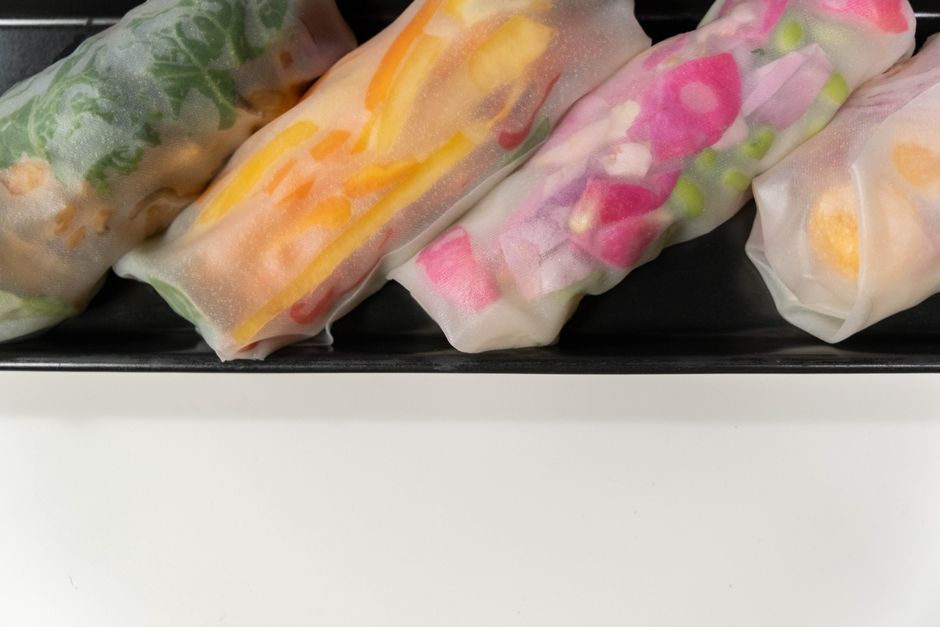
Spring rolls dry out because their wrapper is a thin starch skin with almost no fat to hold moisture in, and that moisture leaves fast once the roll meets open air. The fix is to slow two things at once: water escaping from the filling and water evaporating from the surface. Keep rolls wrapped tightly, stored cool, and separated so they don’t touch, and reheat them with moist heat rather than dry heat. Do those three things and a spring roll stays tender instead of turning leathery.
Why Do Spring Rolls Dry Out So Fast?
A spring roll wrapper is mostly starch and water. Rice paper is rice flour and water; wheat wrappers are flour and water. There is very little fat in either one, and fat is what slows moisture loss in most foods.
Starch also changes as it sits. When a cooked starch cools, its molecules reorder and squeeze water out — the same process that makes leftover rice go hard in the fridge. Food scientists call it starch retrogradation. In a spring roll, that shows up as a wrapper that stiffens and turns opaque. It is not just surface drying; the structure itself is changing.
The filling matters too. A wet filling keeps the wrapper soft from the inside. A dry filling pulls moisture out of the wrapper. This is why a vegetable roll with cabbage and carrot holds up better than a tight roll of plain shredded chicken.
How To Keep Spring Rolls Fresh Without Drying Out
The single most effective step is blocking airflow. Air is the enemy, not time by itself. A spring roll left uncovered for an hour loses more moisture than one wrapped tightly and refrigerated overnight.
Here is the order that works:
- Cool completely first if freshly fried. Sealing a hot roll traps steam, which softens the crisp shell into a soggy one. Let rolls rest on a rack until they stop steaming, then store.
- Wrap each layer. Put rolls in a single layer, cover with plastic wrap pressed gently against the surface, then add a second layer or a lid. Double protection beats one thick layer.
- Keep rolls from touching. Where rolls press together, moisture migrates and the wrappers stick and tear. Use parchment between layers.
- Store cool, not cold if you can. The refrigerator is dry and speeds staling. If a roll will be eaten within a few hours, a cool spot away from sunlight is gentler than the fridge.
- Keep sauces separate. Any dipping sauce packed alongside will soak into the wrapper. Store sauce in its own container.
For fresh (uncooked) rice paper rolls, the same rules apply but the clock runs faster. These are best eaten within a couple of hours. If you must hold them, wrap each one individually and keep them cool.
Should You Refrigerate Spring Rolls?
Refrigerate them if food safety requires it. Cooked spring rolls with meat, poultry, or seafood filling should not sit at room temperature for long. General food safety guidance holds that perishable foods should be refrigerated within about two hours of cooking.
The tradeoff is quality. A refrigerator is a dry, cold environment, and both conditions speed up staling in starch. A fried roll will lose its crunch within hours in the fridge even when well wrapped.
So the answer depends on the filling:
- Meat, poultry, seafood, or egg filling: refrigerate. Safety comes first, and you can restore some texture on reheating.
- All-vegetable filling, eaten the same day: a cool countertop spot is kinder to texture than the fridge.
- Fresh uncooked rolls with any perishable filling: refrigerate, and accept that the wrapper will soften.
One clarification worth knowing: the crispness of a fried roll and the tenderness of the wrapper are two different things. Wrapping well protects the wrapper from drying. It cannot fully protect the fried shell from going soft in the fridge. Those are separate problems with separate fixes.





How Do You Reheat Spring Rolls Without Drying Them Out?
Use moist heat, not dry heat. A dry oven or a microwave on its own will pull moisture out of the wrapper and leave the ends tough.
The most reliable method is an oven or toaster oven with a small dish of water placed inside, or a light spritz of water on the rolls before heating. The steam keeps the surface from drying while the heat restores some crispness. Watch them closely — thin wrappers scorch fast.
A skillet with a lid and a teaspoon of water works the same way. So does a steamer, though steaming softens a fried shell rather than crisping it.
If you use a microwave, cover the rolls and add a damp paper towel. They will come out soft rather than crisp, but they won’t be leathery. Microwaving uncovered is the fastest way to ruin a spring roll.
Reheat only what you plan to eat. Each reheating cycle drives off more moisture and the quality drops each time.
What About Freezing Spring Rolls?
Freezing works better for uncooked rolls than cooked ones. Freeze uncooked rolls in a single layer on a tray until firm, then transfer to a bag or container. Fry or bake them straight from frozen without thawing, which keeps the wrapper from getting wet and gummy.
Cooked fried rolls can be frozen too, but the filling and wrapper both suffer. The wrapper tends to crack and the texture declines. If you freeze cooked rolls, wrap them tightly with as little air as possible and reheat with moist heat.
Fresh rice paper rolls do not freeze well. The wrapper turns watery and slimy on thawing. There is no reliable way around this.
What Wrapper and Filling Choices Help?
Some choices hold up better than others. A slightly thicker wheat wrapper resists drying longer than a very thin one. Rice paper is the most delicate and the least forgiving in storage.
Filling moisture is the other lever. A filling that is too wet makes the wrapper soggy from the inside, and one that is too dry makes it stiff. The middle ground is a filling that has been cooked and drained, with excess liquid pressed out of watery vegetables like cabbage and zucchini before rolling.
Adding a little oil to the filling helps a bit. Fat slows moisture movement, and it also carries flavor. It will not make a spring roll keep for days, but it buys some margin.
Roll tightly but not so tightly that the wrapper tears. A torn wrapper is a direct path for moisture to escape.
How Long Do Spring Rolls Actually Last?
Fresh rice paper rolls are best within two hours and acceptable for a few hours longer if kept cool and wrapped. Fried rolls hold their best quality for a few hours and are still safe for a day or two in the fridge, though texture declines.
Frozen uncooked rolls keep for a few months at proper freezer temperatures without major quality loss, though the filling may soften slightly over time.
These are quality windows, not safety guarantees. For any roll with meat, poultry, seafood, or egg, follow standard food safety guidance on refrigeration and reheating rather than texture alone.
The practical takeaway: spring rolls are a food to make close to when you plan to eat them. Storage can protect them for hours, but not for days. Plan the batch around the meal.
Frequently Asked Questions
How do you keep spring rolls from drying out overnight?
Wrap them tightly in plastic wrap in a single layer, keep them from touching, and refrigerate if the filling contains meat, poultry, seafood, or egg. The wrapping blocks airflow, which is the main cause of drying.
Can you make spring rolls ahead of time?
Yes, uncooked rolls can be assembled a few hours ahead, wrapped tightly, and refrigerated or frozen. Cooked fried rolls are best made close to serving because the shell softens quickly in storage.
Why do my spring roll wrappers get hard in the fridge?
Cold temperatures speed up starch retrogradation, where starch molecules reorder and push water out, making the wrapper stiff and opaque. Tight wrapping slows moisture loss but does not stop this process.
Should you cover spring rolls when reheating?
Yes, covering traps steam and keeps the wrapper from drying out. Add a small dish of water or a light spritz to create moisture, and reheat only the rolls you plan to eat.
