
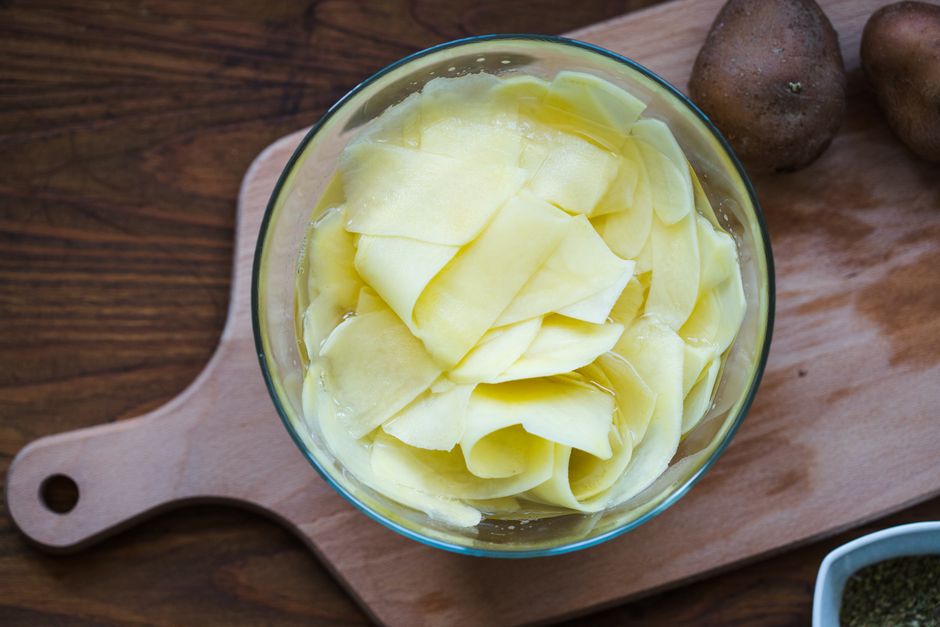
Peeled potatoes start turning brown within minutes of being exposed to air. This browning is called oxidation, and it happens when the potato’s cells are cut open and react with oxygen. The good news is that you can stop this process easily with items you already have in your kitchen. Submerging peeled potatoes in cold water is the most reliable method. Adding a little acid like lemon juice or vinegar to the water gives you even more protection. This method keeps potatoes fresh and white for up to 24 hours in the refrigerator.
What Actually Causes Potatoes to Turn Brown After Peeling?
Potatoes contain an enzyme called polyphenol oxidase (PPO). When you cut or peel a potato, you break open the cells. This lets the PPO enzyme come into contact with oxygen in the air. The reaction creates melanin, which is the same pigment that makes your skin tan or an apple turn brown.
This process is called enzymatic browning. It is not a sign that the potato is bad or unsafe to eat. The brown color is purely cosmetic. But it does make the potato look unappealing, especially if you are serving them to guests or prepping for a holiday meal.
The speed of browning depends on the potato variety. Russet potatoes brown faster than red or Yukon Gold potatoes. Temperature also plays a role. Warmer temperatures speed up the enzyme reaction. Cold temperatures slow it down significantly.
Does Water Really Stop Potatoes From Browning?
Yes, water works because it creates a barrier between the potato’s surface and the oxygen in the air. The PPO enzyme needs oxygen to cause browning. When potatoes are fully submerged, the enzyme cannot react, and the potato stays white.
Research from the University of Idaho Extension confirms that submerging peeled potatoes in cold water is the standard recommended method for commercial and home kitchens. The key word here is submerged. Floating potatoes that break the surface will still brown at the exposed spots.
Cold water is better than warm water for two reasons. First, it slows down the enzyme activity. Second, it helps the potato stay crisp. Warm water can start to cook the outer layer of the potato, making it mushy later when you cook it.
One thing most articles do not tell you: change the water every 8 to 12 hours if you are storing them longer than a day. The water absorbs starches from the potatoes, and that starchy water can start to ferment. Fermented water will give your potatoes an off smell and taste.
How To Keep Peeled Potatoes Fresh And Prevent Browning With Acid
Adding an acid to the water gives you an extra layer of protection. Acids lower the pH of the water, which directly slows down the PPO enzyme. The PPO enzyme works best in a neutral pH around 7. Drop the pH to 4 or below, and the enzyme practically stops working.
Lemon juice is the most common choice. Use about one tablespoon of lemon juice per gallon of cold water. The lemon flavor is very mild and will not affect the taste of your potatoes once you cook and drain them. White vinegar works just as well at the same ratio.
Citric acid powder is what commercial food processors use. You can buy it in the canning section of most grocery stores. Use 1 teaspoon per gallon of water. Citric acid has no flavor at all, so it is the best choice if you are worried about taste.
A common myth is that salt water prevents browning. Salt does not stop the enzyme reaction. Salt can actually draw moisture out of the potato and make the texture worse. Stick with acid and cold water.





What About Storing Peeled Potatoes in the Fridge or Freezer?
Refrigeration is essential if you are keeping peeled potatoes longer than 2 hours. The refrigerator slows down the enzyme reaction and also prevents bacterial growth. Peeled potatoes are more vulnerable to bacteria because the protective skin is gone.
Store your submerged potatoes in a covered container in the refrigerator. A bowl covered with plastic wrap works fine. A container with a tight lid is even better because it also blocks oxygen. Potatoes stored this way will stay white and fresh for 24 to 48 hours.
Freezing peeled potatoes is possible but requires extra steps. Raw potatoes contain a lot of water. When you freeze them, the water expands and breaks the cell walls. When you thaw them, they turn into a watery, mushy mess. To freeze peeled potatoes successfully, you must blanch them first.
Blanching means boiling the peeled potatoes for 3 to 5 minutes, then plunging them into ice water. This deactivates the PPO enzyme completely. After blanching and drying, you can freeze the potatoes in a sealed bag for up to 3 months. The texture will be softer than fresh potatoes, so they are best for mashed potatoes or soups, not for roasting.
What Methods Should You Avoid?
Several viral methods for keeping potatoes white do not work well and can ruin your food. One popular trick is brushing the cut surface with olive oil. Oil does create a barrier against oxygen, but it is not complete. Any spot the oil misses will brown. Plus, oil-coated potatoes do not brown evenly when you cook them.
Another common tip is using baking soda in the water. Baking soda raises the pH, which actually makes the enzyme work faster. Potatoes stored in baking soda water will brown faster, not slower. This is a classic case of internet advice being completely backwards from the science.
Some people recommend wrapping peeled potatoes in a damp paper towel and putting them in a plastic bag. This method is unreliable. The paper towel dries out, and the exposed potato browns. It also creates a moist environment where bacteria can grow quickly.
Vacuum sealing works perfectly for preventing browning because it removes all oxygen. But most home kitchens do not have a vacuum sealer. If you do have one, it is an excellent option for storing peeled potatoes for several days in the refrigerator.
Does How To Keep Peeled Potatoes Fresh And Prevent Browning Change the Nutrition?
Soaking peeled potatoes in water does cause some nutrient loss. Potatoes contain water-soluble vitamins, especially vitamin C and some B vitamins. These vitamins leach into the water over time. The longer the potatoes soak, the more vitamins they lose.
A study published in the Journal of Food Science found that soaking peeled potatoes for 12 hours caused a 10 to 15 percent loss of vitamin C. This is noticeable but not dramatic. If you are eating potatoes as part of a balanced diet, this loss is not a concern.
If you want to minimize nutrient loss, keep the soaking time as short as possible. Soak only for the time you need, not overnight just because you can. Also, use the soaking water for cooking if you can. Boiling potatoes in the same water recaptures some of the lost vitamins.
The starch that leaches into the water is not a nutrient loss you need to worry about. Starch is just carbohydrates, and you are not losing a meaningful amount. Some people actually prefer the texture of potatoes that have been soaked because they become slightly firmer and less sticky when cooked.
| Storage Method | Freshness Duration | Best Use |
|---|---|---|
| Cold water, no acid | 12 to 24 hours | General cooking, roasting, boiling |
| Cold water with lemon juice or vinegar | 24 to 48 hours | Longer prep, holiday meals, serving raw |
| Blanched and frozen | Up to 3 months | Mashed potatoes, soups, stews |
| Vacuum sealed, refrigerated | 3 to 5 days | Meal prep for the week |
Common Misconceptions About Keeping Peeled Potatoes White
The biggest misconception is that brown potatoes are unsafe to eat. Enzymatic browning is not spoilage. It is the same harmless reaction that turns a sliced apple brown. The potato is still perfectly safe. The only issue is appearance.
Another misconception is that you must use lemon juice or vinegar. These acids help, but plain cold water works fine for most situations. The acid is an insurance policy, not a requirement. If you do not have lemon juice, do not let that stop you from soaking your potatoes.
Some people believe that peeled potatoes must be cooked immediately or they will go bad. This is not true. With proper storage in cold water and refrigeration, peeled potatoes stay good for up to 2 days. After that, the texture starts to degrade even if the color is fine.
A final myth is that soaking potatoes removes too much starch and ruins the flavor. Soaking does remove surface starch, which actually improves texture for roasting and frying. The potatoes become crispier. The flavor is unchanged because the flavor compounds are not water-soluble.
Frequently Asked Questions
Can I leave peeled potatoes in water overnight on the counter?
No, you should never leave peeled potatoes at room temperature for more than 2 hours. Bacteria grow quickly on cut produce at room temperature. Always store them in the refrigerator.
Will adding salt to the water prevent browning?
No, salt does not stop enzymatic browning. Salt can actually make the potatoes release moisture and become waterlogged. Use lemon juice or vinegar instead for better results.
How long can peeled potatoes sit in water before cooking?
Peeled potatoes can sit in cold water in the refrigerator for up to 48 hours. After that, the texture becomes soft and the potatoes may develop an off flavor. Change the water every 12 hours for best results.
Does soaking peeled potatoes remove nutrients?
Yes, some vitamin C and B vitamins leach into the water during soaking. The loss is about 10 to 15 percent over 12 hours. This is not a significant concern for most people eating a balanced diet.
