
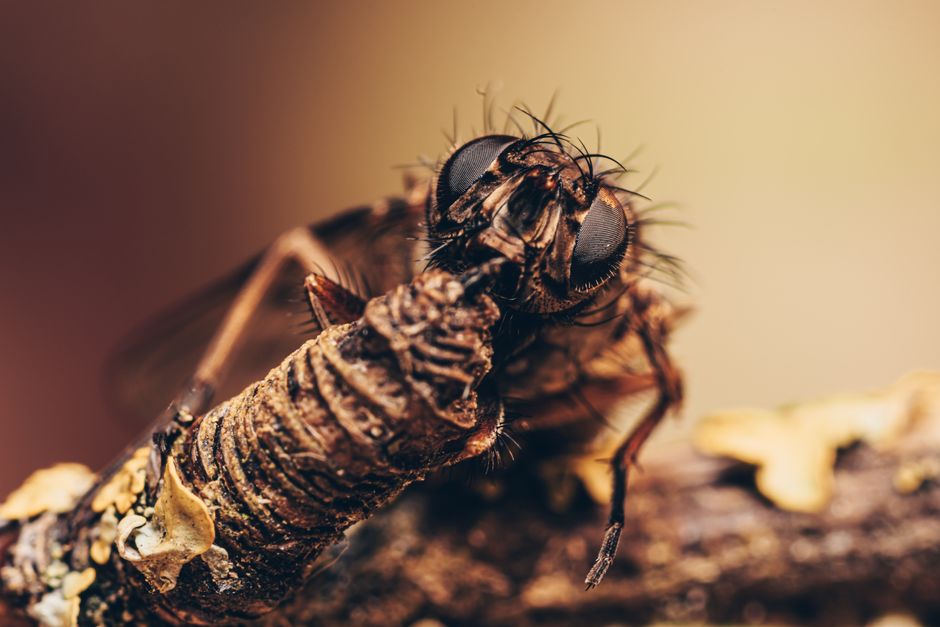
Flies come outside because something out there feeds them or gives them a place to breed. The most effective way to keep them away is to remove those resources: seal and promptly remove garbage, clean up pet waste and rotting fruit, keep doors and windows screened, and manage moisture and organic waste around the yard. Traps and repellents can help, but they work best as a backup to sanitation, not as a substitute for it.
Most people reach for a spray or a trap first. That order is backwards. Flies are tracking odors and moisture back to a source, and until that source is gone, you are treating a symptom.
Why Are Flies So Attracted To My Outdoor Space?
Flies are guided mostly by smell. A house fly can detect decaying organic matter, garbage, and animal waste from a distance, and it heads toward the strongest source. What looks like a clean patio to you may still register as a food site to a fly.
The common species around homes have different habits, which matters for control. House flies and blow flies breed in garbage, manure, and rotting material. Fruit flies follow fermenting fruit and sugary spills. Drain flies breed in the thin film of organic sludge inside drains and pipes. If you have a persistent problem in one spot, identifying which fly you are dealing with points you to the actual source.
Warmth speeds everything up. Flies are cold-blooded, so their life cycle runs faster in hot weather. A single generation that might take weeks in cool conditions can complete in a fraction of that time in summer heat. This is why a small overlooked breeding site can turn into a visible swarm quickly.
How To Keep Flies Away From Outside With Basic Sanitation
Sanitation is the foundation, and it is the part most people underdo. Every fly you prevent from breeding is dozens you never have to trap. The goal is to remove food, water, and breeding material before flies find them.
- Garbage: Use containers with tight-fitting lids. Bag waste before it goes in. Empty indoor bins frequently in warm weather rather than letting them fill.
- Pet waste: Scoop it daily. Dog and cat waste is a prime breeding site for several fly species.
- Fallen fruit and produce: Pick up dropped fruit under trees and clean up garden waste. Rotting fruit draws fruit flies and others.
- Compost: Turn it regularly and keep the right balance of material. A poorly managed compost pile is a fly nursery. Bury food scraps in the center rather than tossing them on top.
- Spills and residues: Rinse recycling before it goes in the bin. Sugary residue in cans and bottles attracts flies.
- Standing water and damp spots: Fix leaks and remove pooled water. Some flies breed in wet organic film, so keep areas dry where you can.
A non-obvious point: distance matters. A garbage can or compost bin placed right next to a door or seating area pulls flies directly to where people are. Moving waste storage farther from the house and away from outdoor living space reduces encounters more than most people expect.
Do Fly Traps And Repellents Actually Work?
Traps can reduce fly numbers, but they are a supplement, not a solution. A trap catches flies that are already there. It does nothing about the source producing them. If you trap heavily while a breeding site remains, you are bailing water without fixing the leak.
Traps work best when placed thoughtfully. Put them away from doors and gathering areas, because a trap that lures flies can draw them toward the house if positioned poorly. Ultraviolet light traps attract certain flies and are used in some settings, though results vary by species and placement. Sticky traps and bait stations can help in enclosed or semi-enclosed spaces.
Chemical sprays and residual insecticides can kill flies on contact and are used in some commercial and agricultural settings. For home outdoor use, follow the product label exactly, and keep in mind that sprays address adult flies present at the moment, not the population breeding nearby. No spray fixes a sanitation problem.
Repellent devices sold as ultrasonic or electronic fly deterrents have not been shown in published research to reliably repel house flies. Be skeptical of strong claims for these products. The evidence does not support them working as advertised.
How Do I Keep Flies Out Of My House From Outside?
The most reliable barrier is physical: keep flies from getting in. Screening, sealing, and airflow control do more than most people give them credit for.
- Keep window and door screens in good repair. Patch or replace torn screens.
- Use a tight-fitting screen door and make sure it closes on its own.
- Seal gaps around doors, windows, and utility openings.
- Keep doors closed when not in use, especially during warm hours when flies are most active.
- Consider a fan at doorways. Flies are relatively weak fliers, and steady airflow at an entrance can discourage them from passing through.
Indoors, the same sanitation logic applies. Keep counters clean, store food in sealed containers, take out trash promptly, and fix leaky pipes. A fly that gets inside will find whatever food or moisture is available, so removing those resources limits how long it stays.
What About Plants, Oils, And Natural Repellents?
Some plant-based repellents have a long history of use, and a few have been studied. Certain essential oils, including some derived from plants like citronella and eucalyptus, have shown repellent activity against flies in limited laboratory and field studies. The evidence is not strong enough to call them reliable stand-alone solutions, and their effect tends to be short-lived.
If you use essential oil products, treat them as a mild added layer, not a primary strategy. Follow label directions, keep them away from children and pets as directed, and do not assume “natural” means risk-free. Some oils can irritate skin or be toxic to pets, particularly cats, so check before using them around animals.
Planting certain herbs or flowers around a patio is often recommended as a fly deterrent. There is little solid evidence that simply growing these plants meaningfully reduces fly populations outdoors. The aroma may help slightly right at the plant, but it does not replace sanitation or screening.
How Do I Handle A Serious Fly Problem?
If flies are present in large numbers despite basic cleanup, look for a hidden breeding source. Common culprits include a forgotten bag of trash, a dead animal in a wall or crawl space, a leaking drain, or waterlogged organic material under a deck or appliance.
Persistent, heavy infestations sometimes point to a source you cannot easily see or reach. In those cases, a pest control professional can locate the breeding site, which is often more useful than repeated spraying. If flies are appearing indoors in large numbers, that usually signals a breeding site inside the structure or very close to it.
For most households, the pattern holds: find and remove the source, block entry, and use traps as a supporting measure. That sequence solves more fly problems than any single product.
Frequently Asked Questions
What is the fastest way to get rid of flies outside?
Find and remove the breeding source, such as garbage, pet waste, or rotting material, because that stops new flies from appearing. Traps and sprays only address flies already present.
Does vinegar or essential oil really keep flies away?
Some plant oils have shown limited repellent activity in studies, but the effect is short-lived and not reliable on its own. Treat them as a minor add-on to sanitation and screening.
Why are there so many flies around my trash cans?
Trash provides food and a breeding site, especially when lids are loose or waste sits too long. Tight lids, bagging waste, and frequent emptying reduce flies significantly.
Do ultrasonic fly repellents work?
Published research has not shown ultrasonic devices to reliably repel house flies. Be skeptical of products making strong claims for them.
