
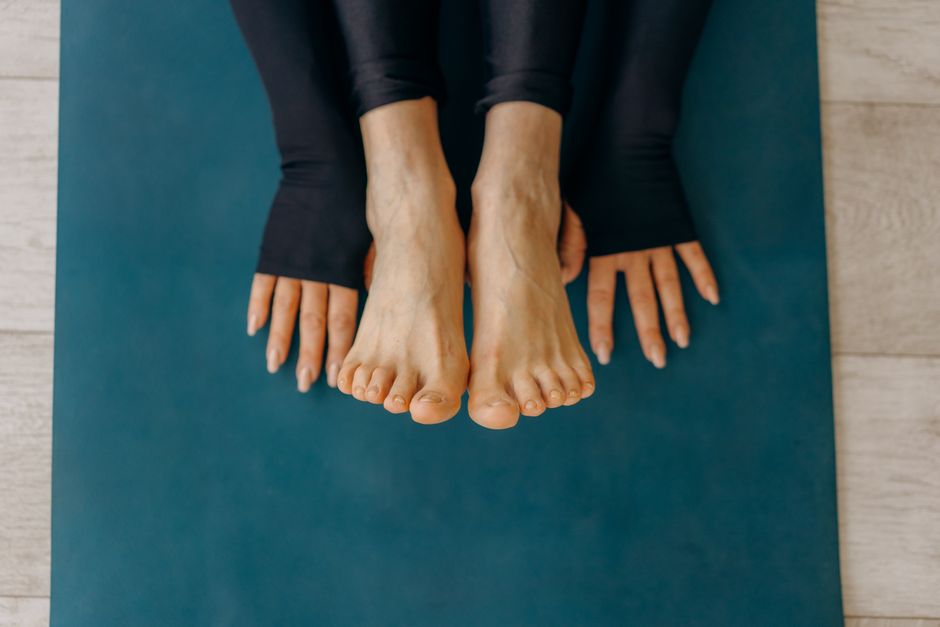
If your ankles and feet swell by the end of the day, raising them above the level of your heart lets gravity drain the extra fluid back toward your core. The key is getting your feet higher than your heart, not just higher than your knees. Lie down, stack pillows under your calves and feet, and stay there long enough for the fluid to actually move.
Swelling in the feet and ankles has a medical name: peripheral edema. It happens when fluid leaks out of tiny blood vessels into surrounding tissue faster than your lymphatic system and veins can carry it away. Elevation works because it changes the pressure inside those vessels and lets gravity do some of the work your circulation normally handles.
Why Does Fluid Collect In The Feet And Ankles?
Your legs are the hardest place for your body to move blood and fluid against gravity. Every step and every heartbeat helps push fluid up toward the heart, and one-way valves in your veins keep it from sliding back down.
When that system gets overwhelmed, fluid pools in the lowest point of your body. That is almost always the feet and ankles. Standing or sitting for long stretches is the most common everyday cause. Blood and fluid simply collect while you are not moving.
Other causes are more serious. Heart failure, kidney disease, liver disease, and problems with the veins in your legs can all produce swelling. So can some medications, including certain blood pressure drugs, steroids, and diabetes medicines. Pregnancy is another common cause, especially in the later months.
This is the part worth being honest about: elevation helps with the fluid, but it does not fix what caused it. If swelling is new, one-sided, painful, or comes with shortness of breath or chest pain, that is a reason to get medical care rather than reach for a pillow. One-sided swelling in particular can signal a blood clot, which is an emergency.
How To Keep Feet Elevated To Reduce Swelling?
The position matters more than the pillow count. To let gravity drain fluid out of your feet, your feet need to sit above the level of your heart. Elevating them to hip height or just above your knees helps a little. Getting them above your heart helps more.
Here is how to set it up:
- Lie flat on your back on a bed, couch, or the floor. Lying down is what puts your heart at a workable height.
- Stack pillows, a wedge cushion, or folded blankets under your calves and feet so the whole lower leg slopes upward.
- Aim for your feet to be roughly 6 to 12 inches above your heart. Higher is not automatically better and can feel uncomfortable.
- Support the entire lower leg, not just the heel. Letting the calf hang with no support can strain the knee.
- Stay in the position for about 15 to 30 minutes at a time, and repeat a few times a day if swelling keeps returning.
Some people get relief faster by also flexing and pointing their ankles while elevated. That movement pumps the calf muscles, which act as a second heart for the legs. Elevation plus gentle ankle pumps tends to work better than either one alone.
If you are sitting in a recliner, understand its limits. A recliner raises the legs but usually keeps the hips and heart at nearly the same level. That is better than standing, but it does not drain fluid the way lying flat with the feet above the heart does.
How Long Should You Keep Your Feet Up?
There is no single number that fits everyone. Elevation is not a treatment with a fixed dose. It is a mechanical way to help your body move fluid, and how long it takes depends on why you are swollen and how much fluid has built up.
For everyday swelling from standing or sitting, many people notice their ankles look and feel better within 15 to 30 minutes of proper elevation. For swelling tied to a medical condition, relief can be slower and less complete.
The useful rule is consistency over intensity. Short, frequent periods of elevation through the day often work better than one long session at night. If you sit at a desk, a few minutes of feet-up every couple of hours can keep fluid from building up in the first place.
If elevation stops helping, or swelling keeps coming back no matter what you do, that is information. It can mean the underlying cause needs attention, not that you need to elevate longer.





What Else Helps Besides Elevation?
Elevation is one tool. It works best alongside a few others that address the same problem from different angles.
Movement is the most underrated. Walking, and especially contracting your calf muscles, pushes fluid up and out of the legs. Sitting still for hours is what lets it pool.
Compression can help some people. Compression socks and stockings squeeze the legs to help veins and lymph vessels move fluid. The evidence for compression is strongest for swelling related to vein problems and after surgery. If you have poor circulation from artery disease, compression can be harmful, so this is something to discuss with a clinician rather than self-prescribe.
Reducing salt may help some people, because sodium makes the body hold onto fluid. The effect varies a lot from person to person.
Managing the underlying cause is what actually resolves ongoing swelling. That might mean adjusting a medication, treating a heart or kidney condition, or addressing a vein problem. Elevation buys comfort. It does not treat the source.
When Is Swelling A Reason To See A Doctor?
Swelling is common and usually not dangerous. But some patterns deserve prompt medical attention, and it is better to be checked than to guess.
Get medical care if you notice any of these:
- Swelling in only one leg or foot, especially with pain, warmth, or redness
- Sudden swelling, or swelling that gets worse quickly
- Swelling with shortness of breath, chest pain, or trouble breathing when lying flat
- Swelling along with weight gain, fatigue, or decreased urination
- Skin that is stretched, shiny, blistered, or weeping fluid
- Swelling that does not improve with elevation and rest
Swelling in one leg is the one to take most seriously. A blood clot in a deep vein can cause it, and a clot that travels to the lungs can be life-threatening. This is not a situation to manage at home with pillows.
Long-standing swelling also has its own risks. Over time, fluid can make the skin fragile and slow to heal, and it can raise the chance of skin infections. That is another reason ongoing swelling is worth a real diagnosis rather than a routine of propping your feet up and hoping.
Common Mistakes That Keep Swelling From Improving
People often elevate their feet and wonder why nothing changes. Usually the position is the problem, not the effort.
The most common mistake is elevating the feet only to knee or hip height. That feels like elevation, but it does not put the feet above the heart, so gravity is not draining fluid the way it needs to. Lying flat is what makes the difference.
Another mistake is expecting a quick fix. If fluid has been building for hours, it takes time to move. A few minutes with the feet up is not enough to undo a full day of standing.
A third is treating elevation as the whole plan. If the cause is a heart, kidney, vein, or medication issue, no amount of propping your feet up will resolve it. Elevation manages the symptom. The cause still needs to be found.
Frequently Asked Questions
How high should my feet be to reduce swelling?
Your feet should be above the level of your heart, roughly 6 to 12 inches higher, while you lie flat on your back. Elevating them only to knee or hip height helps less because gravity is not draining fluid back toward your core.
How long does it take to reduce swelling in the feet?
For everyday swelling from standing or sitting, many people see improvement within 15 to 30 minutes of proper elevation. Swelling tied to a medical condition can take longer and may not fully resolve with elevation alone.
Can I just put my feet up on a recliner?
A recliner raises your legs but usually keeps your hips and heart at nearly the same level, so it does not drain fluid as well as lying flat with your feet above your heart. It is better than standing, but it is not the same.
When should I worry about swollen feet?
Swelling in only one leg, or swelling with pain, warmth, redness, or shortness of breath, needs prompt medical care. Swelling that does not improve with elevation and rest is also worth having checked.
