
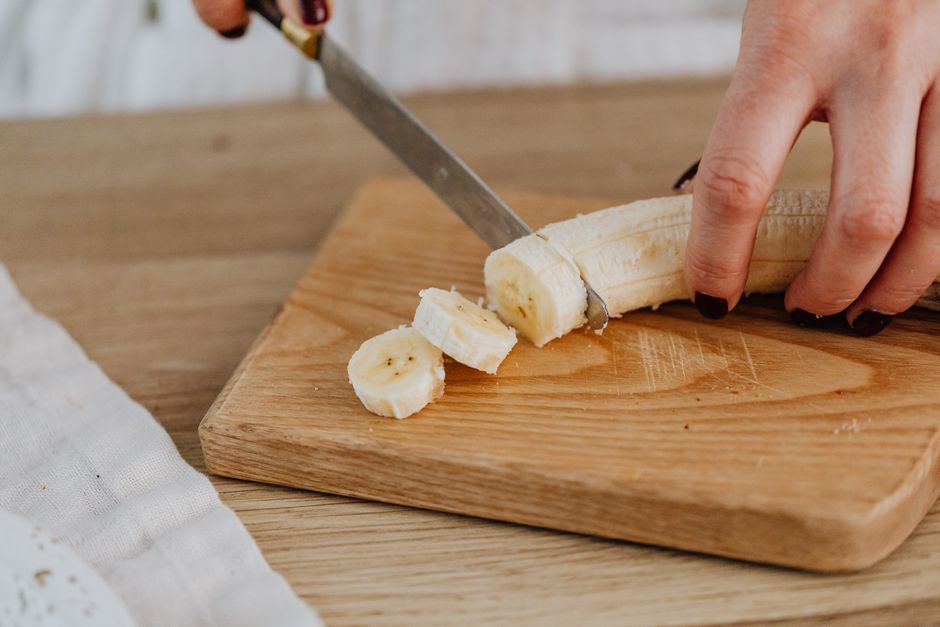
You slice a banana for your cereal or your kid’s lunchbox, turn around for ten minutes, and the edges have already gone brown and sad. The fix is simpler than most people think: stop the fruit’s cut surfaces from meeting oxygen, or slow down the enzyme that reacts with it. Lemon or lime juice, a brief soak in cold water, airtight storage in the fridge, or a quick blanch all work. Which one you choose depends on whether you want the slices to look fresh for an hour or stay decent for a few days.
The browning itself is harmless. It is not spoilage and it is not a sign the banana has gone bad. It is a chemical reaction, and once you understand it, keeping slices pale becomes mostly a matter of interrupting one of its steps.
Why Do Banana Slices Turn Brown So Fast?
Cutting a banana breaks open its cells and releases an enzyme called polyphenol oxidase. That enzyme reacts with oxygen in the air and with natural plant compounds called phenols. The reaction creates brown pigments known as melanins. It is the same basic process that browns a cut apple or a bruised avocado.
Bananas brown faster than many fruits because they are soft and low in acid. Acid slows the enzyme down. A lemon has plenty of it. A banana has very little. That is why a sliced banana on a counter can visibly darken within minutes, while a whole banana can sit for days.
Temperature matters too. Warmth speeds up the reaction, and so does physical damage. A knife that crushes rather than slices exposes more cell contents to air, which is why a dull blade makes browning worse.
Does Lemon or Lime Juice Actually Work?
Yes. Acid is one of the most reliable ways to slow enzymatic browning, and it has been used in food preparation for a very long time. The acid lowers the pH on the surface of the fruit. Polyphenol oxidase works best in a narrow pH range, and once the surface becomes acidic enough, the enzyme slows down considerably.
You do not need much. A light toss or a brush of fresh juice across the cut surfaces is enough. Too much and the banana tastes like a lemon drop. If you want the acid without a strong citrus flavor, a mild solution of lemon juice diluted with water works, though it is slightly less effective than straight juice.
Two practical points:
- Apply the juice right after slicing. Once the brown pigments form, acid cannot reverse them.
- Vitamin C in citrus juice also acts as an antioxidant and can help, which is part of why citrus is so effective here.
If you are packing slices for later, toss them in juice first, then seal them. The order matters.
Does Soaking Banana Slices in Water Help?
Yes, for short periods. A brief soak in cold water limits how much oxygen reaches the cut surfaces, which slows the reaction. It also rinses away some of the enzyme and the compounds it acts on. This is why some people keep peeled bananas in a bowl of water.
The catch is time. Water only blocks oxygen while the slices stay submerged. Once you drain them and expose them to air, browning resumes. Soaking works well if you plan to eat or use the slices within a short window.
Cold water works better than warm. Lower temperature slows the enzyme. Adding a squeeze of lemon to the water combines two methods at once and gives you more leeway.
One thing soaking will not do is keep slices fresh-tasting for days. Water alone is a short-term fix, not a storage solution.





What Is the Best Way to Store Cut Bananas?
Cold, airtight, and acid-treated is the combination that holds up best. Each part does something different.
Acid slows the enzyme. Cold slows the enzyme further. An airtight container limits the oxygen available for the reaction. Together they buy you more time than any one method alone.
Here is how the common methods compare for cut bananas:
| Method | What it does | Best for |
|---|---|---|
| Lemon or lime juice | Lowers surface pH, slows the enzyme | Slices eaten within hours |
| Cold water soak | Blocks oxygen, rinses off enzyme | Short-term, before serving |
| Airtight container in fridge | Limits oxygen and lowers temperature | Overnight storage |
| Blanching | Heat destroys the enzyme | Freezing or longer storage |
| Plastic wrap pressed to the surface | Blocks oxygen contact | Quick single-slice fix |
For the fridge, use a container with a tight lid. Pressing plastic wrap directly against the cut surfaces also helps by cutting off air. Refrigeration slows browning and also slows the ripening that turns a banana soft and mushy, though the peel will darken in the cold even when the inside stays fine.
Expect some browning no matter what. These methods slow the reaction. None of them stop it completely.
Can You Freeze Banana Slices Without Them Turning Brown?
You can, and this is where blanching earns its place. Brief heat exposure deactivates polyphenol oxidase, so the enzyme cannot drive browning even after the fruit thaws. A short dip in boiling water followed by an ice bath does the job, though it changes the texture of the fruit and makes it softer.
For most home freezing, the simpler route is to slice, toss in lemon or lime juice, and freeze in a single layer before transferring to a bag. The slices will still darken somewhat over time, but far less than untreated fruit. Frozen banana slices work well in smoothies, where the color and softer texture do not matter.
Frozen slices are not ideal for eating fresh out of hand. The freezing process damages cell walls, so they thaw soft and release water. That is a texture issue, not a safety one.
Is Browned Banana Safe to Eat?
Yes. The brown color comes from melanin pigments, the same class of compounds that color tea and coffee. It is not a sign of spoilage, mold, or bacteria. A banana that has browned from cutting is safe to eat.
What you should watch for is different. Spoilage looks and smells like spoilage. Signs that a banana has actually gone bad include:
- A fermented or alcoholic smell
- Visible fuzzy mold, especially white, green, or black patches
- A slimy, wet texture rather than just soft
- Leaking or weeping liquid from the flesh
If you see or smell any of those, throw it out. Brown color alone is not a reason to toss it.
One clarification worth making: the browning reaction and ripening are two separate processes. Ripening is driven by ethylene gas and natural enzymes that break down starch into sugar. Browning on a cut surface is a wound response. That is why a banana can be perfectly ripe and still brown the moment you slice it.
Which Method Should You Use?
Match the method to your timeline. If you are slicing a banana to eat in the next half hour, a quick squeeze of lemon or lime is enough and takes seconds. If you are packing slices for lunch, juice them and seal them in a container in the fridge. If you are prepping for smoothies or baking, freeze them with a citrus toss, or blanch first if you want them to hold color longer.
Skip the old tricks that do not hold up. Some people suggest a pinch of salt, which does little for browning. Others suggest coating slices in honey or sugar syrup, which can slow oxygen contact but adds sugar and does not address the enzyme. There is no household method that keeps a cut banana looking freshly sliced for days. Anyone who claims otherwise is overstating what these techniques can do.
The honest summary: acid, cold, and airtight storage each slow browning, and combining them works better than any one alone. None of them reverse browning that has already happened, and none of them keep slices looking new indefinitely. For a fruit that browns this fast, a few hours of good color is a realistic goal.
Frequently Asked Questions
How do you keep banana slices from turning brown?
Toss the slices in lemon or lime juice right after cutting, then store them in an airtight container in the fridge. The acid slows the browning enzyme and the cold and sealed container limit oxygen exposure.
Does lemon juice really stop bananas from browning?
Yes. The acid lowers the pH on the cut surface, which slows the enzyme polyphenol oxidase that causes browning. Apply it immediately after slicing, since it cannot reverse browning that has already started.
Can you keep cut bananas overnight without them turning brown?
You can slow the browning, but you cannot stop it completely. Treated slices in an airtight container in the fridge will look noticeably better the next day than untreated ones, though some darkening is normal.
Is it safe to eat a banana that has turned brown after slicing?
Yes. The brown color comes from harmless pigments, not spoilage. Throw it out only if it smells fermented, feels slimy, or shows visible mold.
