
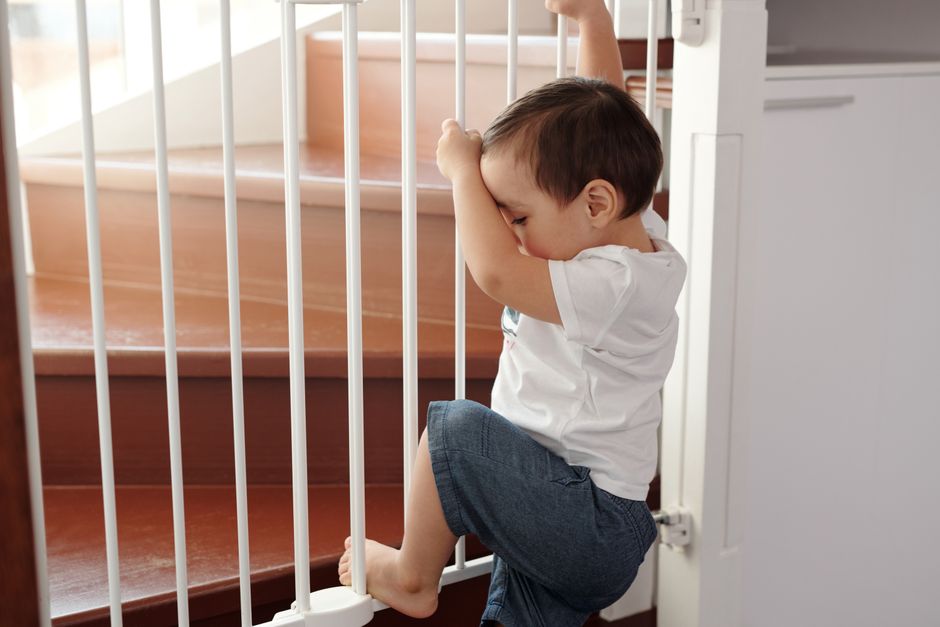
Babies learn to climb before they learn caution. One day your toddler is sleeping peacefully. The next day you find them with one leg hooked over the crib rail, grinning at you. This is a normal developmental stage, but it is also a serious safety risk. The crib is only safe when your child stays inside it. The moment they can climb out, the crib becomes a fall hazard.
The short answer is that you need to lower the mattress to its lowest setting first. If your child can still climb out at the lowest mattress height, it is time to move them to a toddler bed. There is no safe way to keep a determined climber inside a crib. The American Academy of Pediatrics recommends transitioning to a bed once your child reaches 35 inches tall or shows signs of climbing out.
Why Do Toddlers Climb Out of the Crib?
Climbing is a motor skill milestone. Around 18 to 24 months, many toddlers develop the strength and coordination to pull themselves up and over the crib rail. This is not bad behavior. It is a sign that their bodies are developing normally.
Some toddlers climb because they are not ready for sleep. Others climb because they are testing boundaries. A few climb simply because they can. The reason matters less than the response. Once climbing starts, the crib is no longer a safe sleep space.
Parents often wonder if a sleep sack or a crib tent will solve the problem. Sleep sacks can delay climbing for a short time because they restrict leg movement. They are not a permanent solution. Crib tents are not recommended by safety organizations because they pose strangulation and entrapment risks.
What Is the Safest Way To Stop Crib Climbing?
Lower the mattress to the lowest setting. This is the first step and the only adjustment that is both safe and effective. Most cribs have three or four mattress height positions. The lowest position makes it harder for a toddler to gain enough leverage to get a leg over the rail.
Check the crib manual to confirm you have installed the mattress at the lowest possible height. Many parents assume they have done this when they have not. The lowest setting should place the top of the mattress at least 26 inches below the top of the crib rail when measured from the mattress surface to the top rail.
If your child can still climb out at the lowest setting, the crib is no longer safe. No amount of supervision prevents a fall that happens in seconds. The transition to a bed is the only safe option at this point.
When Should You Move Your Child to a Toddler Bed?
Move your child to a bed when they can climb out of the crib at the lowest mattress setting. This is the clearest signal. Some parents wait until age 3. Others transition at 18 months because their child is a climber. Both timelines can be appropriate.
Height matters too. A child who is 35 inches tall is tall enough to climb out of most cribs even with the mattress lowered. If your child reaches this height before showing climbing behavior, consider transitioning early. The risk of a fall outweighs the convenience of keeping them in the crib.
Weight is less important than height and behavior. Most cribs have a weight limit of 50 pounds, but most children outgrow the crib by height or climbing ability long before they reach that weight.





How To Make the Transition to a Bed Safe
A toddler bed uses the same mattress as the crib. This makes the transition familiar. Place the bed in the same spot where the crib stood. Keep the same bedding and the same bedtime routine. Consistency helps toddlers adjust to the change.
Use a bed rail on the toddler bed until your child is used to the open sides. Bed rails prevent rolling out during sleep. They do not prevent climbing out intentionally, but they reduce the risk of injury from accidental rolls.
Put a soft rug or a thick mat on the floor next to the bed. If your child does climb out during the night, the landing surface matters. A carpeted floor is safer than a hard floor.
Remove pillows, stuffed animals, and heavy blankets from the toddler bed. This is the same safe sleep guidance that applies to cribs. A mattress with a fitted sheet is all a toddler needs for safe sleep.
What To Do When Your Toddler Gets Out of Bed at Night
Getting out of bed is different from climbing out of a crib. In a bed, your child can get up safely. They may walk to your room or call for you. This is frustrating but not dangerous.
Return your child to bed calmly and without conversation. Pick them up, place them back in bed, say goodnight, and leave the room. Repeat this as many times as needed. This approach is called the silent return or the walk-back method. It teaches your child that getting out of bed does not lead to attention or playtime.
Make sure the bedroom is safe for a wandering toddler. The door should be closed or secured with a childproof knob cover. Furniture should be anchored to the wall. Any cords from blinds or curtains should be out of reach. Your child may get out of bed even if you prefer they stay in it. The room must be safe enough for them to move around unsupervised.
Is It Safe To Use a Crib Tent or Bumper?
No. Crib tents and mesh crib bumpers are not recommended by pediatric safety experts. Crib tents can trap a child between the tent and the crib rail. The Consumer Product Safety Commission has reported deaths associated with crib tents. Mesh bumpers create a strangulation risk if a child becomes wedged between the bumper and the mattress.
Some parents try to use a sleep sack to prevent climbing. A sleep sack can delay climbing for a few weeks because it restricts leg movement. It is not a safe long-term solution. Once your child learns to climb in a sleep sack, they can climb out of the crib just as easily.
There is no product that safely keeps a determined climber in a crib. The only safe response is to remove the crib from the equation entirely.
What About Dropping the Crib Rail or Removing One Side?
Some cribs convert to daybeds by removing one side rail. This is a legitimate option if your crib is designed for this conversion. Check the manufacturer instructions. Do not remove a side rail from a crib that was not designed for it. This creates structural instability and entrapment hazards.
If your crib converts to a daybed, you still need a bed rail. The mattress height in a converted daybed is lower than in a crib, which reduces fall risk. But a bed rail adds an extra layer of protection.
Some parents consider converting the crib to a full-size bed with a toddler rail. This works for older toddlers who are ready for a bigger bed. For younger climbers, a toddler bed is usually the better choice because the mattress sits lower to the ground.
Frequently Asked Questions
At what age do babies start climbing out of the crib?
Most babies start attempting to climb out between 18 and 24 months. Some start earlier if they are tall or particularly active.
Is it safe to keep a toddler in a crib if they can climb out?
No. Once a child can climb out, the crib becomes a fall hazard and is no longer safe for sleep.
Can a sleep sack stop a baby from climbing out of the crib?
A sleep sack may delay climbing for a short time by restricting leg movement, but it is not a reliable or permanent solution.
What is the best transition from crib to bed?
A toddler bed with a bed rail placed in the same spot as the crib is the safest and easiest transition for most children.
