
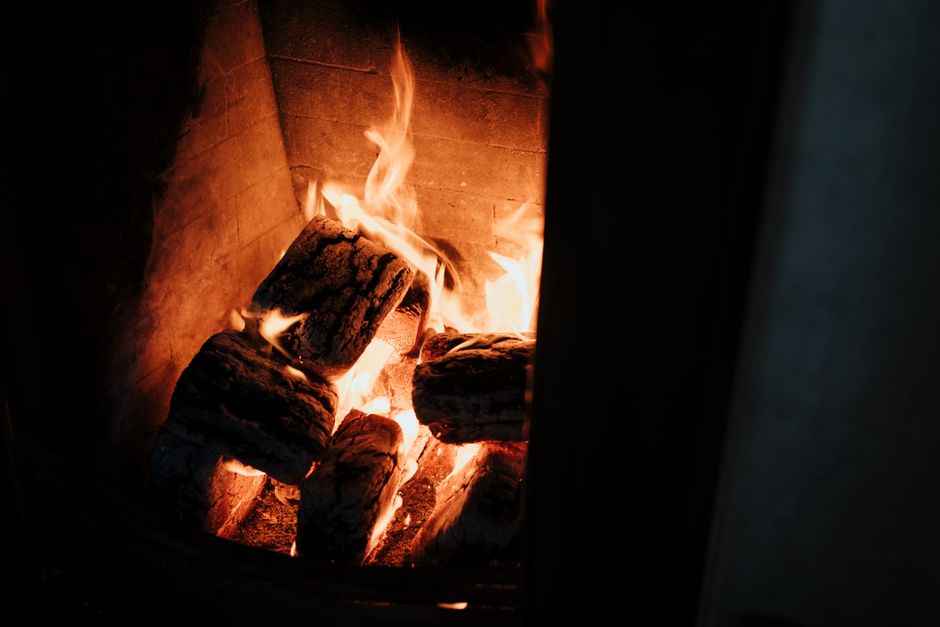
Keeping a coal fire burning steadily comes down to three things: a deep bed of glowing coals, controlled airflow from below, and fresh fuel added before the fire dies down rather than after. Load the firebox with coal, open the bottom air vents until the coal is burning well, then reduce the air to a slow, steady flow and top up with coal at regular intervals. Done right, a properly set coal fire will hold heat through the night without going out.
Coal is not wood. It does not burn the same way, it does not respond to the same techniques, and treating it like a wood fire is the most common reason people struggle to keep one going. Understanding how coal actually burns makes the whole job much simpler.
Why Does Coal Burn Differently From Wood?
Coal releases its heat energy much more slowly than wood and needs a steady supply of air from underneath to burn cleanly. Wood burns with flames and gives up most of its heat quickly. Coal smoulders and releases heat over a much longer period, which is exactly why it can hold a fire overnight when wood cannot.
The key difference is how coal breaks down as it heats. When coal is first added to a hot fire, it goes through a stage where volatile gases are driven off. These gases burn with visible flames. Once those gases are gone, what remains is a hot, glowing mass of carbon that burns slowly and steadily with almost no flame at all.
This is why coal needs to be heated gradually. If you throw a large amount of fresh coal onto a small fire, the coal cools the fire around it and the volatile gases can escape unburned, producing smoke and wasting fuel. Adding coal in smaller amounts to a hot fire lets it ignite properly and burn efficiently.
Coal also needs air from below the fuel bed, not from above. Wood can burn reasonably well with air coming from any direction. Coal needs what is called underfire air to keep the carbon burning. This single fact shapes almost every technique for keeping a coal fire going.
How To Keep A Coal Fire Going All Day And Night
The core method is to maintain a deep, hot bed of coals and control the air supply rather than constantly adding fuel. A deep coal bed is the engine of the whole fire. Shallow beds burn out. Deep beds hold heat for hours.
Here is the working sequence for a fire you want to last:
- Build a deep bed first. Before you try to run the fire long, get a thick layer of glowing coals established. This is your heat reserve.
- Add coal in small amounts. Add a modest layer of fresh coal, let it catch and glow, then add more. Large sudden loads smother the fire.
- Control air from below. Keep the bottom vents open enough to maintain a steady glow. Too little air and the fire smoulders and dies. Too much and the fuel burns away fast.
- Top up before the fire fades. Add coal while there is still a strong glowing bed. Adding coal to a dying fire rarely works.
- Keep the ash from choking the grate. Ash builds up and blocks airflow. Clear it regularly so air can reach the fuel.
The single most useful skill is reading the fire. A healthy coal bed glows evenly with a bright orange-red color and produces a steady heat. Dark patches mean fuel that has not caught. Bright, fast-burning areas mean too much air is getting through.
How Do You Bank a Coal Fire for the Night?
Banking a fire means arranging the fuel and air so the fire burns slowly and steadily for hours without attention. The goal is not to stop the fire burning but to slow it down to a controlled crawl that produces enough heat to keep the coals alive until morning.
Start by letting the fire burn down to a strong, deep bed of glowing coals. Rake the coals into an even layer, then add a generous but not excessive load of fresh coal on top. Once the new coal has caught and is glowing, reduce the bottom air vents to a small opening. You want just enough air to keep the coals alive, not enough to burn them out.
Close down the top of the fire as much as your appliance allows. Restricting air from above limits how fast the fire burns. Many stoves and fireplaces have a damper or top vent for exactly this purpose.
Two things commonly go wrong when banking a fire. The first is adding too much coal at once, which smothers the bed. The second is closing the air down too far, which starves the fire and lets it die overnight. It takes some trial and error to find the right setting for your particular fire, because every appliance draws air differently.
In the morning, open the bottom vents fully and the fire should rouse with a strong glow. Add coal once it has brightened.





Why Does Airflow Control Matter More Than Fuel?
Airflow, not the amount of coal, is what determines how long a coal fire lasts. A fire with too much air burns hot and fast and is gone in a few hours. A fire with the right amount of air burns slowly and holds heat for many hours longer.
This is where many people go wrong. When a fire starts to fade, the instinct is to add more coal. But if the fire is fading because the air is wrong, adding coal just buries the problem. Check the air supply first.
There is a balance to strike. Too little air and the fire smoulders, produces more smoke, and can go out. Too much air and you burn through your fuel quickly. The sweet spot is a steady, controlled flow that keeps the coal bed glowing without racing.
Ash is the silent enemy of airflow. As ash builds up on the grate, it blocks the passage of air into the fuel bed. A fire that was burning well can start to struggle simply because ash has accumulated. Clearing the ash regularly keeps the air flowing and the fire burning properly.
What Are the Safety Rules for Burning Coal Indoors?
Burning coal indoors produces carbon monoxide, and this is a genuine serious risk that needs to be treated as such. Coal fires must only be burned in appliances designed and rated for coal, with a properly functioning flue or chimney that vents combustion gases safely outside.
Carbon monoxide is invisible and has no smell, so you cannot detect it by your senses. A carbon monoxide alarm in the room where a solid fuel appliance operates is a basic safety measure, not an optional extra. This is standard advice from fire and safety authorities, and it applies to coal fires specifically because coal produces carbon monoxide as it burns.
Never burn coal in an appliance meant only for wood, and never burn coal in an unvented space. Ensure the chimney or flue is swept and clear, because a blocked flue is a direct route for carbon monoxide into the room. Keep the area around the fire clear of anything that can burn.
If you ever suspect carbon monoxide is present — headaches, dizziness, nausea, or drowsiness in a room with a solid fuel fire — get everyone outside into fresh air and call for help. Do not wait to see if it passes.
Which Type of Coal Works Best for a Long-Burning Fire?
Different types of coal behave very differently, and the type you use affects how well a fire holds overnight. Coal is generally grouped by how much it has been transformed over geological time, and this affects how it burns.
Higher-rank coals, such as anthracite, are dense and hard. They burn slowly and cleanly with a steady heat and very little smoke, and they are well suited to long, slow burns. They are also harder to light and need a hot fire to get going.
Lower-rank coals, such as bituminous coal, light more easily and produce more flame and smoke. They can burn well but often burn faster and need more frequent attention than anthracite.
Many people who want an all-day, all-night fire use a higher-rank coal for its slow, steady burn. Whatever you choose, check that it is suitable for your appliance and follow the manufacturer’s guidance. The right fuel matched to the right appliance makes long burns far easier to achieve.
Frequently Asked Questions
How long can a coal fire burn without attention?
A well-banked coal fire can hold heat through the night, often many hours, when the fuel bed is deep and the air is controlled. The exact time depends on your appliance, the type of coal, and how well the fire is set.
Should I add coal before or after the fire dies down?
Add coal while the fire still has a strong glowing bed, never after it has faded. Fresh coal needs existing heat to catch and burn properly.
Can I burn coal in a wood stove?
Only if the stove is specifically rated and designed for coal. Burning coal in a wood-only appliance is unsafe and can produce dangerous carbon monoxide.
Why does my coal fire keep going out overnight?
It is usually either too little air or a fuel bed that was too shallow when you banked it. Check that the bottom vents are open enough and that you built a deep bed before closing the fire down.
