
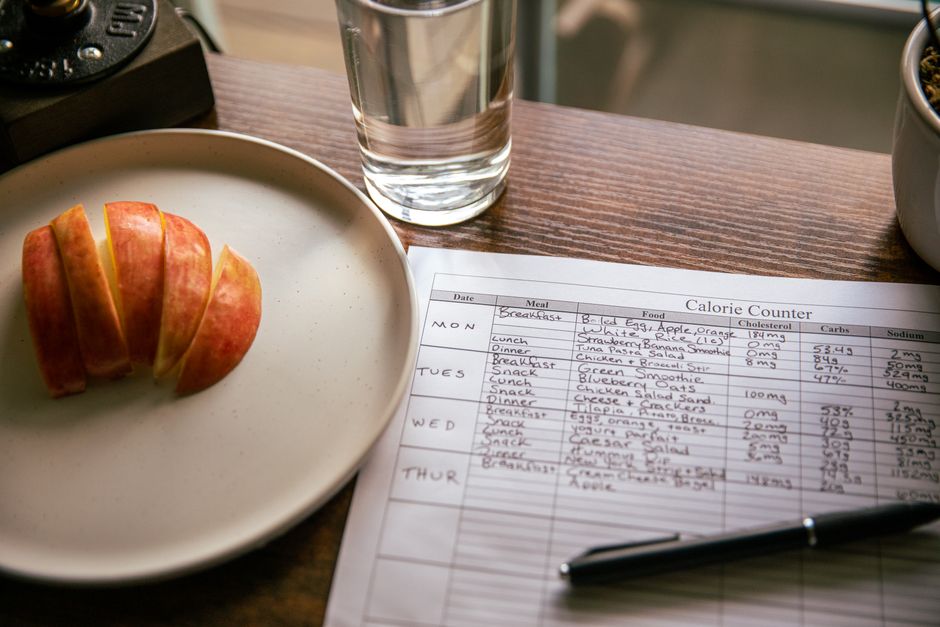
Journaling for weight loss works because it forces you to see what you actually eat, how you feel, and why you reach for food. It is not about writing perfect diary entries. It is about creating a simple daily record that keeps you honest. Research consistently shows that people who track their food intake lose more weight than those who do not. The key is finding a method so simple that you will still do it on your worst day.
Why Does Journaling Help With Weight Loss?
Food journals work through awareness. Most people underestimate how much they eat by a significant margin. When you write down every bite, you stop relying on memory and start seeing the truth. That alone changes behavior.
Journaling also breaks the automatic loop of eating. You pause, you write, you think. That pause is often enough to stop a mindless snack before it happens. Over time, this builds a habit of conscious eating that becomes automatic in a different way.
A food journal also gives you data. Patterns emerge that you cannot see without writing things down. Maybe you notice you eat more sugar on days you sleep poorly. Maybe stress at work drives evening snacking. Once you see the pattern, you can address the cause instead of just fighting the symptom.
What Should You Write In A Weight Loss Journal?
Keep it simple. You do not need to track every micronutrient or count every calorie to benefit. The most effective journals include four things: what you ate, how much, when, and how you felt.
The “how you felt” part matters more than most people realize. Emotions drive eating more than hunger does. Writing down your mood alongside your food helps you separate physical hunger from emotional eating. If you notice you eat when bored, stressed, or tired, that is useful information.
You can also track non-food items that affect weight loss. Sleep, water intake, and exercise all influence progress. Adding one line for sleep quality or water intake gives you a fuller picture without turning journaling into a chore.
Do not weigh yourself daily and record it if the scale makes you anxious. For many people, the scale becomes a source of stress that derails the whole effort. Record weight weekly if you record it at all. Focus the journal on behaviors you control, not outcomes your body decides.
How To Journal For Weight Loss And Actually Stick With It
The most common reason food journals fail is that people make them too complicated. They try to track every detail, calculate exact portions, and write long reflective paragraphs. That works for a week. Then life gets busy and the journal gets abandoned.
Start with the minimum viable journal. One notebook. One pen. Write the date, what you ate, approximate amounts, and a one-word mood rating. That is it. If you can do that for two weeks, you can add more detail later.
Choose a specific time to journal. Many people find it easiest to write after dinner when the day’s eating is done. Others prefer to jot things down throughout the day. The timing matters less than the consistency. Pick a time that fits your schedule and protect it.
Keep the journal visible. Put it on the kitchen counter or your nightstand. If it is hidden in a drawer, you will forget it exists. Visibility is a reminder and a commitment device.
Link journaling to an existing habit. If you already brush your teeth every night, write in your journal right after. If you drink coffee every morning, journal while the coffee brews. Attaching a new habit to an old one is one of the most reliable ways to make it stick.
Forgive missed days. Missing one day does not mean you failed. Missing a week is a signal to simplify your approach, not to quit. The goal is consistency over months, not perfection on any single day.
-
 Tasha Cobbs Weight Loss, Heart Attack, and Health: An Inspiring Journey
 -
Khloé Kardashian Weight Loss 2025: Her Journey, Diet, and Secrets Revealed
-
Connor Stanhope Weight Loss Journey. What Diet He Followed?
-
SleepLean Reviews. Does It Help Weight Loss & Sleep (2025 Verdict)
-
Wake Up Lean Reviews 2026: Meredith Shirk’s eBook Worth It?





Paper Journal vs. App: Which Is Better?
Both methods work. The best choice is the one you will actually use consistently.
Paper journals offer privacy and zero distractions. There is no phone notification interrupting your writing. The physical act of writing also engages memory differently than typing. Some research suggests handwriting improves retention and reflection. Many people find the tactile experience more satisfying and more likely to become a ritual.
Apps offer convenience and automatic data. Most apps calculate calories, macros, and trends for you. They also make it easy to log food on the go. If you eat away from home often, an app may be more practical than carrying a notebook.
The downside of apps is that they can become obsessive. Some people spend more time logging than eating. Others find the constant tracking stressful. If an app makes you anxious about food, switch to paper.
You can also combine both. Use paper for reflection and mood tracking. Use an app for quick food logging. The journaling system should serve you, not the other way around.
What About Meal Planning In The Journal?
Planning meals in your journal is different from logging what you ate. Both are useful, but they serve different purposes. Logging creates awareness. Planning creates intention.
If you plan meals ahead of time, write them in your journal the night before or the morning of. This reduces decision fatigue during the day. When hunger hits, you already know what you are eating. You do not have to make a choice while hungry, which is exactly when bad choices happen.
Planning also helps with grocery shopping. If you know what you plan to eat, you can buy the right ingredients. This reduces impulse purchases and makes it easier to stick to your plan.
Keep the plan flexible. Rigid plans break under real life. If a meeting runs late and you cannot make the dinner you planned, a backup option keeps you on track. Write down two or three quick fallback meals in your journal so you always have an option.
Common Journaling Mistakes That Kill The Habit
The biggest mistake is being too detailed too soon. Weighing every gram of food and calculating exact calories is exhausting. Start loose and tighten up later if you need more precision.
Another mistake is using the journal as a punishment tool. If you write down a “bad” meal and then berate yourself for it, journaling becomes something you dread. The journal is a neutral record, not a judge. It tells you what happened. It does not tell you whether you are good or bad.
Some people quit because they do not see quick results. Weight loss is slow and nonlinear. The scale moves in fits and starts. The journal helps you see that you are making progress even when the scale does not move. That perspective is valuable but takes time to develop.
Comparing your journal to someone else’s is also a trap. Your food needs, your schedule, and your body are different from anyone else’s. The journal is a personal tool. It is not a competition.
How Long Should You Keep A Weight Loss Journal?
There is no required duration. Some people journal for a few weeks to build awareness and then stop. Others journal for years as part of their maintenance routine.
A common approach is to journal for at least four weeks to establish the habit and gather useful data. After that, you can decide whether to continue daily, reduce to a few days a week, or stop entirely.
Many people find that journaling becomes most valuable during maintenance. After losing weight, keeping a loose food record helps prevent the gradual regain that affects most dieters. A simple weekly check-in can be enough to stay on track.
If you hit a plateau, returning to daily journaling for a couple of weeks often reveals what changed. It is a diagnostic tool as much as a daily practice.
Frequently Asked Questions
What is the best time of day to write in a weight loss journal?
Write whenever you are most consistent, whether that is morning, after dinner, or throughout the day. Attaching journaling to an existing habit like brushing your teeth makes it more likely to stick.
Do I need to count calories in my food journal?
No. Many people benefit from simply recording what they ate and how they felt without counting calories. Calorie counting adds precision but also adds effort and can increase stress for some people.
How long until I see results from journaling?
Most people notice improved awareness within the first two weeks, but weight changes take longer. Journaling works best as a long-term habit, not a quick fix.
Should I journal on days I overeat?
Yes, especially on those days. The most useful data comes from honest records of difficult days. Skipping the hard days hides the patterns you most need to see.
