
Aluminum is one of the most common metals in home workshops, yet it is also one of the trickiest to join. You have three main options: welding, brazing, or riveting. Welding melts the base metal to create a fused joint, brazing uses a filler metal that melts at a lower temperature than aluminum, and riveting uses a mechanical fastener to hold pieces together. Your choice depends on the tools you own, the strength you need, and whether you need the joint to be air or water tight. This article explains what each method actually involves, what the evidence says about their effectiveness, and how to choose the right one for your project.
How Does Welding Aluminum Actually Work Compared to Brazing and Riveting?
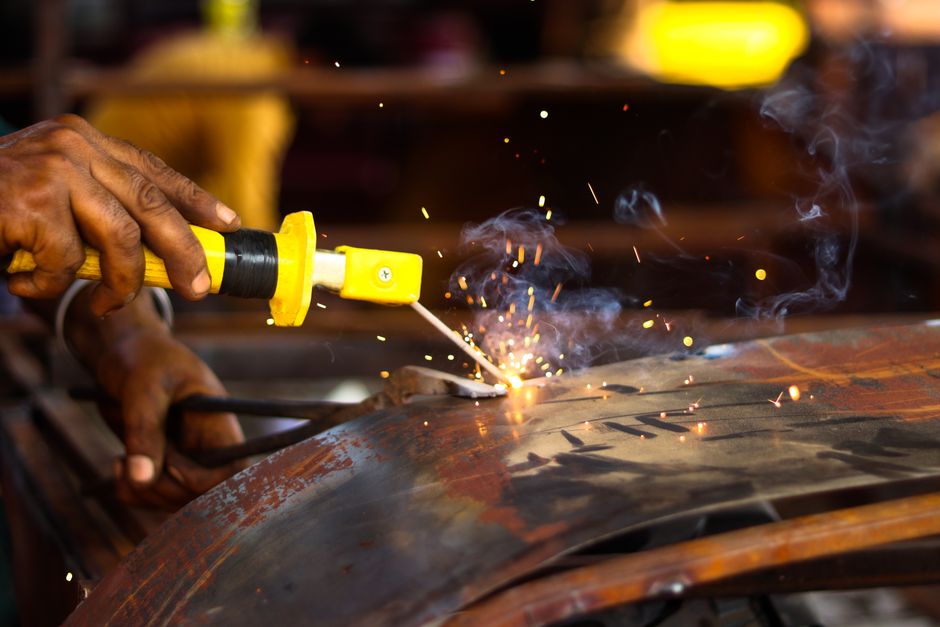
Welding aluminum is not like welding steel. Aluminum conducts heat about five times faster than steel, which means the heat spreads out quickly and makes it hard to get a local melt pool. You need a machine that can deliver high amperage quickly, typically a TIG (tungsten inert gas) welder or a MIG (metal inert gas) welder with a spool gun. TIG welding gives you the most control and produces the cleanest welds, but it requires significant skill and practice. MIG welding with a spool gun is faster but can be messier with more spatter.
Brazing aluminum is different. You do not melt the base aluminum. You heat the joint and melt a filler rod that flows into the gap by capillary action. The filler rod typically melts around 700 to 800 degrees Fahrenheit, while aluminum itself melts around 1200 degrees. This lower heat requirement means you can use a propane torch or a MAP gas torch instead of an expensive welder. Brazing is easier to learn than welding, but the joint strength is lower — roughly 60 to 70 percent of the base metal strength in many cases.
Riveting is the simplest mechanical method. You drill holes through both pieces of aluminum, insert a rivet, and use a rivet gun to deform the tail. Pop rivets, also called blind rivets, are the most common choice for home use. They do not require access to the back side of the joint. The strength of a riveted joint depends on the number and size of rivets, not on any metallurgical bond. Riveting is the weakest of the three methods in terms of tensile strength, but it is also the most forgiving and requires the least equipment.
What Does Research Show About the Strength of Each Joining Method?
Research published in the Journal of Materials Processing Technology has compared the mechanical properties of welded, brazed, and riveted aluminum joints. Welded joints, when done correctly, achieve near 100 percent of the base metal’s tensile strength. The heat-affected zone around the weld is the weak point, but proper technique minimizes this. For structural applications where safety depends on the joint, welding is the gold standard.
Brazed joints typically achieve 60 to 80 percent of the base metal strength. A study in Welding Journal found that the strength depends heavily on joint design and gap clearance. A gap of 0.002 to 0.005 inches gives the strongest braze. Too tight and the filler cannot flow in. Too wide and the filler does not bridge the gap properly. Brazing is suitable for non-structural repairs, decorative work, and applications where the joint will not bear heavy loads.
Riveted joints have the most variable strength. A single 3/16-inch aluminum pop rivet in shear can hold roughly 200 to 300 pounds, but this drops significantly in tension. The Aluminum Association reports that riveted joints in aircraft structures rely on multiple rows of rivets to distribute load. For home use, riveting is fine for sheet metal enclosures, brackets, and non-critical attachments. It is not appropriate for load-bearing frames or safety-critical components.
How To Join Aluminum Welding Brazing And Riveting: A Step-by-Step Comparison
| Method | Equipment Needed | Skill Level | Joint Strength | Best For |
|---|---|---|---|---|
| Welding (TIG) | TIG welder, argon gas, filler rod | Advanced | 90-100% of base metal | Structural frames, repairs, critical joints |
| Welding (MIG) | MIG welder with spool gun, gas | Intermediate | 85-95% of base metal | Thicker aluminum, production work |
| Brazing | Propane or MAP torch, flux, brazing rods | Beginner | 60-80% of base metal | Thin sheet, repairs, decorative work |
| Riveting | Drill, rivet gun, pop rivets | Beginner | Variable (200-300 lb per rivet shear) | Enclosures, brackets, non-structural attachments |
Each method has a clear use case. If you need maximum strength and have the equipment, weld it. If you want a low-cost option that is easy to learn and still decently strong, braze it. If you just need to hold two pieces together quickly with no heat, rivet it.





What Are the Common Mistakes People Make When Joining Aluminum?
The biggest mistake in aluminum welding is not cleaning the metal properly. Aluminum forms a thin layer of aluminum oxide on its surface within seconds of being exposed to air. That oxide melts at over 3700 degrees Fahrenheit, far above the melting point of aluminum itself. If you do not remove it with a stainless steel brush or chemical cleaner, the weld pool will be contaminated and weak. The American Welding Society emphasizes that cleaning is the single most important step for aluminum welding.
In brazing, the most common error is overheating the joint. People think more heat makes a stronger bond, but the opposite is true. Overheating burns off the flux and causes the filler metal to ball up instead of flowing into the gap. The filler should flow like water into the joint, not sit on top of it. If you see the filler beading up, stop and let the metal cool before trying again.
With riveting, the usual mistake is drilling holes that are too large or too small. The rivet should fit snugly into the hole, not rattle around. A loose rivet will not hold well and can work itself out over time. Industry standard is to drill a hole 0.001 to 0.003 inches larger than the rivet diameter. Also, avoid using steel rivets on aluminum in outdoor applications — galvanic corrosion will eat the aluminum around the rivet.
Which Method Should You Choose for Your Specific Project?
For a bicycle frame repair, welding is the only safe choice. The frame bears your weight and experiences repeated stress. A brazed or riveted repair would fail eventually. For a cracked lawnmower deck, brazing works well because the metal is thin and the joint does not need to be perfectly strong. For attaching a metal sign to a post, riveting is fast and effective.
Consider your skill level honestly. If you have never welded before, do not start on a critical project. Practice on scrap aluminum first. Brazing is more forgiving and you can get good results after a few tries. Riveting is nearly foolproof — if you can drill a straight hole, you can rivet.
Also think about disassembly. Welded and brazed joints are permanent. If you might need to take the pieces apart later, rivets are the way to go. You can drill them out and replace them with minimal damage to the parent metal. This is why aircraft use rivets extensively — they allow for inspection and repair.
What Equipment Do You Actually Need to Get Started?
- For welding: A TIG welder with AC capability, 100 percent argon gas, 2 percent thoriated tungsten electrodes, and 4043 or 5356 filler rods. Expect to spend at least 800 dollars on a decent entry-level TIG machine.
- For brazing: A MAP gas torch, aluminum brazing rods with flux coating, a stainless steel brush, and a heat source. Total cost is under 100 dollars. The flux-coated rods eliminate the need for separate flux.
- For riveting: A hand rivet gun, an assortment of aluminum pop rivets, and a drill with bits sized to match the rivets. A basic rivet gun costs 15 to 30 dollars. A box of 100 rivets is about 10 dollars.
Do not buy cheap welding equipment if you are serious about learning. Inexpensive inverter welders often lack the duty cycle and arc control needed for consistent aluminum welds. Rent or borrow a quality machine first to see if welding is something you want to pursue. Brazing and riveting equipment is cheap enough that you can buy it outright without worry.
Frequently Asked Questions
Can you braze aluminum without a welder?
Yes. You only need a propane or MAP gas torch and aluminum brazing rods. The torch heats the joint and the rod melts into the gap.
Is brazing aluminum as strong as welding?
No. Brazed joints typically achieve 60 to 80 percent of the base metal strength, while welded joints can reach near 100 percent.
Do you need special rivets for aluminum?
Yes. Use aluminum pop rivets for aluminum to avoid galvanic corrosion. Steel rivets will cause the aluminum to corrode over time.
What is the easiest method for a beginner to join aluminum?
Riveting is the easiest. It requires only basic tools and no heat. Brazing is the next easiest and gives a cleaner appearance.
