
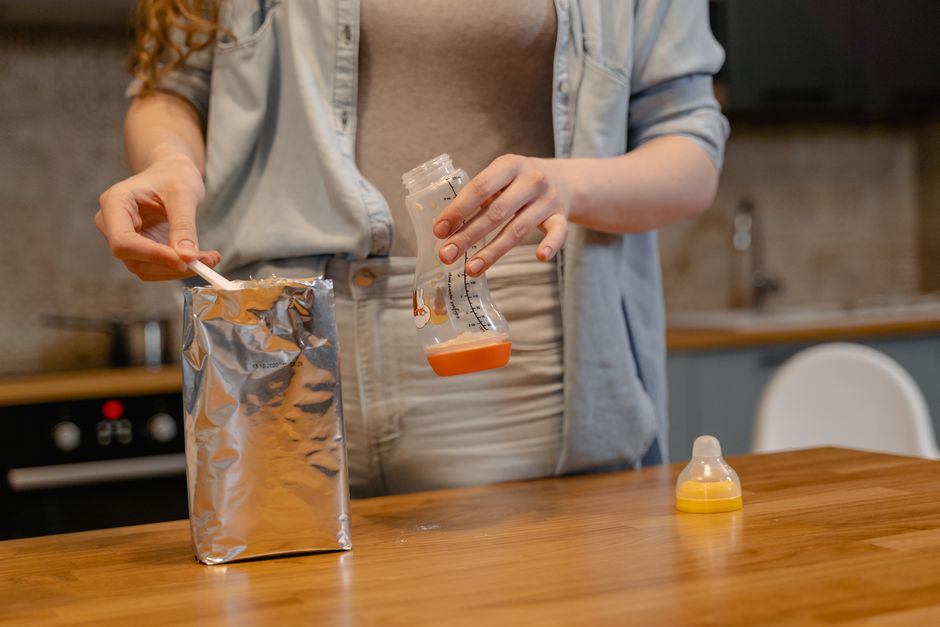
Introducing formula for the first time comes down to a few basics: pick a standard cow’s-milk-based infant formula unless your pediatrician advises otherwise, mix it exactly as the label directs, and offer it in a calm, unhurried way. Start with a small amount, watch your baby’s cues, and never force a full bottle. Most babies adjust within a few feedings, though some take longer, and that is normal.
Whether you are supplementing, switching from breast milk, or formula feeding from the start, the mechanics are simple. The details matter more than most parents expect.
How To Introduce Formula To Baby For The First Time
Begin with one bottle, not a whole day’s worth of change. Pick a time when your baby is calm and a little hungry but not frantic. A frantic baby is harder to feed and more likely to gulp air.
Warm the formula to roughly body temperature if your baby is used to breast milk. You can run the bottle under warm tap water or stand it in a bowl of warm water. Do not microwave formula. Microwaving heats unevenly and can create hot spots that burn a baby’s mouth, and it can destroy some of the nutrients.
Hold your baby semi-upright, support the head, and keep the bottle tipped so the nipple stays full of formula. A nipple that is half empty lets your baby swallow air. Let your baby set the pace. Pause, burp, and offer again if they seem interested.
Offer a small first bottle, around 2 to 3 ounces, so you are not throwing away a large amount if your baby refuses. If they finish and still seem hungry, you can offer a little more.
What to have ready before the first bottle
- A few nipples in different flow rates, starting with the slowest
- Bottles and nipples washed and sterilized before first use
- A can of formula that is in date and undamaged
- Clean water for mixing — see the water section below
How Do You Mix and Prepare Formula Safely?
Follow the instructions on the can exactly. Do not add extra powder to make it “stronger” and do not add extra water to stretch it. Both mistakes are genuinely dangerous.
Too much powder concentrates the formula and can overload a baby’s kidneys and cause dehydration. Too much water dilutes the balance of sodium and other electrolytes, which in severe cases can cause a serious condition called water intoxication. This is not a small risk. It is one of the most important things to get right.
Wash your hands and clean the counter before you start. Use the scoop that comes with that specific can, because scoop sizes differ between brands. Level the scoop, do not pack it. Add the water first, then the powder, then shake or swirl to mix.
Powdered formula is not sterile. It can contain small amounts of bacteria, including Cronobacter sakazakii, which is rare but can cause serious illness in very young infants. For babies under 2 months old, premature babies, or babies with weakened immune systems, public health guidance in many countries recommends using ready-to-feed liquid formula or mixing powdered formula with water hot enough to kill bacteria, then cooling it before feeding. Ask your pediatrician which approach fits your baby.
Once a bottle is mixed, feed it right away. Formula that has been at room temperature for more than about two hours should be thrown out. Formula your baby has already started drinking should be discarded within about an hour, because bacteria from the baby’s mouth get into the bottle. Never save and reheat a partly finished bottle.
What Water Should You Use to Mix Formula?
For most families in the US, cold tap water is fine to mix with formula. If you are on a public water supply, you can use it straight from the tap. If you are on a private well or unsure about your water, boil it first and let it cool.
Do not use bottled water labeled as “natural mineral water” or water with added sodium, because the mineral content can be too high for a baby. Do not add fluoride drops or supplements to formula made with fluoridated tap water without checking with your pediatrician first, since formula already contains some fluoride.
If your water supply has a boil-water advisory, use ready-to-feed formula or boiled water that has been cooled. Do not use water that has sat in the pipes for hours without running first.
How Much Formula Should a Baby Drink?
Newborns drink small amounts and often. In the first few days, a newborn may take only about 1 to 2 ounces per feeding, roughly every 2 to 3 hours. By the end of the first month, many babies take around 2 to 4 ounces per feeding.
By around 6 months, many babies take 6 to 8 ounces per feeding, about 4 to 5 times a day. These are general ranges. Your baby’s appetite, growth, and pediatrician’s guidance matter more than a number on a chart.
Watch your baby, not the clock. Signs of hunger include rooting, opening the mouth, and hand-to-mouth movements. Signs of fullness include turning away, slowing down, and relaxing the hands. Crying is often a late hunger cue, so try to feed before your baby gets upset.
A rough guide many clinicians use is about 2.5 ounces of formula per pound of body weight per day, but this is a general estimate, not a rule. Your pediatrician can give you a target that fits your baby.
How Do You Switch From Breast Milk to Formula?
Go gradually if you can. A slow transition is easier on your baby’s digestion and gives you time to adjust. Mix a small amount of formula into a bottle of expressed breast milk, then increase the ratio over several days.
Some babies accept formula right away. Others notice the different taste and texture and push back. Offering a bottle when your baby is relaxed and not overly hungry helps. So does having someone other than the breastfeeding parent offer the first bottle, since babies often associate that parent with the breast.
If you are reducing breastfeeding, do it slowly to lower your risk of engorgement and plugged ducts. Drop one feeding at a time, over days or weeks, rather than stopping all at once.
If your baby has been exclusively breastfed and you are introducing formula for the first time, expect some resistance. It does not mean your baby will never take it. It usually means the transition needs more patience.
What Are Common Reactions and When Should You Call the Doctor?
Mild spit-up, gas, and a change in stool are common when a baby starts formula. Formula-fed stools are usually firmer and lighter in color than breastfed stools, and they smell different. That is expected.
Some babies have trouble with a particular formula. Signs worth mentioning to your pediatrician include excessive crying after feeds, blood or mucus in the stool, vomiting that is forceful or repeated, or a rash. Do not switch formulas repeatedly on your own. Talk to your doctor first.
Cow’s milk protein allergy is real but uncommon. It is different from lactose intolerance, which is rare in babies. If your pediatrician suspects an allergy, they may recommend a specialized formula. Do not use soy or hypoallergenic formula without medical guidance.
Call your pediatrician promptly if your baby has fewer wet diapers than usual, is very sleepy or hard to wake, refuses several feeds in a row, or has a fever. In a newborn, a fever of 100.4°F (38°C) or higher is a reason to seek care right away.
Which Formula Should You Choose?
Standard cow’s-milk-based infant formula is the right choice for most babies. It is tightly regulated in the US to meet nutritional standards for infants. The differences between standard brands are small.
Do not pay extra for “gentle” or “sensitive” formulas unless your pediatrician recommends one. There is limited evidence that these help most babies, and they are not a first-line choice for a baby without symptoms. Specialized formulas for allergies, prematurity, or specific medical conditions should only be used on medical advice.
Do not make homemade formula. Recipes shared online do not meet an infant’s nutritional needs and have caused serious harm. Do not give a baby under 12 months cow’s milk, goat’s milk, or plant-based milks as a substitute for formula or breast milk. These do not have the right balance of nutrients for an infant.
Frequently Asked Questions
Can I mix breast milk and formula in the same bottle?
Yes, you can combine them, but mix the formula with water first according to the label, then add the breast milk. Use the combined bottle within about an hour of your baby starting to drink it.
How long does it take a baby to adjust to formula?
Many babies adjust within a few feedings, but some take a week or more. Mild gas or a change in stool is common during the transition and usually settles on its own.
Can I switch formula brands without asking the doctor?
Switching between standard cow’s-milk-based formulas is generally fine, but frequent switching can make it hard to tell what is causing symptoms. If your baby has ongoing problems, talk to your pediatrician before changing again.
Should I warm formula or give it cold?
Either is fine as long as your baby accepts it. Many babies prefer formula warmed to about body temperature, especially if they are used to breast milk.
