
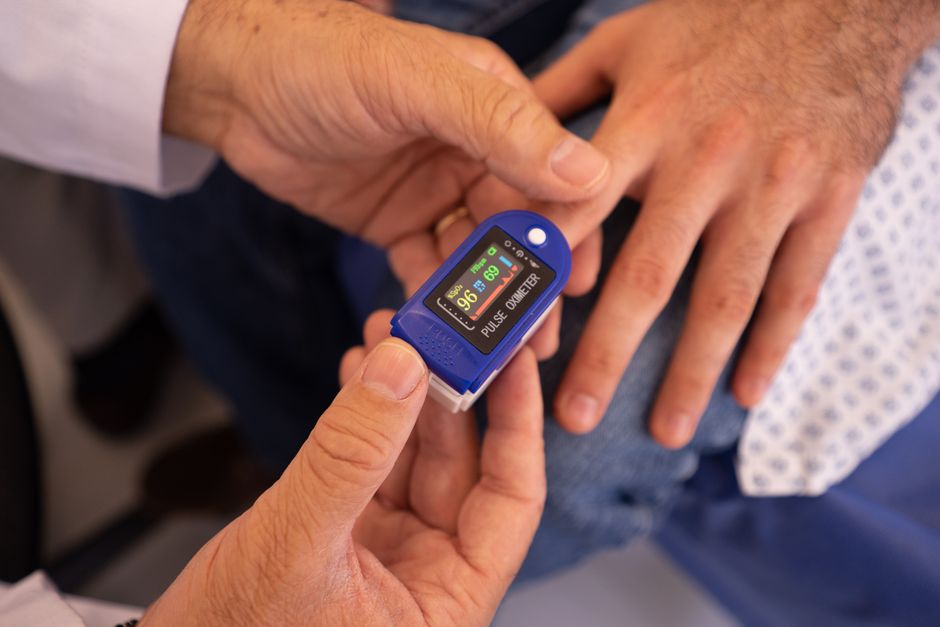
Your blood oxygen level measures how well your body delivers oxygen from your lungs to your bloodstream. For most healthy people, a normal reading on a pulse oximeter falls between 95% and 100%. If your level drops below 90%, that is a medical emergency requiring immediate attention. The most effective ways to increase your blood oxygen level depend on why it is low in the first place, but simple actions like changing your position, practicing deep breathing, and treating underlying conditions like asthma or COPD are the foundations of improvement.
What Does Blood Oxygen Level Actually Measure?
Blood oxygen level, often called oxygen saturation or SpO2, is the percentage of hemoglobin in your blood that is carrying oxygen. Hemoglobin is the protein in red blood cells responsible for transporting oxygen from your lungs to every tissue in your body.
A pulse oximeter clips onto your finger and uses light to estimate this percentage. It is a non-invasive, painless test that takes seconds. While it is not as precise as an arterial blood gas test, which requires a blood draw, a pulse oximeter is accurate enough for most everyday monitoring.
Your body tightly regulates blood oxygen. If levels drop, your brain signals you to breathe faster and your heart rate rises. These are immediate responses, not long-term solutions. Understanding what is normal for you is the first step in knowing when something is wrong.
How To Increase Your Blood Oxygen Level with Breathing Techniques
Deep breathing is one of the fastest ways to raise blood oxygen. Most people take shallow breaths, using only a fraction of their lung capacity. This is especially true for people who sit at desks all day or who are under chronic stress.
Pursed-lip breathing is a technique often taught in pulmonary rehabilitation. You inhale slowly through your nose, then exhale gently through pursed lips, as if you are blowing through a straw. This creates mild back-pressure in your airways, which helps keep them open longer. It allows more oxygen to reach your alveoli, the tiny air sacs where gas exchange happens.
Diaphragmatic breathing, also called belly breathing, engages your diaphragm fully. Place one hand on your chest and one on your belly. Breathe in so your belly rises more than your chest. This recruits more lung tissue and improves ventilation. Some studies suggest that regular practice of these techniques can improve oxygen saturation in people with chronic lung disease, though results vary by individual.
For healthy people, five minutes of slow, deliberate deep breathing can noticeably improve oxygen saturation. The effect is temporary, but consistent practice trains your body to breathe more efficiently over time.
Position Changes That Improve Oxygen Levels
Body position directly affects how well your lungs expand. When you slouch, you compress your diaphragm and restrict lung volume. Sitting upright with your shoulders back allows your lungs to fill completely.
If you have been lying down for a long time, especially with an illness, fluid can pool in the lower portions of your lungs. This is called atelectasis, and it reduces oxygen exchange. Simply sitting up or walking briefly can re-expand those collapsed air sacs and improve oxygen levels.
For people with certain conditions like congestive heart failure or severe pneumonia, a position called prone positioning can help. Proning means lying face down. It shifts blood flow to the better-ventilated parts of the lungs. During the COVID-19 pandemic, clinicians widely used prone positioning to improve oxygen levels in hospitalized patients. Some research suggests it can reduce the need for mechanical ventilation in certain cases, but it is not a substitute for medical care.
If your oxygen level is borderline low, try sitting upright, standing, or walking for a few minutes before rechecking. Many people see an immediate improvement simply from moving out of a slumped or lying position.




Treat the Underlying Cause of Low Oxygen
Breathing exercises and position changes are helpful, but they cannot fix a medical condition that causes low oxygen. The most common causes of chronic low oxygen include COPD, asthma, heart failure, anemia, and sleep apnea.
For people with asthma or COPD, using prescribed bronchodilator inhalers opens the airways and improves oxygen exchange. These medications are not optional extras; they are the primary treatment. If you have been prescribed an inhaler, using it exactly as directed is the single most effective way to manage your oxygen levels.
Anemia is a different story. If your blood does not have enough red blood cells or hemoglobin, your oxygen saturation can appear normal on a pulse oximeter because the oxygen that is present is fully saturated. But your total oxygen-carrying capacity is low. Treating anemia, whether with iron supplementation or addressing the underlying cause, improves how much oxygen your blood can carry overall.
Sleep apnea causes repeated pauses in breathing during sleep, dropping oxygen levels multiple times per hour. Continuous positive airway pressure, or CPAP, is the standard treatment. It keeps your airway open during sleep and normalizes overnight oxygen levels. Untreated sleep apnea raises your risk of high blood pressure, heart attack, and stroke.
The evidence here is strong: treating the underlying disease is the most reliable way to raise blood oxygen. Breathing techniques support this treatment but do not replace it.
Exercise and Physical Activity for Oxygen Efficiency
Regular exercise does not directly increase your resting oxygen saturation, but it improves how efficiently your body uses oxygen. This is called oxygen utilization or VO2 max. Your muscles learn to extract more oxygen from the blood that reaches them.
Aerobic exercise like walking, cycling, or swimming strengthens your heart and lungs. Your heart pumps more blood per beat, and your lungs move more air per breath. Over weeks and months, this lowers the effort required for everyday activities and reduces breathlessness.
For people with chronic lung disease, pulmonary rehabilitation programs combine supervised exercise with education. These programs have strong evidence for improving exercise capacity and quality of life. They do not necessarily change resting oxygen levels, but they help people do more with the oxygen they have.
If you are healthy and your oxygen level is normal, exercise is about maintenance, not correction. If you have a chronic condition, talk to your doctor before starting a new exercise routine. Some people with low resting oxygen require supplemental oxygen during exercise, and a healthcare provider should make that determination.
When To Seek Emergency Care for Low Oxygen
A pulse oximeter reading below 90% is a medical emergency. Do not wait to see if it improves on its own. Seek emergency care immediately.
Other warning signs include sudden shortness of breath, chest pain, confusion, blue or gray lips or fingernails, and rapid breathing. These symptoms can indicate a pulmonary embolism, severe pneumonia, or respiratory failure.
For people with chronic lung disease, your doctor may set a different target. Some people with COPD live with baseline oxygen levels in the high 80s and have adjusted to that. But a sudden drop from your personal baseline is still a reason to seek help.
Home pulse oximeters are useful tools, but they have limitations. Poor circulation, cold fingers, nail polish, and dark skin pigmentation can all affect readings. If your reading is low and you feel fine, recheck it on a different finger or after warming your hands. If it remains low, treat it as real.
Can Supplements or Diet Increase Blood Oxygen?
No supplement has been proven to increase blood oxygen levels in people with normal lung function. The marketing around oxygen-boosting supplements is not supported by clinical evidence.
Iron is the exception in specific cases. If you have iron-deficiency anemia, iron supplementation can improve your blood’s oxygen-carrying capacity. This is a targeted treatment for a diagnosed deficiency, not a general supplement for everyone. Taking iron without a deficiency can cause constipation, nausea, and in rare cases, iron overload.
Dietary antioxidants like vitamin C and vitamin E are sometimes marketed for lung health. Some research suggests that diets rich in fruits and vegetables are associated with better lung function over time. But this is about long-term health, not immediate oxygen levels. No food or drink will raise your oxygen saturation in the moment.
Staying hydrated is genuinely important. Dehydration thickens your blood and makes it harder for oxygen to circulate. But even severe dehydration rarely causes a measurable drop in oxygen saturation in otherwise healthy people. Water is essential for health, but it is not an oxygen treatment.
Frequently Asked Questions
What is a dangerous blood oxygen level?
A reading below 90% is considered low and requires immediate medical attention. Levels below 85% are critical and indicate severe oxygen deprivation.
Can drinking water increase blood oxygen?
No, drinking water does not directly increase blood oxygen levels. Staying hydrated supports overall circulation, but it will not raise your oxygen saturation.
How fast do breathing exercises raise oxygen levels?
Some people see improvement within minutes of deep breathing exercises. The effect is temporary, and consistent daily practice is needed for lasting benefit.
Does walking increase blood oxygen level?
Walking can temporarily improve oxygen levels by expanding your lungs and increasing blood flow. It is most effective for people who have been sedentary or lying down for long periods.
