
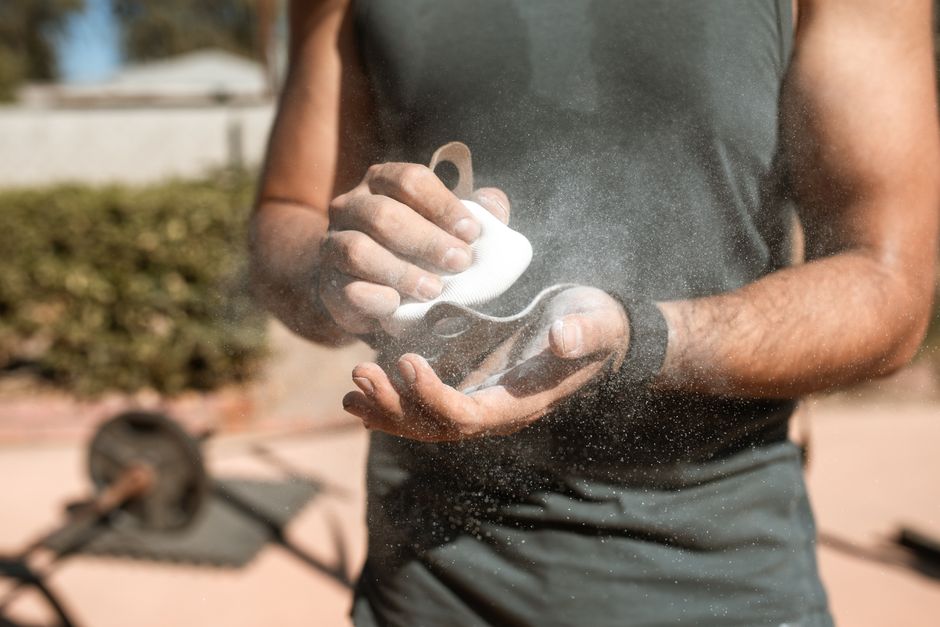
Grip strength is trainable at any age. The fastest way to increase it is to train the forearms and hands directly two or three times a week, add heavy carries and hangs that force the hands to work hard, and progressively increase the load or time as your grip adapts. Most people notice real improvement within four to eight weeks of consistent work.
Grip strength is not just a gym metric. Research consistently links a stronger handgrip to better overall physical function and lower rates of functional decline in middle and older age. It is one of the simplest measures of how well the body is holding up.
What Actually Determines How Strong Your Grip Is?
Grip strength comes from a chain of muscles and joints working together, not just the hand itself. The muscles that bend your fingers (flexors) sit in the forearm, not the hand. Their tendons run through the wrist and into the fingers. That is why forearm training matters far more than most people realize.
The main contributors are:
- Forearm flexor muscles — the primary drivers of crushing and holding strength
- Wrist stability — a wobbling wrist leaks force before it reaches the fingers
- Thumb strength — critical for pinch grip and holding objects securely
- Nervous system efficiency — how well your brain recruits muscle fibers on demand
- Joint and tendon health — the limiting factor for many people over 40
Early gains in any strength program come mostly from the nervous system learning to fire muscles more effectively. Actual muscle and tendon growth takes longer. This is why beginners often see quick jumps in the first few weeks, then slower progress afterward.
Age affects grip strength, but it is not destiny. Grip strength tends to peak in the 30s and decline gradually after that. Training slows the decline and can reverse part of it. Studies of older adults doing structured hand and forearm exercise show measurable strength gains, though the size of those gains varies widely between people.
How To Increase Grip Strength Step by Step
Follow this sequence. It builds from basic movement quality to loaded work, so your tendons and joints adapt alongside your muscles.
Step 1: Test your starting point
Get a baseline so you can track progress. A handgrip dynamometer gives the most accurate reading, but it is not essential. A simpler option: hang from a pull-up bar and note how many seconds you can hold. Or squeeze a heavy gripper and note how many clean reps you get. Write it down.
Step 2: Train the forearms directly twice a week
Add two exercises that work the flexors and extensors. Wrist curls (bending the wrist with a weight) hit the flexors. Reverse wrist curls (extending the wrist) hit the extensors on the back of the forearm. The extensors are often neglected, and weak extensors raise the risk of elbow and forearm problems.
Use a weight you can control for 10 to 15 slow reps. Stop when you have one or two good reps left in the tank, not when you fail completely.
Step 3: Add loaded carries
Farmer’s carries train grip under real-world conditions. Pick up a heavy dumbbell or kettlebell in each hand and walk with tall posture for a set distance or time. Your grip works the entire time, and so does your core. Start lighter than you think you need. Grip fails before your legs or back do, and that is the point.
Step 4: Add hangs or holds
Dead hangs from a pull-up bar build grip endurance and also decompress the shoulders and spine. Hang for as long as you can hold good form, then rest. If full hangs are too hard, start with your feet lightly touching the floor to reduce the load. Never hang to the point of losing control of your shoulders.
Step 5: Progress the load or the time
This is where most people stall. Grip adapts to what you ask of it. Each week, add a little weight, a few seconds, or a few reps. Small jumps are safer than big ones, especially for tendons, which adapt more slowly than muscle.
Step 6: Train the pinch grip separately
Crush grip and pinch grip are different skills. Pinching two weight plates together, or holding a thick book by its edge, trains the thumb and fingers in a way that carries and hangs do not. Include one pinch exercise per week.
Step 7: Recover and repeat
Forearms recover quickly but tendons need rest. Two or three grip sessions a week is enough for most people. Doing grip work every day often leads to elbow pain rather than faster progress.
Which Grip Exercises Give the Best Results?
The best exercises are the ones that load the hands heavily and can be progressed over time. Bodyweight-only exercises like squeezing a soft ball have a ceiling. Once you can do many reps easily, they stop driving change.
Here is a practical comparison of the main options:
| Exercise | What it trains | How to progress |
|---|---|---|
| Farmer’s carry | Crush and support grip, whole-body stability | Heavier weight or longer distance |
| Dead hang | Endurance grip, shoulder stability | Longer hold or added weight |
| Wrist curl | Forearm flexors | More weight, slower reps |
| Reverse wrist curl | Forearm extensors | More weight, controlled tempo |
| Plate pinch | Thumb and pinch strength | More weight or thinner grip |
| Hand gripper | Crush strength | Heavier gripper |
Grippers deserve a caution. Heavy grippers load the fingers and knuckles hard, and many people jump to a gripper that is too heavy too soon. Start with a level you can close cleanly several times, then move up slowly.
Can You Improve Grip Strength Without a Gym?
Yes. Grip strength responds well to simple household and bodyweight work, though progress will eventually require more resistance. The principles are the same: load the hands, track your effort, and increase difficulty over time.
Practical no-gym options include:
- Hanging from a sturdy doorway pull-up bar (check it is properly installed and rated for your weight)
- Carrying heavy grocery bags or water jugs for distance
- Squeezing a rolled towel or thick book edge for pinch work
- Wringing a wet towel as hard as you can
- Rice bucket work — plunging and gripping your hands in a bucket of rice, which some hand therapists use for rehab and conditioning
Rice bucket training is common in climbing and hand therapy circles, but the formal research on it is thin. It is reasonable as a supplementary tool, not as a replacement for loaded grip work.
What Mistakes Slow Grip Progress?
Most stalled grip programs share the same few errors. Fix these and progress usually resumes.
- Training grip every day. Tendons need recovery. Rest days are when adaptation happens.
- Never increasing the load. If the weight or time never changes, the body has no reason to change either.
- Ignoring the extensors. Training only the flexors creates imbalance and raises the risk of elbow issues.
- Chasing max attempts too often. Maximal grip work is taxing. Keep it occasional and do most work at a moderate effort.
- Pushing through elbow or wrist pain. Grip training loads tendons heavily. Pain that lingers or worsens is a signal to back off and, if it continues, to see a clinician.
One clarification worth knowing: soreness in the forearm muscles after training is normal and expected. Sharp pain at the elbow, or pain that persists for days, is not the same thing and should not be ignored.
How Long Does It Take to See Results?
Most people see measurable improvement in four to eight weeks of consistent training. Early gains come fast because the nervous system adapts quickly. Slower, steadier gains follow as the muscles and tendons strengthen.
How much you improve depends on your starting point, age, consistency, and how well you progress the load. Someone new to grip training will generally improve faster than someone who has trained for years. There is no universal number, and anyone promising a specific percentage gain is guessing.
Track your baseline test every few weeks. If it has not moved after six to eight weeks of consistent, progressive work, change one variable — usually the load — and reassess.
Frequently Asked Questions
How often should I train grip strength?
Two to three sessions per week is enough for most people. Daily grip work often leads to elbow pain rather than faster progress.
Does grip strength really matter for health?
Yes. Research consistently links weaker grip to poorer physical function and higher rates of functional decline in middle and older age. It is a useful general marker of physical health.
Can I improve grip strength after 50?
Yes. Studies of older adults doing structured hand and forearm exercise show measurable strength gains. Progress may be slower than in younger people, but it happens with consistent training.
Do hand grippers alone build grip strength?
They build crush strength but miss pinch strength, endurance, and wrist stability. Use them as one tool within a broader grip program, not the whole program.
