
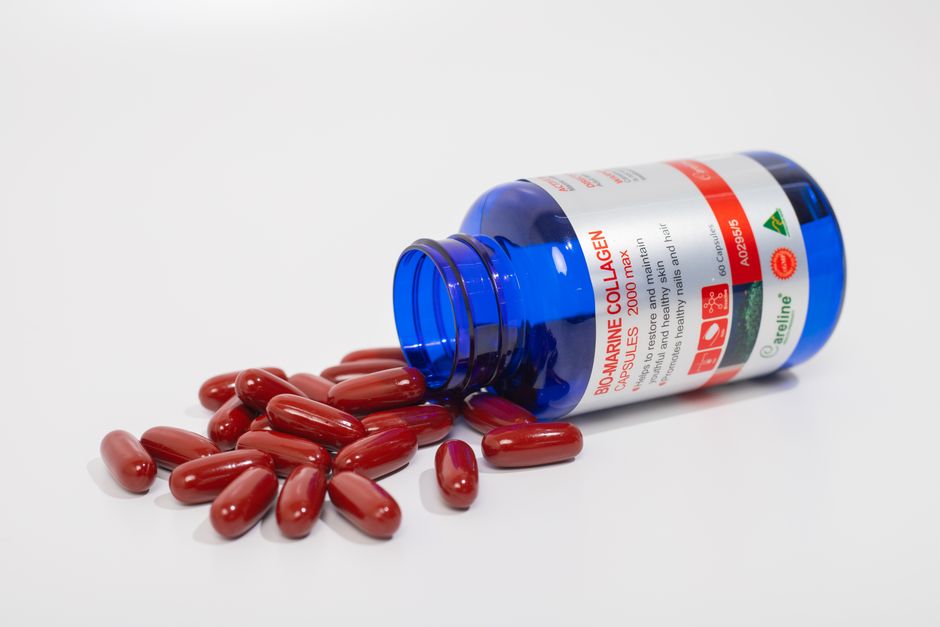
Collagen is the most abundant protein in your body. It gives structure to your skin, bones, tendons, ligaments, and cartilage. Your body builds collagen on its own, and it does so most efficiently when you give it the right raw materials and protect it from the things that break it down. The strategies with the strongest evidence are eating enough protein, getting adequate vitamin C, avoiding smoking, and limiting excess sun exposure. Most collagen powders and drinks have weaker evidence behind them than their marketing suggests.
What Is Collagen and How Does Your Body Make It?
Collagen is a protein made of long chains of amino acids, primarily glycine, proline, and hydroxyproline. These chains twist together into a triple helix structure. That structure is what gives collagen its strength and flexibility.
Your body does not absorb collagen directly from food or supplements. Instead, when you eat protein — including collagen — your digestive system breaks it down into individual amino acids and short peptides. Your cells then use those building blocks to assemble new collagen where it is needed.
The process requires specific cofactors. Vitamin C is essential because it helps enzymes add hydroxyl groups to proline and lysine, a step that stabilizes the collagen molecule. Without enough vitamin C, collagen cannot form properly. This is why severe vitamin C deficiency causes scurvy, a condition characterized by poor wound healing, bleeding gums, and skin problems.
Copper and zinc also play supporting roles in collagen cross-linking, the process that strengthens collagen fibers. These minerals are needed in small amounts and most people get enough through a normal diet.
Collagen production naturally declines with age. This is a well-documented biological process, not a disease. Starting around your mid-20s, production gradually decreases. By your 40s and 50s, the visible effects — thinner skin, more wrinkles, stiffer joints — become more noticeable. This decline is normal and cannot be stopped entirely. But certain habits can slow it or support what remains.
How To Increase Collagen Production What Works?
The most effective approach is to support your body’s own collagen-making process rather than trying to replace collagen directly. Here is what the evidence supports.
Eat enough protein. Your body needs amino acids to build collagen. If you are not eating enough total protein, collagen production suffers. Most adults need somewhere in the range of 0.8 grams of protein per kilogram of body weight per day as a baseline, according to widely accepted nutrition guidelines. Some research suggests older adults may benefit from somewhat more. Good sources include meat, poultry, fish, eggs, dairy, beans, and soy.
Get enough vitamin C. Vitamin C is required for collagen synthesis. The recommended daily allowance for adults is 75 milligrams for women and 90 milligrams for men, according to the National Institutes of Health. You can meet this easily with foods like oranges, strawberries, bell peppers, broccoli, and tomatoes. Taking megadoses of vitamin C does not appear to boost collagen production beyond what your body needs.
Do not smoke. Smoking damages collagen and elastin in the skin. Research has consistently shown that smoking accelerates skin aging and impairs wound healing. This is one of the clearest and most avoidable factors affecting collagen.
Limit unprotected sun exposure. Ultraviolet radiation breaks down collagen in the skin. This is a major contributor to skin aging. Using sunscreen and avoiding excessive sun exposure helps protect the collagen you already have.
Stay physically active. Exercise may support collagen production in connective tissue, though the research here is less definitive than for the factors above. Some studies suggest that regular physical activity promotes collagen synthesis in tendons and ligaments. The evidence is not strong enough to say exercise directly increases skin collagen, but it supports overall connective tissue health.
These steps work because they support the biology your body already uses to make collagen. They are not shortcuts, but they are the foundation.
Do Collagen Supplements Actually Work?
The evidence on collagen supplements is mixed, and the marketing often outruns the science. Here is an honest look.
Collagen supplements — usually in the form of hydrolyzed collagen peptides — are broken down into amino acids and small peptides during digestion. Some of these peptides may be absorbed into the bloodstream. Whether they then reach the skin or joints in meaningful amounts and stimulate new collagen production is not fully established.
Some studies have reported improvements in skin elasticity and hydration with collagen supplementation. Other studies have found no significant difference compared to placebo. Many of these studies are small, short in duration, or funded by supplement manufacturers. This does not mean the results are invalid, but it does mean they should be interpreted with caution.
For joint pain, some research suggests collagen supplements may reduce symptoms in people with osteoarthritis. Again, the evidence is not consistent across all studies.
What is clear: collagen supplements are not a replacement for a healthy diet, and they do not work the way many advertisements imply. Your body does not use swallowed collagen directly to rebuild your skin. It breaks it down first. Whether the resulting peptides have specific benefits beyond providing amino acids is still an open question.
If you choose to try a collagen supplement, it is unlikely to be harmful for most healthy adults. But the evidence does not support the strong claims often made about reversing aging or dramatically improving skin.





Which Foods Support Collagen Production?
No food contains ready-to-use human collagen. But certain foods provide the building blocks and cofactors your body needs.
- Protein-rich foods: Chicken, beef, fish, eggs, dairy, beans, lentils, and soy provide the amino acids used to build collagen.
- Vitamin C sources: Citrus fruits, strawberries, kiwi, bell peppers, broccoli, and tomatoes.
- Copper-containing foods: Nuts, seeds, whole grains, and organ meats.
- Zinc sources: Meat, shellfish, legumes, and seeds.
Bone broth is often promoted as a collagen booster. It does contain collagen that has been extracted from bones during cooking. But once you eat it, that collagen is digested like any other protein. There is no strong evidence that bone broth increases collagen production more than any other protein source.
The idea that specific foods can directly “boost” collagen is oversimplified. What matters more is eating a varied diet that covers your protein, vitamin, and mineral needs.
What Habits Damage Collagen?
Protecting existing collagen is as important as supporting new production. Several common habits accelerate collagen breakdown.
Smoking is one of the most damaging. Chemicals in tobacco smoke break down collagen and elastin and impair the skin’s ability to repair itself.
Excess sun exposure without protection exposes your skin to ultraviolet radiation, which activates enzymes that break down collagen. This is a leading cause of premature skin aging.
High sugar intake may contribute to a process called glycation, where sugar molecules attach to proteins like collagen and damage them. The evidence for this in humans is not as strong as for smoking or UV exposure, but it is a plausible mechanism and some research supports it.
Chronic stress and poor sleep may also affect collagen indirectly through hormonal changes and increased inflammation. The research here is less clear, but the general principle that lifestyle affects skin and connective tissue health is well accepted.
Can You Really Boost Collagen With Diet Alone?
Diet alone can support your body’s collagen production, but it cannot reverse all age-related decline. The most realistic goal is to give your body what it needs to make collagen efficiently and to avoid habits that destroy it.
If you eat a balanced diet with enough protein and vitamin C, you are already doing the main things that matter. Supplements may offer some benefit for certain people, but they are not essential and the evidence is not strong enough to recommend them universally.
Genetics also play a significant role in how your skin and connective tissue age. No diet or supplement can override that entirely. What you can control is the environment you create for your body’s own collagen-producing cells.
One point that often gets lost: collagen is not just about skin. It is critical for bone strength, joint health, and wound healing. Supporting collagen production is about whole-body health, not just appearance.
When Should You Talk to a Doctor?
If you notice sudden changes in your skin, slow wound healing, easy bruising, or joint pain that is new or worsening, talk to a healthcare provider. These can be signs of underlying conditions that affect collagen, such as nutritional deficiencies or connective tissue disorders.
If you are considering collagen supplements and take medications or have a medical condition, check with your doctor first. Supplements can interact with some medications and are not regulated the same way as drugs.
For most people, the basics — protein, vitamin C, not smoking, sun protection — are the most reliable steps. There is no single food or pill that dramatically increases collagen production. But consistent healthy habits do support the process your body is already doing.
Frequently Asked Questions
Does drinking collagen really work?
Collagen drinks are digested into amino acids before absorption, so they do not directly become new collagen in your skin. Some studies suggest collagen peptides may improve skin elasticity, but results are mixed and many studies are small or industry-funded.
What vitamin increases collagen production?
Vitamin C is essential for collagen synthesis because it helps stabilize the collagen molecule during formation. Without enough vitamin C, your body cannot make collagen properly.
Can I increase collagen naturally?
Yes. Eating enough protein, getting adequate vitamin C, not smoking, and protecting your skin from excessive sun exposure all support your body’s natural collagen production.
How long does it take to see results from collagen supplements?
Some studies report changes in skin hydration or elasticity after several weeks of daily use, but results vary widely. There is no established timeline, and many people see no measurable difference.
