
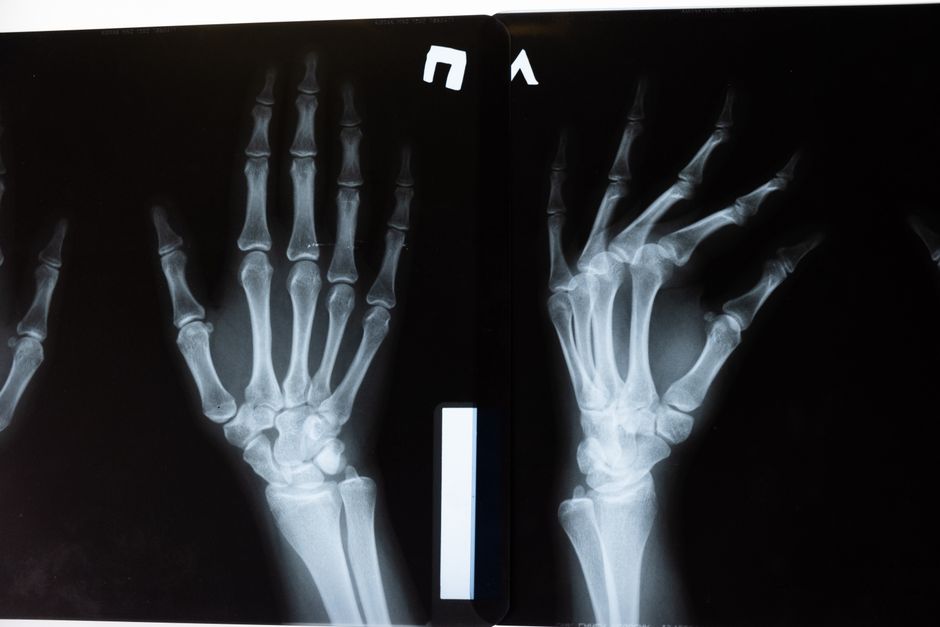
Bone is living tissue that constantly breaks down and rebuilds itself. You can influence that process at any age through two main levers: the right kind of physical stress on your bones, and enough of the nutrients your body needs to build new bone. Exercise that loads your bones and a diet rich in calcium, vitamin D, and protein form the foundation. No supplement or single food replaces those basics.
How Does Bone Remodeling Actually Work?
Your skeleton is not a fixed structure. It is remodeled continuously by two cell types working in sequence. Osteoclasts break down old bone. Osteoblasts build new bone in its place.
This process responds to demand. When bone carries more load than usual, the rebuilding side gets a signal to add strength. When bone carries less load — during bed rest, for example, or long periods of inactivity — breakdown outpaces buildup and density falls.
Peak bone mass is reached in your late twenties. After roughly age 30, the balance shifts. You gradually lose more bone than you build. For women, the drop accelerates sharply during the years around menopause because estrogen supports osteoblast activity, and estrogen levels fall.
That timeline matters. It means the goal after 30 is to slow loss and hold what you have, not to dramatically rebuild. Building bone is easiest during childhood and adolescence. In adulthood, preserving density and reducing fracture risk becomes the realistic target.
How To Increase Bone Density Exercise Diet More
Two types of exercise matter for bone: weight-bearing activity and resistance training. Weight-bearing means your feet and legs carry your body weight against gravity — walking, stair climbing, dancing, hiking. Resistance training means working muscles against an external load — weights, resistance bands, bodyweight exercises.
The key principle is that bone responds to load it is not used to. Ordinary walking, while good for your heart, is often not enough load to meaningfully stimulate bone building in people who walk regularly. The bone needs a challenge beyond its routine.
Some research suggests that higher-impact loading — jumping, hopping, and similar activities — produces stronger bone-building signals than low-impact exercise. This does not mean everyone should start jumping. People with existing fractures, joint problems, or low bone density should talk to a clinician before adding impact.
For resistance training, the general approach is to work major muscle groups with enough resistance that the last few repetitions are difficult. Two to three sessions per week is a common general recommendation for adults. The load on the bone comes from the muscle pulling on its attachment points.
Balance training also belongs in the picture, though for a different reason. It does not build density. It reduces fall risk, which is the main way low bone density turns into a fracture.
Which Exercises Build Bone and Which Do Not?
Not all movement stresses bone. Swimming and cycling are excellent for cardiovascular fitness but are largely non-weight-bearing, so they do little to stimulate bone building. That does not make them bad — it means they are not a substitute for loading exercise.
Here is how common activities compare in terms of bone loading:
- High bone-loading: jumping, hopping, stair climbing, hiking with elevation, resistance training with moderate to heavy loads
- Moderate bone-loading: brisk walking, dancing, stair use, bodyweight exercises like squats and lunges
- Low bone-loading: swimming, cycling, seated exercise, stretching alone
One clarification worth making: yoga and tai chi are often promoted for bone health. Their main documented benefit is improved balance and flexibility, which reduces fall risk. Whether they build density on their own is not well established. They are valuable, but for a different reason than resistance training.





What Should You Eat for Stronger Bones?
Calcium is the raw material for bone mineral, but it does not work alone. Vitamin D helps your body absorb calcium. Protein provides the structure that holds calcium in place. Magnesium, vitamin K, and other nutrients play supporting roles.
Calcium needs vary by age and sex. For most adults, the general target is around 1,000 mg per day, rising to about 1,200 mg per day for women over 50 and men over 70. These figures reflect widely cited adult reference intakes, though individual needs can differ.
Food sources are generally preferred over supplements when possible. Dairy products, fortified plant milks, canned fish with bones, tofu made with calcium salts, and leafy greens like kale and collard greens all contribute.
Vitamin D is harder to get from food alone. Fatty fish, egg yolks, and fortified products provide some. Sunlight triggers your skin to make vitamin D, but how much you produce depends on skin tone, latitude, season, and sunscreen use. Many adults fall short, and testing is the only reliable way to know your level. Ask a clinician before starting a supplement.
Protein matters more than many people realize. Bone is roughly half protein by volume. Some evidence indicates that adequate protein intake supports bone density, and older adults in particular often eat less protein than they need.
Can Supplements and Medications Help?
Calcium and vitamin D supplements can fill genuine gaps, but they are not a shortcut to stronger bone in someone who is already sufficient. Taking more calcium than you need does not build extra bone. In some cases, excess calcium intake has been associated with unwanted effects.
For people with diagnosed osteoporosis or a high fracture risk, prescription medications can slow bone loss or, in some cases, rebuild bone. These are medical decisions made with a clinician based on bone density testing and individual risk. They are not interchangeable with supplements.
Collagen supplements and other bone-health products are heavily marketed. No large, well-controlled human trials currently confirm that collagen supplements increase bone density. The evidence here is limited. Treat marketing claims with caution.
What Else Affects Bone Density?
Several lifestyle factors work against your bones. Smoking is consistently linked to lower bone density and higher fracture risk. Heavy alcohol use also harms bone. Long stretches of inactivity accelerate bone loss.
Body weight plays a role too. Being underweight is a recognized risk factor for low bone density, partly because less body weight means less load on the skeleton. Significant unintentional weight loss in older adults warrants a conversation with a clinician.
Certain medications — including long-term use of corticosteroids — and some medical conditions can reduce bone density. If you take a medication long-term, it is reasonable to ask your clinician whether bone health should be monitored.
Bone density testing, usually with a DEXA scan, is the standard way to measure bone mineral density and estimate fracture risk. Clinical guidance generally supports screening for women starting around age 65 and for younger people with risk factors. Ask your clinician whether testing is appropriate for you.
Frequently Asked Questions
Can you rebuild bone density after 50?
You can slow bone loss and modestly improve density with loading exercise and adequate nutrition, but rebuilding lost bone becomes harder with age. The realistic goal is preserving density and reducing fracture risk.
Is walking enough to increase bone density?
Walking helps maintain bone but is often not enough load to build it, especially in people who walk regularly. Adding resistance training or higher-impact activity provides a stronger stimulus.
What is the best exercise for bone density?
Resistance training and weight-bearing activities that challenge your bones beyond their usual load are the most effective. High-impact activities may help more, but check with a clinician first if you have joint problems or low bone density.
Does calcium alone strengthen bones?
No. Calcium is essential, but it works alongside vitamin D, protein, and physical loading. Taking extra calcium when you already get enough does not build additional bone.
