
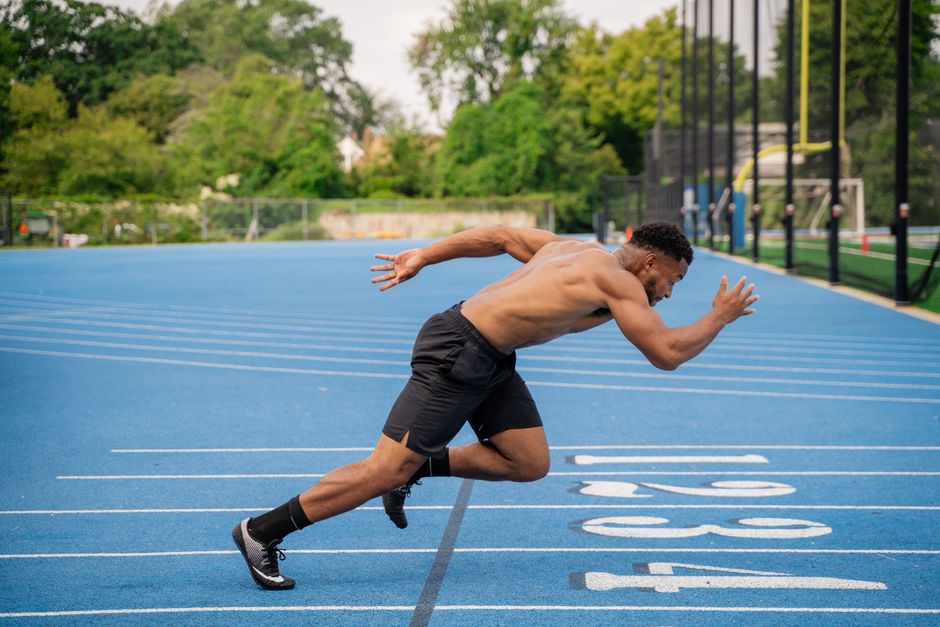
Athleticism is not a single trait you are born with. It is a set of physical qualities — strength, power, speed, balance, endurance, and the coordination to tie them together — and each one responds to training. To increase athleticism from the ground up, you build a base of general strength and movement quality first, then layer on speed, power, and sport-specific skill. The foundation is the part most people skip, and it is the part that determines how far the rest can go.
What Actually Makes Someone Athletic?
Athleticism is the ability to move your body efficiently and forcefully through a range of tasks. That definition matters because it explains why some people look strong in the gym but struggle on a basketball court, and why others seem naturally coordinated without ever lifting a weight.
The qualities that make up athleticism are trainable. They include:
- Strength — how much force your muscles can produce.
- Power — how quickly you can produce that force. Strength and power are related but not the same.
- Speed — how fast you can move your body or a limb.
- Endurance — how long you can sustain effort before fatigue degrades performance.
- Mobility — the usable range of motion in your joints.
- Balance and coordination — your ability to control your body position and time your movements.
Most training programs focus on one or two of these and neglect the rest. A person who only runs long distances builds endurance but may lack power and strength. A person who only lifts heavy weights builds strength but may lack speed and mobility. Real athleticism comes from developing them together, not maximizing any single one.
Why Does Building From the Ground Up Matter?
The phrase is not just a slogan. It reflects how the body actually adapts. Your feet and ankles are the first point of contact with the ground, and everything above them — knees, hips, spine, shoulders — depends on how well that contact is managed.
When your foundation is weak or stiff, the joints above it have to compensate. Poor ankle mobility, for example, changes how you squat, land, and push off. Over time, those compensations can limit how much force you can safely produce and may raise injury risk. Research on movement quality consistently links better foundational control to better performance and fewer injuries, though the exact mechanisms are still being studied.
Building from the ground up also means building general capacity before specific skill. A young or new athlete who develops broad strength, balance, and coordination tends to progress faster in any sport than one who specializes too early. This is one reason youth sports organizations generally discourage heavy early specialization.
How Do You Build a Strength Foundation?
Strength is the base that power and speed are built on. Without it, there is nothing to convert into explosive movement. The good news is that the movements that build general strength are simple and well established.
Focus on a small number of compound movements that train multiple joints at once:
- Squats and their variations
- Hip hinges such as deadlifts and their variations
- Pushing movements such as push-ups, presses, and dips
- Pulling movements such as rows and pull-ups
- Carries, such as holding a heavy weight while walking
These patterns train the whole body and teach your muscles to work together. For beginners, the priority is learning the movement with control before adding load. For more experienced athletes, progressive overload — gradually increasing weight, reps, or difficulty over time — is what drives continued adaptation.
One point worth clarifying: getting stronger does not automatically make you faster or more powerful. Strength is a prerequisite, not a guarantee. You still have to train speed and power specifically. This is a common misunderstanding, and it is why some strong people are not particularly athletic.




How Do You Train Speed and Power?
Power is strength expressed quickly. Speed is the ability to move fast. Both depend on your nervous system’s ability to recruit muscle fibers rapidly, and both are trained differently from raw strength.
Two broad categories of training target these qualities:
- Plyometrics — jumping, hopping, and bounding movements that involve rapid stretch and contraction of muscles.
- Sprint and acceleration work — short, maximal-effort runs that train your body to produce force fast.
These methods are effective, but they are also demanding. Plyometrics and sprinting place high stress on tendons and joints. They work best once you already have a strength base and good movement quality. Adding them too early, or too much at once, is a common cause of overuse injury.
Quality matters more than quantity here. A few well-executed jumps or short sprints with full recovery between efforts train power better than many sloppy reps done while fatigued. Speed and power work is generally done fresh, not at the end of a hard session.
Where Do Mobility, Balance, and Coordination Fit In?
These are the qualities that let you use your strength and power in real situations. They are also the most neglected.
Mobility is your usable range of motion. It is not the same as flexibility, which is about how far a muscle can stretch. Mobility is about controlling movement through a range — for example, reaching deep into a squat and standing back up under control. Restricted mobility limits your positions and your force production.
Balance and coordination are trained by challenging your body in unstable or unfamiliar positions. Single-leg work, balance drills, and movements that require you to react to a changing environment all develop these. Sport itself is one of the best teachers of coordination, which is why playing a variety of sports as a child tends to build a broader movement vocabulary than specializing in one.
For adults, balance training becomes more important with age. Balance and reaction time tend to decline over time, and training them helps maintain physical function. The evidence for fall prevention through balance training in older adults is strong.
How Much Recovery Do You Need?
Training is the stimulus. Recovery is when adaptation actually happens. Skip recovery and you do not get stronger — you get tired, and eventually injured.
Sleep is the single most important recovery factor. Most adults need seven or more hours per night, and athletes often need more. Chronic short sleep is associated with poorer performance, slower reaction time, and higher injury rates.
Other recovery basics include adequate protein intake to repair muscle, enough total calories to support training, hydration, and rest days. Hard training days should be balanced with easier days. Training the same quality hard every day is a common mistake that leads to stagnation rather than progress.
Soreness is not a reliable measure of a good workout, and its absence does not mean a session was wasted. As you get fitter, you often feel less sore from the same work.
Do You Need Special Equipment or Supplements?
No. The most important tools for building athleticism are your own body, a place to move, and consistency over time. Bodyweight training alone can build meaningful strength, especially for beginners.
Equipment like barbells, kettlebells, and resistance bands can help you add load and variety, but they are not required to start. What matters is progressive challenge — doing a little more over time.
Supplements are a different story. The evidence for most sports supplements is weak or absent. A small number have reasonable support, such as creatine for certain power and strength outcomes and caffeine for short-term performance, but many products marketed for athleticism have no solid human evidence behind them. No supplement substitutes for training, sleep, and food. Anyone considering supplements should be aware that they are not tightly regulated in the same way medications are, and should talk to a qualified professional, especially if they take medication or have a health condition.
How Long Does It Take to See Results?
Strength gains can show up within a few weeks for beginners, largely because the nervous system learns to use muscles more efficiently. Visible muscle growth typically takes longer — often several weeks to a few months of consistent training.
Speed, power, and coordination develop on their own timelines and depend heavily on your starting point, your training, and your recovery. There is no universal number. The honest answer is that meaningful change takes months of consistent work, not days. Programs that promise rapid transformation usually overstate what is realistic.
The people who improve most are usually the ones who train consistently, progress gradually, and avoid the cycle of pushing too hard and then stopping.
Frequently Asked Questions
Can you increase athleticism as an adult?
Yes. Strength, power, mobility, and balance all remain trainable in adulthood, though gains may come more slowly than in youth. Consistency matters more than age for most people.
What is the fastest way to build athleticism?
There is no fast shortcut. The reliable path is building a strength base first, then adding speed, power, and mobility work while prioritizing sleep and recovery.
Do you need to lift weights to be athletic?
No. Bodyweight training can build meaningful strength, especially for beginners. Weights are a useful tool for adding load but are not required.
Is athleticism genetic?
Genetics influence traits like muscle fiber type and natural coordination, but training determines how much of your potential you actually develop. Most athletic qualities respond well to consistent work.
