
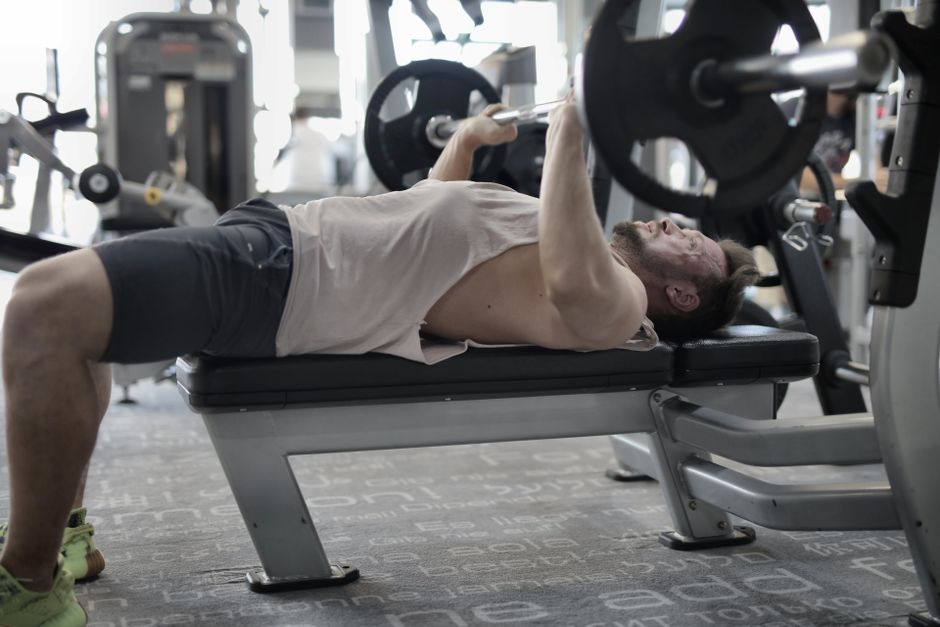
The incline bench press is a barbell pressing movement performed on a bench set to an upward angle. Raising the bench shifts more of the work toward the upper portion of the pectoralis major, the large chest muscle that runs from your breastbone up toward your collarbone. To do it well, set the bench to roughly 30 degrees, grip slightly wider than shoulder width, lower the bar to your upper chest with control, and press back up without letting your shoulders roll forward.
That is the short version. The details below explain why the angle matters, how to set up, where people go wrong, and what the research actually supports about building upper chest size.
Why does the incline angle target the upper chest?
The pectoralis major has two main portions: a clavicular head (upper chest, attaching to the collarbone) and a sternal head (lower and middle chest, attaching to the breastbone). Both portions contract during any pressing movement. The difference is how much each contributes depending on the angle of the press.
Electromyography (EMG) studies, which measure electrical activity in muscle during exercise, have compared pressing at different bench angles. The general finding across this research is that the clavicular head becomes more active as the bench inclines from flat toward roughly 30 to 45 degrees. A flat bench loads the sternal head more heavily. This is why the incline press is the standard recommendation for upper chest development.
One clarification worth making: you cannot isolate the upper chest completely. The portions of the pectoralis major share a common tendon and work together. Incline pressing biases the upper portion — it does not switch off the rest of the muscle. That distinction matters because some training advice implies you can fully separate the two, and you cannot.
How do you set up for the incline bench press?
A good setup starts before you touch the bar. The position of your body determines how much force you can transfer and how safely your shoulders are loaded.
- Bench angle: Set the back pad to roughly 30 degrees. Steeper angles shift more work to the front deltoids and reduce chest involvement.
- Feet: Plant them flat on the floor, roughly shoulder width. They provide stability, not drive for a bodybuilding-style press.
- Back: Maintain a slight natural arch. Pull your shoulder blades down and back, and keep them pinned to the bench throughout.
- Grip: Slightly wider than shoulder width. Your forearms should be close to vertical at the bottom of the movement.
- Wrists: Keep them straight and stacked over your forearms, not bent backward.
The shoulder blade position is the detail most people skip. Retracting and depressing the shoulder blades gives the pressing muscles a stable base and reduces the chance of the shoulder rolling forward under load. If you lose that position mid-set, stop the set rather than grinding out more reps in a compromised position.
How do you perform the incline bench press with correct form?
Unrack the bar with your shoulder blades already set. Position it over your upper chest, not over your face. From there, the movement has two phases.
The lowering phase. Bend your elbows and lower the bar under control to your upper chest, just below your collarbone. Your elbows should travel at roughly a 45 to 60 degree angle from your torso — not flared straight out to the sides, and not tucked tight against your body. Take about two seconds to lower the bar. Control here builds more muscle than a fast drop.
The pressing phase. Press the bar back up along a slight arc, finishing over your upper chest and shoulders. Exhale as you press. Keep your shoulder blades pinned and your feet planted. Do not let your lower back lift off the bench or your shoulders roll forward at the top.
One non-obvious point: the bar path on an incline is not straight up and down. It travels slightly back toward your head as you press. Forcing a perfectly vertical bar path on an incline tends to push the shoulders into a less stable position.
What bench angle is best for upper chest growth?
Around 30 degrees is the most commonly recommended angle, and it is a reasonable starting point. The EMG research generally shows upper chest activity rising as the incline increases from flat, with the benefit flattening or reversing at steeper angles.
Once the bench goes past roughly 45 degrees, the movement starts to resemble a shoulder press. The front deltoids take on more of the load and the chest contributes less. Many lifters set the bench too steep and wonder why their shoulders fatigue before their chest does.
Practical takeaway: if your upper chest is the goal, err on the shallower side. A 30-degree incline is usually enough. If you only have a bench with fixed settings, choose the lowest incline available rather than the steepest.
What mistakes limit upper chest growth on the incline press?
Most stalled progress on this lift comes down to a handful of fixable errors.
- Bench set too steep. This turns the lift into a shoulder press and reduces chest involvement.
- Bar lowered to the mid-chest. On an incline, the bar should touch the upper chest. Lowering it too far down shifts the movement toward a flat press pattern.
- Flared elbows. Elbows out at 90 degrees from the torso increase shoulder stress and reduce pressing power. Keep them at roughly 45 to 60 degrees.
- Bouncing the bar off the chest. This removes the muscle-building benefit of the lowering phase and adds injury risk.
- Shoulders rolling forward at the top. This loses the stable base you set up and shifts load off the chest.
- Loading too heavy too soon. Form breaks down before the chest is challenged. Build the movement pattern before adding weight.
How should you program the incline press for chest growth?
Muscle growth depends on progressive overload — gradually increasing the demand on the muscle over time — combined with enough volume and recovery. The incline press is one tool for that, not a magic exercise.
For most people training for size, the incline press fits well as a primary or secondary chest movement. A common approach is to place it early in a chest session while you are fresh, then follow with flat pressing and isolation work. Some lifters alternate incline and flat pressing as their main lift across sessions.
On rep ranges: muscle grows across a fairly wide range of loads, roughly from around 6 to 8 reps up to 20 or more, provided sets are taken close to failure. Heavier sets in the 5 to 8 rep range build strength and size; moderate sets in the 8 to 12 range are a common middle ground. There is no single correct number. Choose a range you can progress in with good form.
On frequency: training each muscle group roughly twice per week is a reasonable general guideline supported by growth research. How you distribute incline pressing within that is flexible.
What the evidence does not support is the idea that any single exercise is essential. The incline press is effective for upper chest development, but consistent progressive training and adequate recovery drive the result.
Is the incline press safe for your shoulders?
The incline press is generally well tolerated, but shoulder comfort depends heavily on technique and individual anatomy. The shoulder joint has a wide range of motion and is sensitive to how load is applied.
Keeping the shoulder blades retracted, using a moderate elbow angle, and controlling the bar all reduce stress on the front of the shoulder. If you feel pinching or sharp pain in the front of the shoulder during the press, that is a signal to stop and reassess rather than push through. Persistent shoulder pain during pressing is worth discussing with a clinician or a qualified coach who can assess your position.
People with a history of shoulder injury may find dumbbell incline pressing more comfortable than the barbell, because the fixed bar path of a barbell does not suit every shoulder. This is common clinical and coaching practice rather than a strongly established finding from trials.
Can you build upper chest without a barbell?
Yes. The upper chest responds to the same growth principles regardless of equipment. Incline dumbbell presses, incline machine presses, and low-to-high cable flyes all load the clavicular head. Incline push-up variations also bias the upper chest, though loading them progressively is harder.
Dumbbells offer a couple of practical advantages: each side works independently, and the handles can follow a path that suits your shoulders. The trade-off is that you can usually load a barbell more heavily. Neither is superior in principle — the best choice is the one you can perform consistently with good form and progress over time.
Frequently Asked Questions
What angle should the incline bench be for upper chest?
Around 30 degrees is the most commonly recommended setting. Angles steeper than roughly 45 degrees shift more of the work to the front deltoids and reduce chest involvement.
Should you go all the way down on incline bench press?
Lower the bar until it lightly touches your upper chest, just below the collarbone. Going lower than that shifts the movement toward a flat press pattern and can strain the shoulders.
How often should you do incline bench press for chest growth?
Training the chest roughly twice per week is a reasonable general guideline supported by growth research. Incline pressing can be your main chest movement or a secondary one within those sessions.
Does incline bench press build the whole chest?
It loads the upper chest more than a flat press, but it still works the entire pectoralis major. You cannot fully isolate the upper chest, so include flat pressing and other chest work alongside it.
