
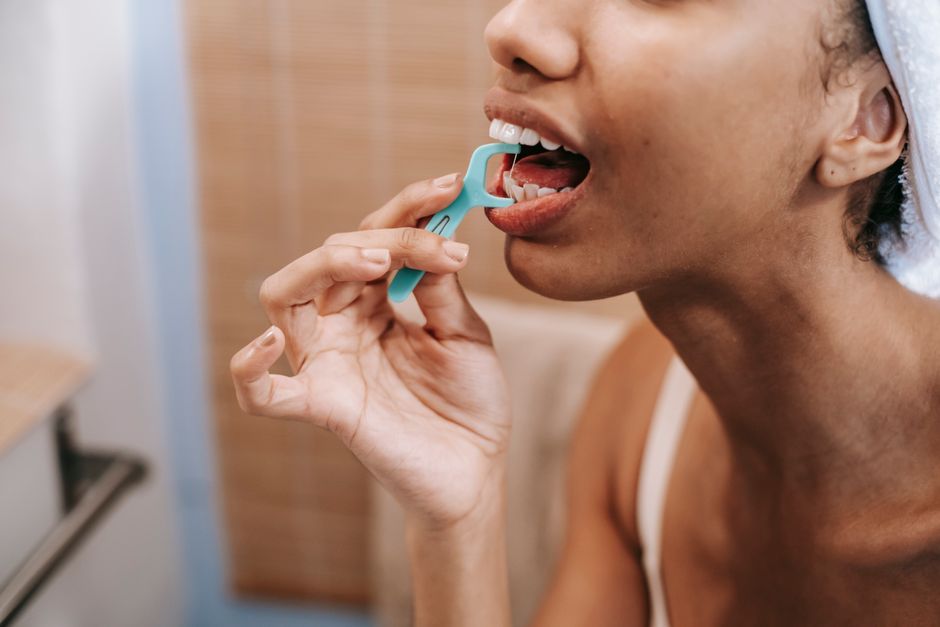
Your mouth is home to hundreds of bacterial species, and the single most effective thing you can do for your gums and teeth is to disrupt the sticky film they build on your teeth every day. That film is plaque, and if it stays put, it hardens into tartar within about 24 to 72 hours. Brushing twice daily with fluoride toothpaste, cleaning between your teeth once a day, and limiting how often you eat sugar are the habits with the strongest evidence behind them. Everything else — mouthwash, oil pulling, special toothpastes — works best as a supporting act, not a replacement.
What Actually Causes Gum Disease and Tooth Decay?
Both problems start with the same thing: bacteria organizing themselves into plaque on your teeth and along the gumline.
When you eat or drink something with sugar or refined carbohydrates, those bacteria ferment it and produce acid. That acid dissolves minerals in your tooth enamel. Your saliva then works to repair the damage — it contains calcium and phosphate that rebuild the enamel surface. This back-and-forth is normal. Cavities form when acid attacks happen so often that your saliva can’t keep up.
Gum disease follows a different path. Plaque that sits along the gumline triggers an immune response. Your gums become inflamed — red, swollen, and prone to bleeding when you brush. This early stage is called gingivitis, and it is reversible. If plaque stays long enough to harden into tartar, the inflammation can spread below the gumline into the tissues and bone that hold your teeth in place. That later stage is periodontitis, and unlike gingivitis, the bone loss it causes cannot be reversed.
This distinction matters. You can stop gingivitis with good home care. You cannot treat periodontitis at home — it requires professional treatment to halt progression.
How To Improve Gum And Teeth Health Naturally With Daily Habits
Brushing and cleaning between your teeth are not optional extras. They are the foundation, and no natural remedy substitutes for them.
Brush twice a day for two minutes with a fluoride toothpaste. Fluoride is not a marketing add-on — it is the single most evidence-backed ingredient in oral care. It works by making enamel more resistant to acid and by helping remineralize early damage. The American Dental Association has endorsed fluoride toothpaste for decades, and population-level research consistently links community water fluoridation to fewer cavities.
Technique matters as much as frequency. Hold the brush at a 45-degree angle toward the gumline and use short, gentle strokes. Scrubbing hard does not clean better — it wears down enamel and irritates gums over time. A soft-bristled brush is the right choice for almost everyone.
Clean between your teeth once a day. Floss, interdental brushes, or a water flosser all work. Floss reaches the sides of teeth where a brush cannot. If you have wider gaps or gum recession, small interdental brushes often clean more effectively than string floss. This step is where most people fall short, and it is the one most strongly linked to preventing gum disease.
Replace your toothbrush every three to four months, or sooner if the bristles look frayed. Worn bristles do not clean well.
Does Diet Really Affect Your Teeth and Gums?
Yes, and the biggest factor is not how much sugar you eat — it is how often.
Each time sugar or refined carbs hit your teeth, acid production spikes for roughly 20 minutes or more. Sipping a sweet drink over an hour creates a long acid bath. Eating a dessert in one sitting creates one shorter attack. That is why frequency matters more than total amount for cavity risk.
Some dietary habits support oral health:
- Drink water, especially fluoridated tap water. It rinses away food particles and keeps saliva flowing.
- Eat cheese and plain dairy. These raise the pH in your mouth and provide calcium and phosphate.
- Choose crunchy vegetables and fibrous foods. Chewing them stimulates saliva.
- Limit sugary drinks and sticky snacks. If you have them, have them with meals rather than between them.
One clarification worth knowing: the idea that acidic foods like citrus “strip” enamel permanently is overstated. The bigger issue is frequency and whether you brush immediately after. Brushing right after acidic food or drink can scrub softened enamel. Wait about 30 minutes, then brush.




Do Natural Remedies Like Oil Pulling Actually Work?
Oil pulling has been studied, and the results are modest at best. It is not a replacement for brushing or flossing.
Oil pulling involves swishing oil — usually coconut or sesame — in your mouth for up to 20 minutes. Some small studies suggest it may reduce plaque and gingivitis scores slightly compared with no oral hygiene at all. But when compared with standard mouthwash or brushing, the evidence does not show it works better. The studies are generally small, and the quality varies.
The honest position: oil pulling is not harmful, and it may help a little as an add-on. It does not remove tartar, it does not reverse periodontitis, and it does not substitute for fluoride or mechanical cleaning. If you enjoy it, keep it alongside your regular routine, not instead of it.
Other popular remedies — baking soda, hydrogen peroxide rinses, herbal mouthwashes — have varying levels of support. Baking soda toothpaste can help remove surface stains and has mild antibacterial properties. Hydrogen peroxide should be diluted and used short-term only, since it can irritate gums with overuse. None of these replace the basics.
When Should You See a Dentist Instead of Treating This at Home?
Some signs mean home care is not enough and you need professional help.
See a dentist if you notice:
- Gums that bleed regularly when you brush or floss
- Persistent bad breath that does not improve with brushing
- Gums that are pulling away from your teeth, making teeth look longer
- Loose teeth or teeth that have shifted
- Pain when chewing or sensitivity that does not go away
- Swelling, pus, or a bad taste near a tooth
Gingivitis can often be reversed with improved home care, but periodontitis needs professional treatment — typically deep cleaning and sometimes medication or surgery. The earlier it is caught, the more can be saved. Regular dental visits, generally every six months for most adults, allow early detection. If you have gum disease or other risk factors, your dentist may recommend more frequent visits.
Do not wait for pain. Gum disease is usually painless in its early stages, which is exactly why it goes unnoticed.
What Else Supports Long-Term Oral Health?
A few broader factors influence your mouth more than most people realize.
Do not smoke or use tobacco. Smoking is one of the strongest risk factors for gum disease. It also masks the warning sign of bleeding gums, so problems can progress unnoticed.
Manage conditions like diabetes. High blood sugar is linked to more severe gum disease, and the relationship runs both ways — gum inflammation can make blood sugar harder to control. This connection is well established in clinical research.
Watch for dry mouth. Saliva protects your teeth, and many medications reduce saliva flow. If your mouth feels persistently dry, talk to your dentist or doctor about options.
Drink alcohol in moderation. Heavy alcohol use is associated with higher rates of gum disease and oral cancers.
None of these steps are dramatic. They work because they reduce the conditions bacteria need to cause damage — and they compound over years.
Frequently Asked Questions
Can gum disease be reversed naturally?
Early gum disease, called gingivitis, can often be reversed with consistent brushing, daily cleaning between teeth, and professional cleanings. Periodontitis, which involves bone loss, cannot be reversed at home and requires professional treatment to stop it from getting worse.
Is oil pulling as effective as brushing?
No. Studies on oil pulling show only modest effects compared with no oral hygiene, and it has not been shown to work better than standard brushing or mouthwash. It can be an add-on, but it does not replace brushing or flossing.
How often should I floss or clean between my teeth?
Once a day is the standard recommendation. Flossing, interdental brushes, or a water flosser all work, and the best one is the one you will actually use consistently.
Does fluoride toothpaste really matter if I want a natural routine?
Fluoride is the most evidence-backed ingredient for preventing cavities, and the American Dental Association has endorsed it for decades. If you choose a fluoride-free toothpaste, know that you are giving up the ingredient with the strongest proof of benefit.
