
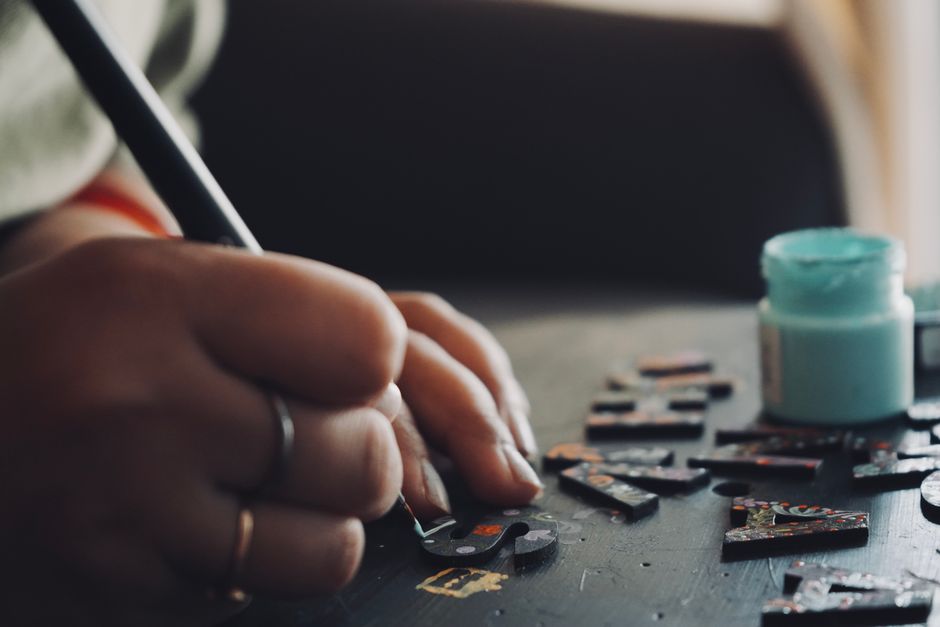
Fine motor skills in adults improve the same way they do in childhood: through repeated, gradually harder practice of precise hand movements. At home, the most effective approach is to pick activities that challenge your fingers and hands just beyond what feels easy, do them regularly, and increase difficulty as they get comfortable. Everyday tasks like cooking, handwriting, buttoning, and manipulating small objects all count as training if you approach them with attention.
What Are Fine Motor Skills and Why Do They Matter in Adulthood?
Fine motor skills are the coordinated movements of small muscles in your hands, fingers, and wrists, usually guided by your eyes. They let you grip a pen, turn a key, fasten a button, or thread a needle. These movements depend on a network that includes the muscles themselves, the nerves that control them, and the parts of your brain that plan and refine movement.
Adults rely on fine motor control constantly, often without noticing. Typing, driving, preparing food, and managing buttons and zippers all draw on it. When these skills decline, the effect is practical: tasks take longer, feel clumsy, or become frustrating.
Fine motor ability is not fixed. The nervous system retains the capacity to adapt and learn new movement patterns throughout life, a property called neuroplasticity. Practice drives this adaptation. What changes with age is usually the speed of learning and the amount of practice needed, not the basic capacity to improve.
Why Do Fine Motor Skills Decline in Some Adults?
Decline has several possible causes, and they are not equivalent. Ordinary aging brings some slowing and reduced grip strength, but it rarely causes dramatic loss of hand precision on its own. When fine motor problems appear, it is worth understanding what is driving them.
Common contributors include:
- Disuse. Long periods without challenging hand tasks, such as after an injury or a sedentary stretch, let skills dull. This is often reversible with practice.
- Arthritis. Joint pain and stiffness in the hands can limit movement and make precision tasks uncomfortable.
- Nerve conditions. Carpal tunnel syndrome and other nerve compression problems affect sensation and control in the fingers.
- Neurological conditions. Stroke, Parkinson’s disease, and multiple sclerosis can impair fine motor control. These require medical assessment and often professional rehabilitation.
- Vision changes. Because fine motor tasks are usually eye-guided, reduced vision can make precise movements harder.
One clarification worth making: occasional clumsiness is normal and not a sign of disease. Persistent, worsening, or one-sided loss of hand control is different. That pattern warrants a medical evaluation rather than a home exercise program alone.
How To Improve Fine Motor Skills In Adults At Home
The core principle is progressive challenge. You want tasks that require accuracy and control, done often enough to build skill, and made slightly harder as they become easy. This mirrors how physical therapy approaches hand rehabilitation, though a home program is not a substitute for professional care when a medical condition is present.
Effective home practice generally includes these elements:
- Precision tasks. Threading, sorting small objects, assembling puzzles, or manipulating coins and beads.
- Grip and pinch work. Using putty, spring-loaded hand exercisers, or simply opening tight jars.
- Handwriting and drawing. Writing by hand, coloring, or sketching demands fine control and eye-hand coordination.
- Everyday tasks done deliberately. Cooking, chopping, buttoning, and tying all train the hands if you slow down and focus on accuracy.
- Instrument practice. Playing a musical instrument is a well-recognized way to train precise, coordinated finger movement.
Frequency matters more than duration. Short, regular sessions tend to build skill better than occasional long ones. The general direction from rehabilitation research is that task-specific practice, repeated over time, drives improvement. The exact “best” schedule has not been pinned down by large trials, so consistency is the practical guide.
Which Everyday Activities Train Fine Motor Control?
You do not need special equipment to train your hands. Many daily tasks already demand precision, and approaching them with attention turns them into practice. The key is to notice when a task is easy and add difficulty rather than coasting.
Activities that genuinely challenge fine motor control include:
- Cooking. Chopping, peeling, kneading dough, and decorating food all require controlled hand movements.
- Sewing and crafting. Threading a needle, knitting, crocheting, and model-building demand sustained precision.
- Gardening. Handling small seeds, pruning, and repotting work the hands in varied ways.
- Home repair. Using small tools, tightening screws, and working with fasteners trains grip and control.
- Games. Card games, jigsaw puzzles, and board games with small pieces involve picking up and placing objects accurately.
These activities help maintain and build skill, but they are not proven treatments for a diagnosed condition. If you have a specific medical problem affecting your hands, a hand therapist or occupational therapist can design a program matched to your needs.
Does Hand Strength Training Improve Fine Motor Skills?
Strength and fine motor control are related but not the same thing. Grip strength training builds the muscles that close the hand, while fine motor skill depends on precise control of small movements. Stronger hands can support better control, but strength alone does not automatically improve dexterity.
This distinction matters because hand-strengthening gadgets are heavily marketed. Building grip strength is reasonable for general hand function, and some evidence links grip strength to broader health measures. But no strong evidence shows that squeezing a device alone will improve tasks like handwriting or buttoning. Those tasks require practicing the specific movement you want to improve.
A balanced approach pairs some strengthening with precision practice. The precision work is where the skill improvement comes from. Strength supports it.
Can Technology and Apps Help?
Touchscreens and apps are widely marketed for hand training, and the evidence for them is limited. Some small studies suggest that certain digital games and tablet-based exercises can engage hand coordination. But large, well-controlled trials comparing apps to ordinary practice are scarce, and marketing claims often run ahead of the data.
What is clear is that any activity requiring accurate finger placement and control can serve as practice. If a tablet game keeps you engaged and challenges your coordination, it fits the general principle of task-specific practice. It is not superior to real-world tasks, and it should not replace professional rehabilitation if you have a diagnosed condition.
When Should You See a Professional?
Home practice suits people whose fine motor skills are intact but could be sharper, or who are recovering from disuse. It is not the right first step for everyone. Some patterns need medical assessment before any exercise program.
Consider seeing a doctor or a hand therapist if you notice:
- Sudden or rapid loss of hand control
- Weakness or numbness, especially on one side
- Hand problems that interfere with daily tasks like dressing or eating
- Tremor, stiffness, or difficulty starting movements
- Pain that limits what your hands can do
Sudden weakness or numbness, particularly on one side of the body, can signal a medical emergency and warrants immediate care rather than a home program. For non-urgent but persistent problems, an occupational therapist or hand therapist can assess your specific needs. Some clinicians recommend structured hand therapy for conditions like arthritis or after injury, though the evidence for specific protocols varies.
The Bottom Line
Fine motor skills in adults respond to practice. The most reliable approach is regular, task-specific activity that challenges precision and control, made gradually harder over time. Everyday tasks, crafts, cooking, and instrument practice all count. Strength training supports hand function but does not replace precision practice. And when hand problems are sudden, one-sided, or interfering with daily life, professional assessment comes before any home program.
Frequently Asked Questions
How can I improve my fine motor skills at home?
Practice precise hand tasks regularly and increase difficulty as they get easier. Threading, handwriting, cooking, crafts, and instrument practice all train fine motor control.
Can fine motor skills be improved in adults?
Yes. The nervous system retains the ability to adapt and learn new movement patterns throughout life, so adults can improve fine motor skills with consistent practice.
What causes poor fine motor skills in adults?
Causes include disuse, arthritis, nerve compression, vision changes, and neurological conditions such as stroke or Parkinson’s disease. Persistent or one-sided loss of hand control should be evaluated by a doctor.
Do hand exercisers improve fine motor skills?
Hand exercisers build grip strength, but no strong evidence shows they improve precision tasks on their own. Skill improvement comes from practicing the specific movements you want to master.
