
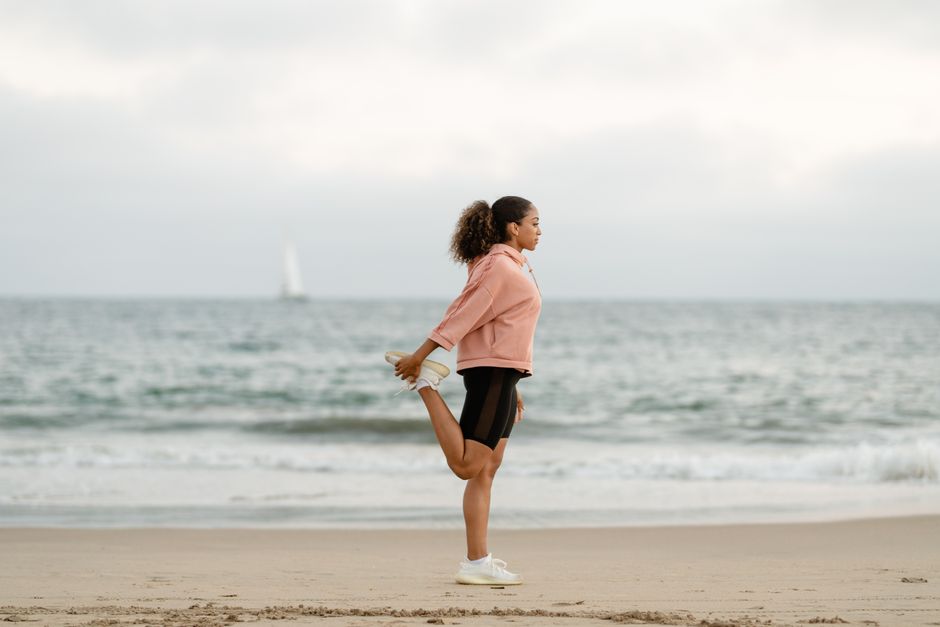
Balance is something most people take for granted until they lose it. The good news is that balance can be rebuilt and strengthened with specific exercises that have real science behind them. Research shows that targeted exercises—like single-leg stands, heel-to-toe walks, and dynamic stability moves—can significantly improve your balance in as little as four to six weeks. The key is consistency and choosing exercises that challenge your body’s natural stability systems.
What Causes Poor Balance as We Age?
Balance does not just fade away on its own. Three main systems in your body work together to keep you upright: your vision, your inner ear (vestibular system), and your proprioception—the sense of where your body is in space. As you age, each of these systems can become less reliable.
The CDC reports that about one in four adults over 65 falls each year. That number is not random. Muscle mass naturally declines about 3 to 5 percent per decade after age 30. Weaker leg and core muscles mean your body has less ability to correct itself when you start to tip. Your reaction time also slows. By age 50, nerve signals travel more slowly from your feet to your brain. This delay matters when you step on an uneven surface.
Some people also have medical conditions that affect balance. Inner ear disorders like vertigo, neuropathy from diabetes, and certain medications can all make balance harder. If your balance has gotten noticeably worse quickly, check with your doctor first. Some causes are treatable.
How To Improve Balance With Exercises Backed By Science
Research published in the British Journal of Sports Medicine found that balance training programs reduce falls in older adults by about 24 percent. That is a real number from a large analysis of multiple studies. The exercises that work best target the lower body and the core while also training your brain to process balance information faster.
Here are the exercises with the strongest evidence behind them:
- Single-leg stance. Stand on one foot for 30 seconds. Hold onto a counter at first if needed. This directly trains the ankle and hip stabilizers.
- Heel-to-toe walk. Place one foot directly in front of the other as if on a tightrope. Walk 20 steps. This challenges your vestibular system.
- Tai chi. The National Institute on Aging highlights tai chi as one of the most effective balance exercises. Studies show it reduces falls by up to 50 percent in older adults who practice regularly.
- Clock reach. Stand on one leg and reach your other foot to the 12, 3, 6, and 9 o’clock positions on the floor. This combines strength and coordination.
Do these exercises three to four times per week. Start with support and progress to no support as you improve. Within about four weeks, most people notice they can stand on one leg longer without wobbling.
What Does the Research on Balance Exercises Actually Show?
A 2021 meta-analysis in JAMA Internal Medicine looked at 108 randomized trials on fall prevention. The researchers found that exercise programs that included balance training reduced the rate of falls by 23 percent compared to no exercise. Programs that only focused on strength or walking without balance work did not show the same benefit.
Another study from the University of Sydney followed older adults for two years. Those who did balance exercises three times a week had 31 percent fewer falls than those who did general physical activity. The key difference was that the balance group did exercises that specifically challenged their stability—like standing on one leg with eyes closed or walking on uneven surfaces.
The evidence is clear: generic exercise helps overall health but does not automatically improve balance. You need targeted balance training. Walking alone is not enough. Even yoga, which is excellent for flexibility, does not reduce falls as effectively as specific balance exercises unless the yoga includes standing poses that challenge your stability.




How Often Should You Do Balance Exercises?
The American College of Sports Medicine recommends balance training at least two to three days per week. But more frequent training produces faster results. A study in Gerontology found that doing balance exercises daily for 10 to 15 minutes improved stability scores by 35 percent after six weeks.
Here is a practical schedule that research supports:
| Frequency | Duration | Expected Improvement |
|---|---|---|
| 2-3 days per week | 10 minutes per session | Moderate improvement in 8-12 weeks |
| 4-5 days per week | 15 minutes per session | Significant improvement in 4-6 weeks |
| Daily | 10-15 minutes per session | Rapid improvement in 3-4 weeks |
The most important factor is consistency. Doing balance exercises once a week barely moves the needle. Your brain and muscles need repeated exposure to the challenge to adapt. Think of it like learning a new skill—you would not expect to play piano well by practicing once a week.
What Balance Exercises Should You Avoid?
Not all balance exercises are safe or effective. Some popular exercises can actually increase your risk of falling if done incorrectly or before you are ready.
Avoid closed-eye exercises too early. Standing on one leg with your eyes closed is a common recommendation online. But research shows this can cause sudden loss of balance even in healthy adults. Your brain relies heavily on visual cues. Taking vision away before your body has adapted to the basic stance increases fall risk. Start with eyes open. Only close your eyes when you can stand on one leg for 30 seconds without wobbling.
Be cautious with unstable surfaces. Exercises on foam pads, wobble boards, or Bosu balls are popular. However, a study in the Journal of Strength and Conditioning Research found that these unstable surfaces do not improve functional balance more than stable-surface exercises for most people. They also increase injury risk. If you use them, start on a firm floor first and only progress to unstable surfaces after several weeks of solid progress.
Avoid rushing through reps. Balance exercises are not about speed. They are about control. Moving too fast means your body uses momentum instead of muscle control. This defeats the purpose. Each rep should be slow and deliberate. If you can do an exercise quickly without wobbling, you are not challenging your balance enough—you need a harder variation.
Common Misconceptions About Balance Training
Many people think balance is something you either have or you do not. That is not true. Balance is a trainable skill at any age. A study in Frontiers in Physiology found that adults in their 70s and 80s improved their balance scores by 40 percent after 12 weeks of targeted training. Age is not a barrier.
Another common myth is that walking is enough to maintain balance. Walking does keep your legs strong, but it does not challenge your stability system in the way that standing on one leg or walking heel-to-toe does. Your body can walk on autopilot. Balance exercises force your brain to actively correct your position, which is what builds real stability.
Some people also believe that balance exercises are only for older adults. That is incorrect. Younger adults benefit too. Better balance improves athletic performance, reduces injury risk during sports, and even helps with everyday activities like carrying groceries or walking on icy sidewalks. Starting balance training in your 30s or 40s builds a foundation that protects you later in life.
Frequently Asked Questions
How long does it take to improve balance with exercise?
Most people see noticeable improvement within four to six weeks of doing balance exercises three to four times per week.
Can balance exercises prevent falls in older adults?
Yes, research shows balance training reduces fall risk by about 24 to 31 percent in older adults who practice consistently.
Is walking alone enough to improve balance?
No, walking does not challenge your stability enough. You need specific balance exercises like single-leg stands and heel-to-toe walks.
What is the single best exercise for balance?
The single-leg stance has the strongest research support and is the most commonly prescribed balance exercise in clinical studies.
