
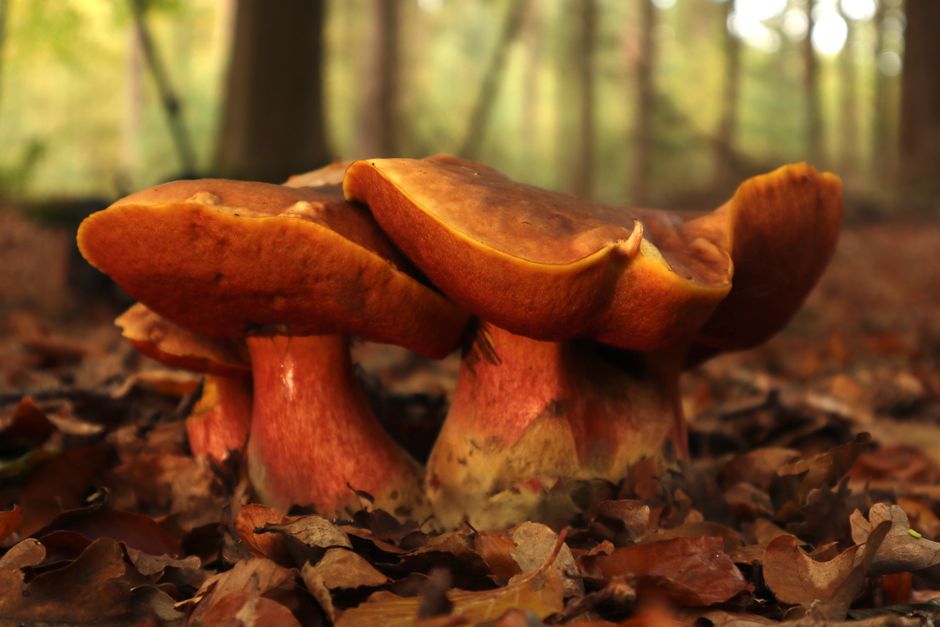
Bolete mushrooms are a large family of fleshy, stemmed fungi that grow on the ground, usually in partnership with tree roots, and most have a spongy, tube-like layer under the cap instead of the thin gills you see on a supermarket button mushroom. To identify one, you look at that underside first, then check the stem, the cap surface, and how the flesh reacts when you cut it. The tricky part is that “bolete” describes a shape and structure, not a guarantee of safety. Some boletes are excellent edibles, and a few are toxic or cause serious gastrointestinal illness.
What Makes a Mushroom a Bolete?
Boletes belong to the order Boletales, a group defined largely by how they release spores. Instead of hanging spores from gills, they pack them inside narrow vertical tubes that open as tiny pores on the underside of the cap. That pore surface is the single most useful feature for a beginner to learn.
Run a finger under the cap. On a bolete you feel something like a dense sponge or the underside of a mushroom-shaped foam sponge. The pores can be fine and tight or wide and angular. They may be white, yellow, olive, orange, red, or brown depending on the species and the age of the mushroom.
Nearly all boletes grow from the ground. They form underground connections with the roots of living trees, which is why you find them in forests rather than on dead logs. A mushroom that looks like a bolete but is growing directly out of rotting wood is probably something else.
One clarification worth knowing: the old rule that “all boletes are safe” is wrong. It has circulated for decades and it has made people sick.
How To Identify Bolete Mushrooms Step by Step
Work through the same checks every time, in the same order. Skipping steps is how mistakes happen.
- Underside: Confirm a tube and pore layer, not gills. Gills are thin blades that separate easily. Pores are the open ends of tubes.
- Stem: Boletes have a thick, solid-to-fibrous central stem. Many species show a fine net-like pattern called reticulation, especially near the top.
- Cap: Usually broad, rounded, and dry to slightly sticky. Color ranges widely from tan and brown to red, yellow, and near-white.
- Flesh test: Cut the cap in half vertically. Note the color of the flesh and whether it changes color within seconds to minutes after exposure to air.
- Stain test: Press or bruise the pore surface and the stem base. Some species turn blue, green, or brown almost instantly.
- Habitat: Note which trees are nearby. Many boletes associate with specific tree types.
The blue-staining reaction causes more confusion than any other feature. Many people believe blue staining means a bolete is toxic. That is not accurate. Blue bruising occurs across a wide range of boletes, including some well-regarded edibles and some that cause illness. It is a clue about which species you have, not a verdict on whether it is safe.
Why the Pore Surface Matters More Than Anything Else
Pore color and how it changes with age is one of the most reliable identification features in this group. A young bolete may have white or pale yellow pores that darken to olive or brown as spores mature. That shift is normal.
Color alone will not identify a species, but it narrows the field fast. A bolete with bright red pores and a red stem belongs to a very different group than one with white pores and a brown cap. Red and orange pore surfaces deserve extra caution, because several boletes in that range are known to cause gastrointestinal distress.
Pores also help you separate boletes from lookalikes. Some gilled mushrooms have a spongy or wrinkled underside that can fool a quick glance. If you can see distinct blades, it is not a bolete.





The Boletes You Should Not Eat
This is where honesty matters more than enthusiasm. No simple rule separates every edible bolete from every harmful one. Identification requires matching multiple features to a specific species, and even then, some species are debated among mycologists.
Several boletes are documented causes of gastrointestinal illness. One well-known example is Rubroboletus satanas, sometimes called Satan’s bolete, which has a pale cap, red pores, and a thick stem with red tones. Eating it has been linked to severe vomiting and diarrhea. Other red-pored species have caused similar reactions.
There is also a separate and more serious concern. Some boletes, including certain species in the genus Boletus and related groups, have been associated with a delayed reaction in susceptible people. Symptoms can include fatigue and muscle breakdown that appear a day or more after eating, not within the usual hour or two. This reaction is not fully understood and appears to affect only some individuals. Because of that uncertainty, no general safety statement covers all boletes.
If you are new to foraging, the practical takeaway is simple: do not eat a bolete you cannot identify to species with confidence. “It looks like a bolete” is not identification.
Boletes vs. Common Lookalikes
Most dangerous mix-ups happen with mushrooms that share the fleshy, stemmed shape but have gills. The table below covers the features that separate them.
| Feature | Bolete | Gilled lookalike (e.g., Amanita) |
|---|---|---|
| Underside | Spongy pores, no blades | Thin gill blades |
| Stem base | No cup-like sac | Often a cup-like sac (volva) |
| Ring on stem | Rare or absent | Common |
| Growth | On ground near tree roots | On ground, often near trees |
The sac at the base of the stem is the feature that matters most. Several deadly Amanita species have it, and it is sometimes buried in soil. Always dig the whole mushroom out rather than cutting the stem at ground level. Cutting hides the base and hides the evidence you need.
Practical Rules for Foraging Safely
No book, app, or article replaces hands-on instruction from someone experienced with your local fungi. Regional species vary enormously, and a bolete that is common and safe in one part of the country may be absent or different where you live.
- Learn from a local mycological group or an experienced forager in your area.
- Identify every mushroom to species before it goes in your basket.
- Keep unknown mushrooms separate from known edibles.
- Eat only a small amount of any new species the first time, and only if you are fully confident in the identification.
- Never eat a mushroom raw unless you are certain that species is safe raw.
- Photograph the cap, stem, pore surface, and cut flesh before you decide.
Also worth knowing: even well-established edible boletes can cause problems if they are old, spoiled, or undercooked. Some people react to certain species even when the identification is correct. Individual sensitivity is real and cannot be predicted from a field guide.
If someone develops vomiting, diarrhea, or unusual muscle pain after eating a wild mushroom, seek medical care and bring a sample or a clear photo if possible. Timing of symptoms matters to clinicians, and the information helps guide treatment.
Frequently Asked Questions
How do I tell a bolete from a regular mushroom?
Look under the cap. A bolete has a spongy layer of tiny pores instead of thin gill blades, and it grows from the ground near tree roots rather than on wood.
Are all bolete mushrooms safe to eat?
No. The old claim that every bolete is edible is false, and several species cause serious gastrointestinal illness.
What does blue staining on a bolete mean?
Blue bruising means the flesh is oxidizing, and it happens in both edible and harmful species, so it cannot be used as a safety test on its own.
Can I identify boletes with a phone app?
Apps can suggest possibilities but are not reliable enough to confirm edibility, and a wrong identification can have serious consequences.
