
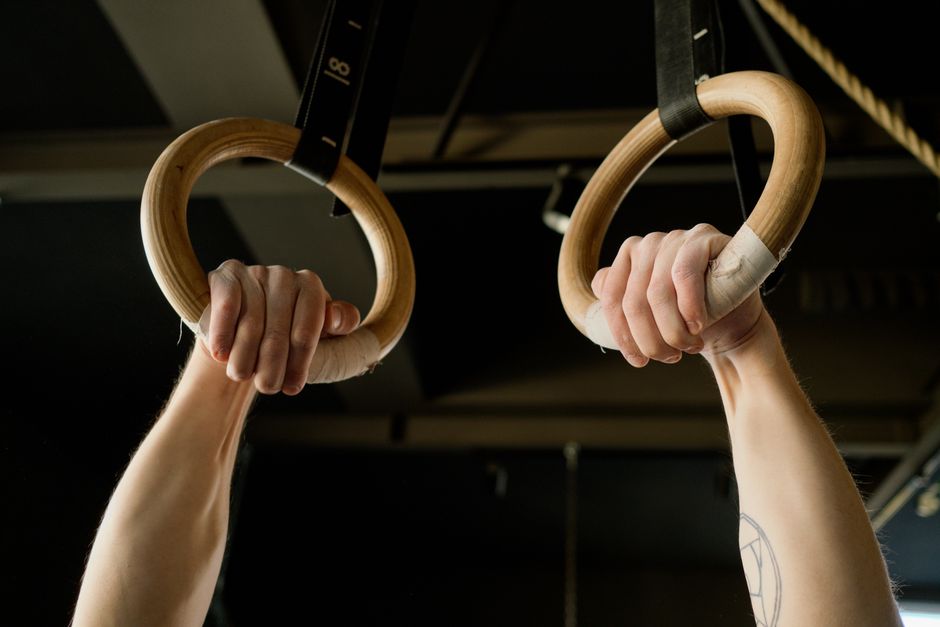
Hook grip works by wrapping your thumb around the bar first, then closing your fingers over it. That traps the thumb between the bar and your middle and index fingers. The bar no longer rests on skin alone — it presses against bone and connective tissue that don’t fatigue the way your forearm flexors do. The catch is real: the thumb takes direct compression, and most thumb pain from hook grip comes from loading it too fast, not from the grip itself.
You can hook grip without wrecking your thumbs. The technique is correct and safe when the load is progressive, the thumb is taped or wrapped early on, and you treat thumb discomfort as a training variable rather than a badge of honor. What usually goes wrong is jumping to heavy singles before the tissue has adapted.
Why Does Hook Grip Hurt Your Thumbs?
Your thumb is not built to be a load-bearing column. It has two phalanges instead of three, a saddle joint at the base, and a lot of nerve endings. When you hook grip, the bar compresses the pad and nail bed of the thumb against the index and middle fingers. That compression is the whole point — it’s what creates the lock — but it’s also where the pain comes from.
The discomfort has two distinct sources. The first is simple pressure on skin and soft tissue, which fades as the tissue adapts. The second is stress on the joint and the ligaments around it, which does not always fade and is the one worth paying attention to. Early on, most people feel both and can’t tell them apart.
There’s a detail worth knowing: the thumb isn’t being crushed by the bar so much as pinned between the bar and your own fingers. The fingers are doing the squeezing. That’s why grip strength in the fingers matters — a stronger hand can hold the hook with less crushing force on the thumb itself.
How Do You Set Up a Hook Grip Correctly?
Most thumb pain traces back to setup, not to the grip’s inherent demands. Get the sequence right and the load distributes better.
- Chalk the thumb and the area of the bar where it sits. Dry skin reduces the slip that forces you to squeeze harder.
- Place the thumb on the bar first, wrapping it around the bar’s surface rather than pinning it flat.
- Bring the index and middle fingers over the top of the thumb, closing them firmly. The thumb should sit between the bar and those two fingers.
- Set the bar in the crease of your hand, close to the wrist, not out toward the fingertips.
- Wrap the remaining fingers around the bar normally.
The most common mistake is gripping the bar too far out in the palm. That puts the hook under more leverage and increases the pressure on the thumb. Moving the bar back toward the wrist reduces the load the thumb has to resist.
Another frequent error is a loose hook. A half-closed hook lets the bar shift, and every shift grinds the thumb. A tight hook feels worse for the first few seconds and better for the whole set.
How Do You Build Thumb Tolerance Without Injury?
Thumb adaptation is a tissue process, and it follows the same rules as any other tissue. Load it gradually, give it time to recover, and increase stress in small steps. There’s no shortcut that replaces this.
Start with loads well below your maximum and hold the hook for the full set. Do this for weeks, not days. The pressure tolerance builds slowly. Some lifters notice meaningful improvement in a few weeks; others take a couple of months. There is no reliable published timeline, so treat any specific number you hear with suspicion.
Use the hook on warm-up sets and lighter working sets even when you could use a regular grip. That’s where the adaptation happens. Save the heaviest hook work for when the tissue has already been exposed to moderate loads.
Keep total hook volume reasonable. If your thumbs are sore the next day in a way that feels like joint pain rather than surface tenderness, back off the load and volume. Soreness that resolves within a day or so is normal adaptation. Pain that lingers, swells, or changes how the joint moves is a signal to stop and get it looked at.
Does Taping or Wrapping the Thumb Help?
Thumb tape reduces skin irritation and can take some of the edge off the pressure. It does not eliminate the compressive force on the joint. That distinction matters, because some lifters tape up and then assume they can jump load faster than their tissue is ready for.
Thumb tape is widely used in weightlifting and powerlifting. Coaches commonly recommend it for lifters new to the hook or dealing with skin breakdown. That’s a reasonable practice, but it’s a comfort measure, not a structural fix. No controlled trials have established that taping prevents thumb injury.
If you tape, keep it snug but not so tight that it restricts blood flow. Tape that cuts into the skin can cause its own problems. Some lifters use athletic tape in a figure-eight around the thumb and wrist to keep it in place. Others prefer a simple wrap around the thumb pad. Both are common; neither is proven superior.
When Is Hook Grip the Wrong Choice?
Hook grip is not mandatory for every lift or every lifter. It has real tradeoffs, and there are situations where a different grip is the better call.
If you have an existing thumb injury, arthritis at the base of the thumb, or a history of ligament damage in the hand, hook grip may not be appropriate. That’s a conversation for a clinician who can examine the joint, not something to sort out from a training article.
For many lifters, straps are the practical answer on heavy pulls where grip isn’t the limiting factor. Straps remove the thumb compression entirely and let you train the back and hips without grip fatigue. Some purists argue against them; that’s a training philosophy debate, not a safety issue.
Mixed grip is another option. It changes the mechanics of the pull and shifts stress to the biceps of the supinated arm. The evidence on injury risk with mixed grip is limited and mostly anecdotal, so it’s fair to say the tradeoffs are real but not well quantified.
Hook grip is worth learning if you compete in a sport that requires it, or if you want a grip that doesn’t rely on straps. It is not worth forcing if your thumbs aren’t tolerating it after a reasonable adaptation period.
What Actually Reduces Thumb Soreness After Training?
Recovery for thumb tissue follows the same general principles as recovery for other connective tissue. Manage load, allow time, and avoid adding more stress while it’s still irritated.
Reducing hook volume for a week or two is the most direct lever. So is dropping the load on hook sets while keeping the technique. Ice and over-the-counter pain relievers may ease symptoms, but they don’t speed tissue adaptation, and masking pain can lead to training through a problem that needs rest.
If thumb soreness persists beyond a few days after each session, or if it’s worsening rather than improving over weeks, that’s not normal adaptation. Persistent joint pain, swelling, or a thumb that feels unstable should be evaluated by a clinician. Self-treating a possible ligament issue with more tape and more load is how small problems become bigger ones.
Is Hook Grip Worth the Thumb Discomfort?
For most lifters who compete or train heavy pulls regularly, yes — once the tissue adapts. The grip is more secure than a standard double overhand grip at heavy loads, and it doesn’t depend on equipment. That’s why it’s standard in Olympic weightlifting, where it’s used on every snatch and clean.
The discomfort is real but usually temporary. The lifters who struggle are typically the ones who rushed the progression, skipped tape, or kept training through joint pain instead of surface soreness. Treat the thumb as a tissue that needs a training plan, not a problem to push through, and hook grip becomes a durable tool rather than a source of chronic pain.
Frequently Asked Questions
Does hook grip damage your thumbs?
Hook grip does not damage healthy thumbs when load is increased gradually and technique is correct. It does place direct compression on the thumb joint and soft tissue, which can cause injury if load is added faster than the tissue adapts.
How long does it take for thumbs to get used to hook grip?
Adaptation varies widely between lifters, and no reliable published timeline exists. Many notice improvement over several weeks of consistent, moderate-load practice, while others take longer.
Should you tape your thumbs for hook grip?
Thumb tape is widely used and can reduce skin irritation and some pressure discomfort. It does not remove the compressive force on the joint, and no controlled trials have shown it prevents injury.
Is hook grip stronger than straps?
Hook grip and straps solve different problems. Hook grip improves your own grip security without equipment, while straps remove grip as a limiting factor entirely on heavy pulls.
