
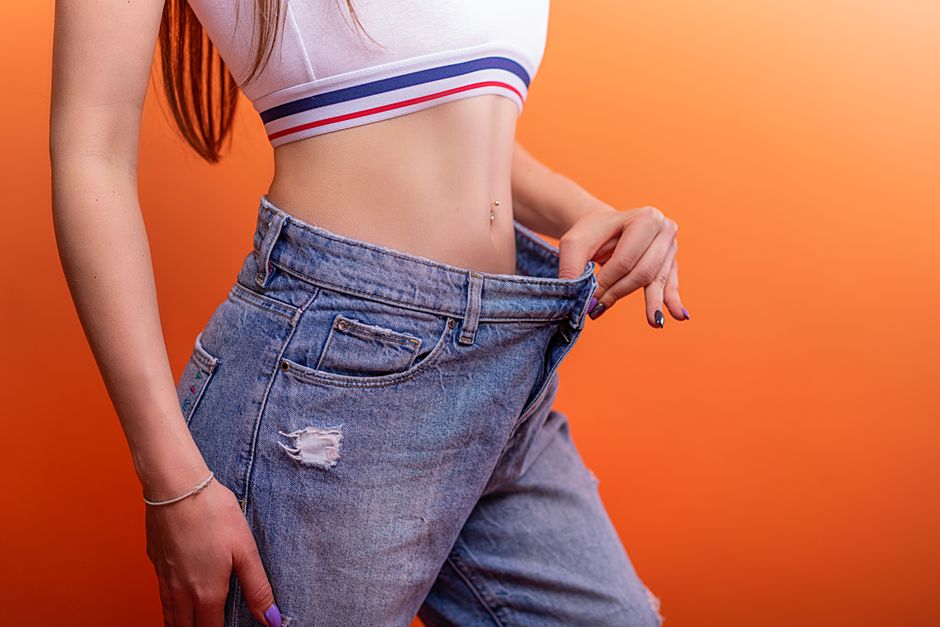
You can hide belly fat in jeans by choosing the right rise, fabric, and fit, then using a few simple styling tricks. High-rise styles that sit at or just above your natural waist tend to smooth the midsection. Dark, structured denim with some stretch holds its shape better than thin, clingy fabric. The goal is not to squeeze anything in. It is to work with how denim drapes and where it puts visual weight.
Why Do Some Jeans Make Belly Fat Look Worse?
Denim is a stiff fabric. Where it sits and how it grips decides where the eye goes.
Low-rise jeans are the main problem for most people. They sit below the belly, which pushes soft tissue up and over the waistband. That creates a visible bulge even on someone with very little body fat. The waistband also cuts across the widest part of the hips, drawing attention right where you do not want it.
Thin, high-stretch denim causes a different issue. Fabric with a lot of spandex clings to every curve and shows every line. It also stretches out through the day and loses shape. By afternoon the jeans look painted on rather than fitted.
Light washes and heavy fading add to the effect. Light colors reflect more light and make an area look larger. Whiskering and fading across the front of the thighs and hips creates horizontal lines that widen the appearance of the lower body.
None of this is about your body being wrong. It is about how fabric behaves. Change the fabric and the cut, and the same body looks different in the mirror.
What Is the Best Jean Rise to Hide Belly Fat?
A high rise is the most reliable choice for most body types. A high-rise waistband sits at or slightly above your natural waist, which is the narrowest part of your torso. That gives the denim a place to anchor. It also covers the lower belly instead of cutting across it.
Mid-rise can work well too, as long as the waistband lands above the belly rather than across the middle of it. The exact height depends on your proportions. There is no single number that fits everyone.
Here is the part many people miss. A high rise only helps if the waistband actually stays put. If it rolls down or gaps at the back, it will not smooth anything. Look for a contoured waistband, which is cut slightly higher in the back than the front. This shape follows the curve of the lower back and reduces gapping when you sit or bend.
Try jeans on at the end of the day, not first thing in the morning. The abdomen changes slightly through the day with eating and bloating. What fits comfortably at 6 p.m. will almost always feel fine at 8 a.m.
Which Fabrics and Fits Work Best?
Fabric weight matters as much as cut. Heavier denim holds its shape and skims the body instead of gripping it. Very light denim with high stretch does the opposite.
Look for denim with a small amount of elastane, often between one and three percent. That is enough to allow movement without losing structure. Fabric that is mostly spandex will feel comfortable in the store and lose its shape within hours.
- Dark washes in indigo, black, or deep gray create a slimming line from waist to hem.
- Straight or bootcut legs balance a fuller midsection by adding visual width at the bottom.
- Wide-leg and trouser styles skim rather than cling and can be very flattering.
- Minimal distressing keeps the eye moving vertically instead of stopping at the hips.
- Contoured waistbands reduce back gapping and stay in place when you sit.
Skinny jeans are not automatically off the table. A dark, high-rise skinny in a heavier fabric can work. The risk is thin fabric and a low rise, which is the combination that causes most of the trouble.
How Should Jeans Fit Around the Waist and Hips?
The waistband should sit flush against your skin without digging in. If you can slide two fingers under the band comfortably, the fit is close. If the fabric bunches or the band leaves a red mark after an hour, it is too tight.
Too tight is not just uncomfortable. A waistband that presses into the abdomen can cause bloating, heartburn, and a feeling of pressure after meals. It also creates a visible line where the fabric cuts in, which is the opposite of what you want.
Check the gap at the back. If you can fit more than a hand flat against your lower back while the front fits well, the cut is wrong for your shape, not your size. Sizing down will not fix a gapping waistband. It will just make the front too tight.
Pay attention to the pocket placement too. Pockets that sit low and close together make the rear look flatter and the hips look wider. Pockets set slightly higher and angled gently inward create a more balanced line. This is a small detail that makes a real difference.
Styling Tricks That Actually Help
How you wear the jeans matters as much as the jeans themselves.
A front tuck is one of the most useful tricks. Tuck just the front hem of your top into the waistband and let the back hang loose. This defines your waist and creates a vertical line down the center of your body without exposing the sides or back. It works with almost any top that is not too thick.
Longer tops that end below the widest part of your hips create a clean vertical line. Tops that stop right at the belly draw a horizontal line across it, which adds width. The difference is where the hem lands, not the size of the top.
Layering helps too. An open jacket, cardigan, or button-down worn over a fitted top creates two vertical lines down your front. Those lines draw the eye up and down rather than side to side. A structured layer, like a blazer or a denim jacket, adds shape at the shoulders and balances a fuller midsection.
Belt choice is a small but real factor. A belt in the same color as your jeans blends in and keeps the line unbroken. A contrasting belt creates a horizontal band at the waist. Neither is wrong. It depends on whether you want to define the waist or minimize it.
Does Shapewear or Tucking Help?
Shapewear can smooth the look of the midsection under clothing. High-waisted shaping shorts or a light control brief worn under jeans can reduce visible lines. The effect is temporary and cosmetic. It does not change body composition.
Comfort matters here. Shapewear that is too tight can cause the same problems as a too-tight waistband, including pressure, bloating, and discomfort after eating. If it feels restrictive, it is too small. A lighter level of control is usually enough under denim.
There is also a simple trick with the jeans themselves. Some people use a hair tie looped through the buttonhole and around the button to give a slightly looser waist without a visible gap. This is a temporary fix, not a real alteration. A tailor can take in a waistband properly for a permanent solution, and it is usually inexpensive.
What About Actually Reducing Belly Fat?
Clothing tricks change how your body looks in jeans. They do not change the fat itself. If reducing belly fat is your goal, the levers are the ones that have held up in research for decades.
Belly fat, especially the visceral fat stored deep around the organs, responds to overall energy balance, physical activity, and sleep. No food or supplement targets belly fat specifically. Spot reduction, meaning losing fat from one area by exercising that area, has not been supported by research. Sit-ups build abdominal muscle but do not burn fat from the abdomen preferentially.
What does have consistent support is a combination of eating patterns that create a modest calorie deficit, regular aerobic and resistance exercise, and adequate sleep. Stress and alcohol intake also appear to play a role in where the body stores fat, though the evidence on the exact size of that effect is mixed.
If you carry a lot of weight around the middle, it is worth mentioning to a doctor. Central weight gain is associated with higher risk of type 2 diabetes and heart disease. That is a medical conversation, not a styling one.
Frequently Asked Questions
What jeans hide belly fat best?
High-rise jeans in a dark wash with a small amount of stretch and a contoured waistband work best for most people. They sit at your natural waist and cover the lower belly instead of cutting across it.
Do high-waisted jeans make you look thinner?
They often do, because they sit at the narrowest part of your torso and create a longer, cleaner line. The effect depends on the fabric and fit, not the rise alone.
Should I size up to hide belly fat in jeans?
Size up if the waistband digs in or gaps at the back, since a snug fit creates visible lines. A good tailor can adjust the waist for a better fit than sizing alone.
Does shapewear help under jeans?
Light shaping shorts can smooth the look of the midsection under denim. The effect is temporary and cosmetic, and shapewear that feels restrictive is too tight.
